Dogs | Dog Training
Safely Crate Training a Puppy During the Day: Full Schedule by Age
There’s nothing more Aussie than balancing work, play, and a new pup — and crate training a puppy during the day can save your sanity. In the Queensland heat, my Golden Retriever (Bruce) quickly learned that his crate was the coolest, cosiest spot for an arvo nap. A daytime crate routine keeps a young rascal safe and out of mischief while you’re busy around the house. In this Knowledge Guide, we’ll cover practical steps to create a positive crate experience, all backed by expert advice like the RSPCA Australia puppy guide to keep things humane and effective. Be sure to read our sister Knowledge Guide on safely crate training a puppy at night, and our hub Dog Crates and Training in Australia: Ultimate Hub for the most in-depth tips and resources.
The Upshot
Daytime crating works in short, age-appropriate stints — never as an all-day babysitter.
Introduce the crate gradually with treats and praise so it feels like a cubby house, not a punishment zone. Plan stints around age — 30–60 min for under-12-weekers, up to 3–4 hours max for older pups — with toilet and play breaks in between. Always leave water and keep airflow flowing in the Aussie summer heat.
Best Calming Toy

SmartPetLove Snuggle Puppy Behavioral Aid Toy
- Heartbeat eases first-week anxiety
- Great for crate naps and settling
- Plush only — not a chew toy
See the full Product Guide: Best Dog Toys for Puppies in Australia
Best Budget Crate
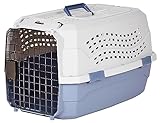
Amazon Basics 2-Door Top Load Hard-Sided Kennel
- Affordable everyday kennel
- Top-loading suits anxious pups
- Latch hardware is mostly plastic
See the full Product Guide: Best Travel Crates: Airline Approved, Car Safe

Why does this matter for Aussie pet owners? For one, puppies have tiny bladders — they often need a toilet break every hour or two. If you’re ducking out to Woolies or joining a Zoom meeting, a proper crate schedule ensures your pup stays comfy, not distressed. In this Knowledge Guide, we’ll break down a full daytime crate training schedule by age, with tips from veterinarians and the RSPCA (including when RSPCA Queensland’s crate training guide says to pause for play and potty). By the end, you’ll know how to use the crate as a safe haven — never a punishment — so your puppy stays happy and healthy.
Quick Takeaways
The five things worth remembering. Scroll across to read all five.
It’s a safe space, not a jail
Introduced properly, a crate becomes your puppy’s safe space — like a comfy cubby house, not a cell. Make it positive from day one with treats, praise, and never as punishment.
Short bursts, not all day
Puppies can’t “hold on” for long. Young pups need potty breaks at least every 1–2 hours, so plan crate time in short bursts. Never crate longer than 3–4 hours during the day.
Water and ventilation matter
Always leave water in the crate and keep it out of direct sun. In our Aussie summers, hydration and airflow are a must — see our picks for the best dog crate food and water bowl attachments.
Balance crate with play
Use the crate for naps and quiet time, but balance it with plenty of play, exercise and cuddles outside the crate. A tired, well-stimulated pup settles much faster.
Never as punishment
Never use the crate as punishment. It should be a positive place — think treats, toys, and a cosy bed — so your pup loves chilling there even when the door is open.
Crate training a puppy during the day: why?
Safe supervision when you’re busy: Daytime crate training is a lifesaver when you can’t keep eyes on your pup 24/7. Need to take a work call or pop out for a coffee? A crate lets your puppy rest safely instead of chewing the couch or sneaking off to the bathroom rug. For example, I started crating Bruce for short spells while making dinner — it kept him from tripping me up underfoot, and he learned to settle with a chew toy until I was free again.
Supports toilet training and routine: Dogs are naturally den animals and don’t like soiling where they sleep. A crate takes advantage of this instinct. By crating your puppy after meals or play, then taking them straight outside to “do their business” upon release, you reinforce good toilet habits. Over time, they’ll start to associate going outdoors with relief and praise, making training much smoother.
Many Aussie puppy owners swear by this method for quicker house-training. Just remember that a crate is not a magic fix — consistency and praise (and the occasional treat party when they pee in the right spot) are key. Patience and routine will get you there faster than punishment ever could, and your pup will learn to trust the process.
Provides a cosy den for downtime: Puppies play hard and nap hard. A crate gives your little mate a quiet retreat to recharge. This can be especially useful in busy households or during Australia’s steamy summers — Bruce often chooses his crate for afternoon snoozes when the AC is on, smart boy. Line the crate with a comfy blanket or pad (washable for accidents), and toss in a safe chew. Over time, your pup will associate the crate with relaxation and good things. Even visitors and kids learn that when the pup’s in her “room,” it’s chill-out time.
Aids in travel and vet visits: Crate-trained puppies tend to handle car trips and vet stays better. If your dog sees the crate as normal, popping them into a travel crate for a road trip to the beach or an overnight stay is much less stressful. Think of it as giving your pup their own familiar bed wherever they go. In Australia, where a trip might mean a long drive through the outback or a flight across states, crate training can make the journey safer and calmer for everyone.
A crate is best used like a toddler’s pram or nap nook — handy for safety and rest, never the whole day.
Crate training schedule by age
One size doesn’t fit all when it comes to crate time — a two-month-old puppy is very different from a six-month-old in what they can handle. The general rule of thumb is roughly one hour of crate time per month of age, but every puppy’s bladder capacity and temperament is a bit different. Below is a practical guide to daytime crate durations by age. These are maximum guidelines — always err on the side of shorter sessions and more breaks if your pup is uneasy or has an accident. If you notice restlessness, whining or panting, it’s time for a break (even if the “schedule” says they could go longer).
| Puppy age | Daytime crate guidelines |
|---|---|
| 8–12 weeks (2–3 months) | Tiny bladder alert. Limit crate time to about 30–60 minutes at a stretch. Expect to take them out for a toilet break every 1–2 hours at this age. Lots of play and nap cycles — use the crate for naps in a cool, quiet spot. |
| 3–4 months old | Can start handling ~1 to 2 hours in the crate at a time. Still, plan for a potty and play break at least every 2 hours. You might do a mid-morning and mid-afternoon crate session, with lunch and a romp in between. |
| 5–6 months old | May tolerate around 2 hours per session, occasionally up to 3 hours if they’ve napped. Ensure a midday break for toilet and exercise — a walk or playtime to burn energy before any afternoon crating. |
| 7–12 months (older puppy) | Approaching adult endurance. Some pups can do about 3 hours comfortably. Never crate longer than 3–4 hours during the day; they need exercise and interaction. By now, your dog should also enjoy some free time in a puppy-proofed area when you’re away. |
As shown above, young puppies need very short, frequent crate stints. My routine with Bruce at 10 weeks was a crate nap for 45 minutes, then outside for a toilet break and a bit of play, repeat. We also wrote a Knowledge Guide on what to do when your puppy cries in the crate — worth a read if those first few daytime sessions get noisy.
By 4 months, Bruce could chill for 2 hours in the crate in the morning — but I always made sure to tire him out with a play session beforehand and rewarded him with a treat-filled Kong in the crate.
At 6 months and beyond, while Bruce could technically snooze for 3 hours, I rarely pushed it that far. Even a well-trained dog shouldn’t be left crated all day; the RSPCA’s guideline of “no more than 3–4 hours at a time” is there for a reason. Puppies need to move, stretch, and learn about the world. Use the crate to support a routine (like a toddler’s nap schedule), not as a babysitter for the whole day. Short, predictable crate times help your dog feel secure and rested, while too much confinement can lead to boredom or anxiety. A stuffed Kong, a frozen carrot, or any safe long-lasting chew turns the crate from “boring box” into “treat zone” — and a pup who actively chooses the crate is one you’ve trained well. The trick is variety: rotate two or three high-value items so the novelty never wears thin, and only deploy the very best (a fully stuffed and frozen Kong) for the longest stints when you really need them to settle without a peep.
Tips for safe and positive crate time
Make the crate comfortable: Set your puppy up with a soft bed or towel and a couple of chew-safe toys. Especially in Australia, think about temperature — if you live in Darwin or Townsville, position the crate where it’s shaded and catches a breeze or near a fan. In winter down in Tassie, you might pop a blanket over part of the crate to keep it snug (leave enough ventilation). Always provide fresh water; a heavy bowl or dispenser that won’t tip is ideal. I learned the hard way that a cheap plastic bowl lasts about five minutes with a bored puppy — invest in a spill-proof water bowl for peace of mind.
Introduce the crate gradually: The first few times can set the tone, so go slow and keep it happy. Toss treats inside, let your pup wander in and out with the door open, and praise them like crazy whenever they choose to rest inside. When you start closing the door, do it for just a minute or two while you sit nearby. Build up in small steps. Maybe day one, you close it for 2 minutes; day two, 5 minutes, and so on. If your puppy whines, don’t immediately let them out (hard love, I know). Wait until they’re quiet, then open the door calmly. This teaches them that quiet, calm behaviour gets rewarded. In no time, “crate = chill time” in their mind.
Time it right: Put your pup in the crate after they’ve had a potty break and some play. A tired, toileted puppy is a content crated puppy. Avoid crating when they’re bursting with energy — that’s asking for a protest chorus of barks. Instead, use the crate after a walk or training session, when they’re ready to snooze. Stick to a routine if possible (dogs thrive on routine). For example, every weekday at 10am Bruce knew it was “crate nap time” as I sat down to work. He’d get a treat and settle in, no dramas. Consistency pays off.
Never as punishment: This one’s non-negotiable. The crate should be a positive, safe zone — your puppy’s personal bedroom. If they do something naughty (chew a thong or dig up the garden bed), resist any urge to banish them to the crate in anger. They won’t “get” the reason, and it will only make the crate scary. Instead, keep your cool and redirect the behaviour. Use the crate proactively for management and naps, not reactively for discipline. This way, you’ll never sour your pup’s view of their special space.
Know when to stop (or adjust): If your puppy is continually distressed in the crate (some might howl or attempt a great escape), take a step back. Not every dog takes to crating, and that’s okay. You can try making the crate more enticing — yummy stuffed Kongs, moving the crate to where you are, or covering it to create a darker den-like vibe. Some pups experience a bit of separation anxiety; in such cases, shorter crate periods and more gradual training help. And if it’s really not working, you might use a puppy-proof pen or safe room as an alternative (with their bed, toys, and a puppy pad for accidents). The goal is a content, safe puppy — whether that’s in a crate or a contained area.
FAQ
How long can I leave my puppy in a crate during the day?
It depends on age, but it should be a short period, not an all-day affair. Young puppies under about 3 months should only be crated for 1–2 hours at a time at most. As a rough guide, many experts suggest you can crate for about one hour per month of the puppy’s age. For example, a 4-month-old might handle ~3 hours, but only if they’re well-trained and had a toilet break beforehand. Always adjust to your individual pup — if they’re having accidents or getting very restless, cut that time down. By six months, some dogs can stay calm in a crate for up to 3–4 hours, but even then, it’s healthiest to give them a break to stretch and toilet halfway through the day. Remember: crating is meant for short-term safety and naps, not for regularly leaving a puppy alone from 9 to 5.
Should I leave water, food or toys in my puppy’s crate?
Always leave water, especially in Australia’s climate — dehydration can happen quickly and our summers get sweltering. The RSPCA explicitly says water must be available inside the crate. Use a sturdy bowl or water bottle that attaches to the crate so it doesn’t tip. Food is a bit different: you wouldn’t typically leave a full meal in there (pups need supervision when eating to prevent choking, and old food can attract ants). However, it’s fine — even helpful — to use long-lasting treats or chew toys. For instance, a frozen carrot or a Kong stuffed with a bit of wet food can keep your puppy busy and happy in the crate. Just make sure any toy or treat is safe to leave unsupervised (nothing that they can shred and swallow). Rotating a few favourite chew toys keeps things interesting. In short: water yes, a safe chew toy yes, and save the main meals for outside the crate.
Can I crate my puppy while I’m at work all day?
No — crating a puppy for a full workday is not recommended or fair to the pup. Puppies need to move around, toilet often, and have company. If you work full time, you have a few options. One is to come home at lunch or arrange for someone (a friend or a pet sitter) to give your puppy a break midday for a toilet stop and some play. Another option is setting up a secure puppy playpen or section of a room instead of a crate, so they have space to move, a toilet area, and water while you’re out. This way, they might make a mess on a pad or newspaper, but at least they can relieve themselves and won’t be forced to sit in soiled bedding. As your dog gets older (by 5–6 months and up), they can hold on longer, but even then, an eight-hour stretch in a crate is too much. Consider doggy daycare a few times a week or a neighbour who can drop in. The bottom line: a crate is great for short stints and supervised routine, but it’s not a substitute for exercise and human interaction. Your pup will be much happier (and better behaved) if they get a potty break and playtime during the day.
Final thoughts
Crate training during the day can be a huge help in raising a well-adjusted puppy, as long as you use it wisely. Think of it like a pram or a playpen for a toddler — useful for safety and naps, but not where you’d keep them all day. When used with love and consistency, the crate becomes your puppy’s little sanctuary. Bruce now wanders into his crate whenever he’s ready for a snooze, and Luna the tabby has even been caught curling up nearby (monkey see, monkey do).
Be patient with your pup’s progress, celebrate the small wins (like the first time they snooze without whining), and don’t be afraid to adapt the routine as they grow. In the end, a happy, crate-trained puppy means peace of mind for you and a content, secure fur baby. Good on ya for putting in the effort — your pup will thank you with calmer afternoons and maybe a bit less chaos at home.
We Think You’ll Also Like These Guides
 DOG
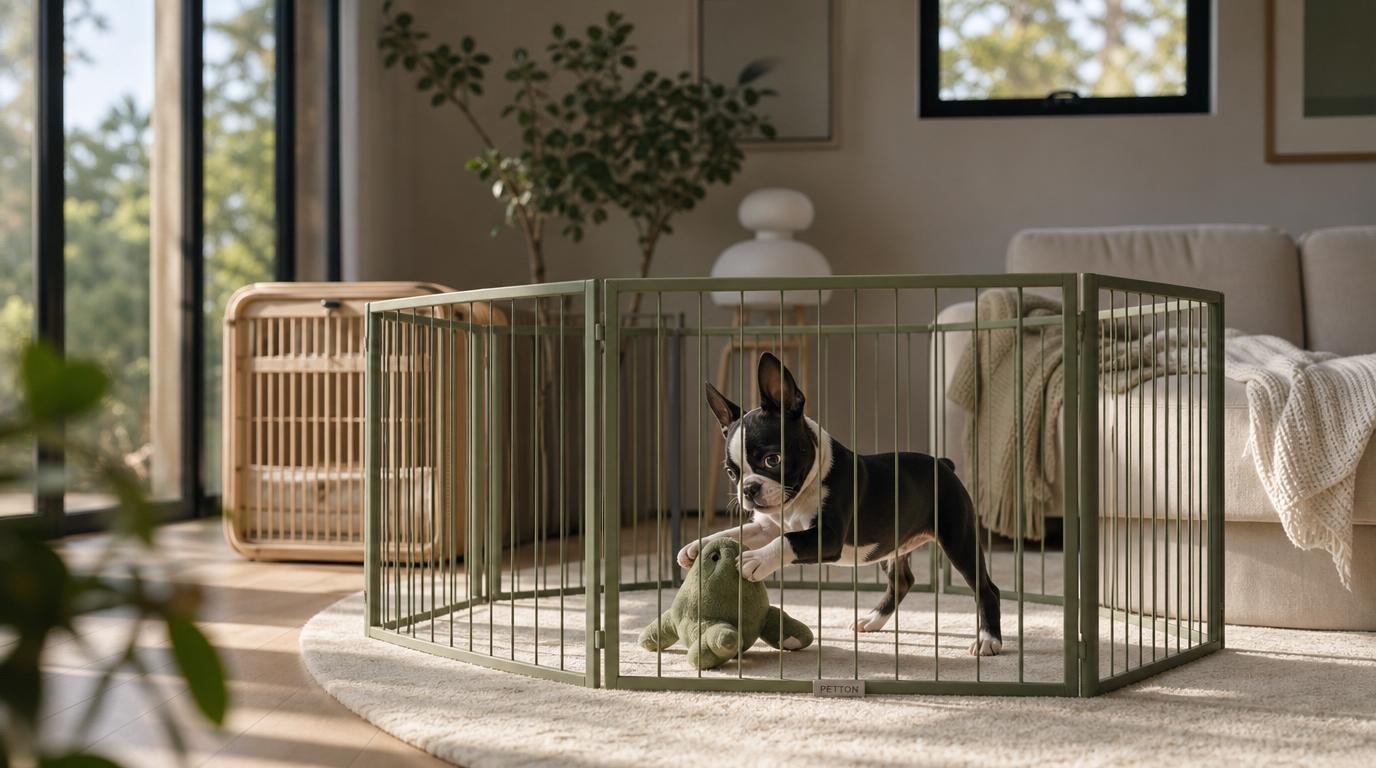
DOGCrate vs Playpen for Dogs: What’s Better for Aussie Owners?
Crate, playpen, or both? We compare the two so you choose the right safe space for your dog's age, size and temperament.

 DOG
DOGHow to Manage a Puppy Crying in the Crate
Those first crate nights are tough on everyone. Here's how to settle a crying puppy and build calm, confident crate habits.
 DOG
DOGSafely Crate Training a Puppy at Night: Full Schedule by Age
Night crate training tests every new owner. Here's a calm, age-by-age schedule to get your puppy sleeping soundly.