Dogs | Health | Lifestyle
Summer Camping with Dogs: How to Manage Heat, Wildlife, Food, and Fire Hazards
Aussie pet owners face unique challenges — from heatstroke risks to snake-infested campsites. In this guide, we’ll share practical tips to handle the heat, wildlife encounters, food safety, and fire hazards while camping. A bit of prep and know-how means you and your pup can enjoy the great outdoors without drama. We’ll also point you to expert resources like the RSPCA’s guide on how to protect your dog from heatstroke, so you can camp with confidence.
The Upshot
Summer camping with dogs is great — until heat, snakes or toads turn it ugly fast.
Plan around the heat: shade, water, and walks at sunrise or sunset rather than midday. Stay on top of tick prevention before you leave, lock the rubbish away from curious noses, and never let your dog roam the campsite when the fire’s still warm. Get those four right and the rest sorts itself out.
Best Dog Lifejacket

Outward Hound Dog Life Jacket by Splash
- Dual top rescue handles
- Secure neck float
- Calm-water flotation aid only
See the full Product Guide: Best Dog Lifejackets in Australia
Best Travel Cooling Mat

Hugs Pet Products Chillz Cooling Mat
- No ice or power needed
- Folds flat for travel
- Only mild cooling effect
See the full Product Guide: Best Cooling Mats for Dogs in Australia

Look, Aussie summers can be brutal. I love camping out bush with my family and Pepper (our rescue staffy mix), but the heat and wildlife here are no joke. When you’re camping with dogs in Queensland or anywhere in Australia, you’ve got to plan ahead. We’re talking scorching temperatures, curious critters (some of them deadly), and the usual camp chaos like barbecues and bonfires — all of which can spell trouble for your best mate if you’re not careful. Little things help a lot out there, like having a cooling mat or vest ready for the hottest parts of the day, and keeping up with flea and tick treatment before you even leave home. Read on for the full rundown so your pup stays safe and happy right through the trip.
Quick Takeaways
The five things worth remembering. Scroll across to read all five.
Shade and water
Set up a shaded rest spot before you do anything else, and carry more water than feels reasonable. Heatstroke moves fast in Aussie summer — closed tents and parked cars can become deadly in minutes.
Walk dawn or dusk
Midday sun cooks paw pads and exhausts dogs. Walk at sunrise or sunset when the air and ground are cooler — if you can’t hold your hand on the ground for five seconds, neither can your dog.
Keep them close
On-leash or within eyesight at all times. It keeps them out of snake habitat, stops them chasing kangaroos, and means you’ll spot ticks or odd behaviour before it becomes a vet emergency.
Lock food away
Store food and rubbish in sealed containers or the car overnight. Onions, chocolate, cooked bones and fatty BBQ scraps can poison or block a dog — and bin-raiding is a fast way to ruin a trip.
Fire and evacuation plan
Never leave a dog unattended near a campfire — singed fur and burnt paws happen quick. Check fire danger ratings daily, and know how you’d evacuate with your dog if a bushfire moves in.
Managing the heat and hydration
Australian summers are stinking hot — Pepper starts panting the minute it hits 30°C. When camping, always set up a cool, shaded spot for your dog. Carry more water than you think you need; I bring multiple large water bowls and refill them throughout the day (one spilled bowl and an empty water tank is a nightmare scenario).
Avoid physical activity in the middle of the day. We walk Pepper at sunrise and sunset when the air and ground are cooler — a good rule is if the ground is too hot for your hand after 5 seconds, it’s too hot for your dog’s paws. And yes, dogs can get sunburnt too, especially those with pink noses or thin coats, so consider pet-safe sunscreen and protective gear for long beach days.
Know the signs of overheating. Excessive panting, drooling and searching for shade are early red flags that your dog is struggling. I’ve seen Pepper go from playful to listless in minutes when she overheated. Give your dog regular rest breaks in a ventilated area — even set up a battery-powered fan or a damp towel for them to lie on.
Never leave your dog inside a closed tent or car on a warm day, not even for “just a minute.” Temperatures inside vehicles or tents skyrocket and can lead to fatal heatstroke in no time. If your dog does show heat stress symptoms, act fast: get them into the shade, offer small drinks of cool water, and start cooling their body with wet towels (focus on belly, paws, armpits). Always keep the nearest vet’s location in mind when camping, just in case.
| Sign | What to do |
|---|---|
| Heavy panting and drooling | Early overheating signs — move your dog to shade immediately and provide cool (not ice-cold) water to drink. |
| Staggering or weakness | Serious heat stress — soak their fur with cool water, fan them if possible, and begin cooling before transporting to a vet ASAP. |
| Collapse or seizures | Heatstroke emergency — rapidly cool the dog with water and wet towels and get veterinary help immediately (minutes count). |
Wildlife hazards at camp
Camping in Australia often means sharing the space with wildlife — some of which can pose a real threat to dogs. Snakes are a big one in summer. Curious dogs like Pepper might stick their nose where it doesn’t belong, and in snake country that’s a recipe for disaster. Keep your pup on a leash or within close range, especially at dawn and dusk when snakes are active. If you’re hiking, stay on paths and don’t let your dog rummage in undergrowth, hollow logs or rocky crevices. In known snake habitats I’ve even attached a bell to Pepper’s collar so snakes feel the vibrations and slither off.
Despite all precautions, snake bites can still happen — and they’re life-threatening. If a snake strikes, do not try any bush remedies (no sucking venom or cutting the wound). Keep your dog as still and calm as possible to slow venom spread, carry them if you can, and seek a vet immediately. Time is critical (experts say you only have a small window to save your pet), so having a plan to reach the nearest vet is essential. If the bite is on a limb, you can apply a firm pressure bandage over and above the bite site while heading to help. And never attempt to catch or kill the snake — that just adds another patient (you) to the emergency room.
Ticks are another invisible danger, especially in bushy or coastal camp spots. Paralysis ticks in eastern Australia can latch onto your dog and inject toxin that causes paralysis. Use a vet-recommended tick preventative (yes, it’s an extra ongoing cost, but absolutely worth it). Each evening at camp, do a thorough tick check — run your fingers through your dog’s coat, and inspect under the collar, between toes, inside ears, and around the gums. I make it a game with Pepper, a sort of massage she happily tolerates. If you find a tick, remove it promptly with tweezers or a tick removal tool, gripping as close to the skin as possible.
After removal, keep an eye on your dog for any odd symptoms. Early signs of tick paralysis can be subtle — things like a wobbly walk, weakness in the hind legs, or a change in your dog’s bark. If you notice any of these, even if you haven’t spotted a tick, get to a vet pronto.
Key Insight
An adult cane toad has enough poison to kill a medium-sized dog in as little as 15 minutes. Up north (QLD and NT) on summer nights, treat any mouthing of a toad as an emergency — rinse the mouth and drive.
Don’t forget the cane toads up north either. In Queensland and the NT, these ugly critters are everywhere on summer nights. Cane toads are extremely toxic — dogs often lick or mouth toads out of curiosity, which releases the toxin. If you suspect your dog tangled with a cane toad, immediately rinse out their mouth with water (tilt their head downwards so you don’t make them swallow more), and get to a vet without delay. The same goes for spider bites or stings from bees or bull ants: monitor your dog and seek veterinary advice if you see swelling, breathing issues, or severe reactions.
A final wildlife tip: respect the local fauna. Keeping your dog under control isn’t just for their safety — it protects native wildlife too. Many national parks across Australia actually ban dogs entirely to protect native animals (for good reason, as Parks Victoria explains). Always check if dogs are allowed where you’re going. Even in dog-permitted areas, use a leash and prevent your dog from chasing or harassing wildlife. It’s safer for everyone. Plus, you won’t have to deal with the guilt (and fines) of your pup disturbing a nesting bird or getting quilled by an echidna.
Food and rubbish hazards
It’s not a true-blue camping trip without a barbie or campfire cook-up, but you need to be mindful of food hazards for dogs. First up: human foods. A lot of what we eat at camp isn’t safe for dogs. Onions from your sausage sizzle, chocolate in your marshmallow s’mores, leftover cooked bones from the BBQ — all these are dangerous for dogs. Onions (and garlic) can cause anaemia in dogs, chocolate can poison them, and cooked bones can splinter, causing choking or internal injuries. I never give Pepper barbecue scraps unless I’m absolutely sure they’re dog-friendly (plain cooked meat with no bones or seasoning). Even then, I keep it minimal — sudden rich or fatty foods can trigger pancreatitis (trust me, you don’t want to spend your holiday at an emergency vet because your dog scoffed a tray of sausages).
Store your food and rubbish securely. Dogs have a knack for raiding tents and bins if they smell something yummy. On a hot day, garbage can turn toxic quickly (imagine your pup eating old, fly-covered food… not pretty). Use a sturdy cooler or sealed box for food storage and have a lidded bin or bag that can be hung out of reach for rubbish. This not only stops your dog from eating something nasty, but also deters wildlife from coming into your camp looking for a free feed. I learned this after finding Pepper happily licking out a nearly-empty baked beans can one night — now I double-bag all food waste and stash it in the car overnight.
Think about your dog’s own meals too. Keep their kibble or dog food in airtight containers so it doesn’t spoil or get invaded by ants. Bring plenty of your dog’s regular food so you’re not tempted to substitute with leftovers. Sudden diet changes, especially junk food or unfamiliar scraps, can lead to vomiting, diarrhoea, or worse. Clean up any spilled food quickly — bits of meat or chips on the ground can attract ants, wasps, or larger unwelcome visitors (hello goannas) that might confront your dog. Bottom line: stick to your dog’s normal diet as much as possible while camping, and save the treats for home where you have easy access to a hose and mop if things go sideways. For a handy reference, the Victorian Agriculture department keeps a human foods to avoid list that covers everything from chocolate to xylitol sweetener.
Fire safety for dogs
Campfires and summer camping go hand-in-hand, but they introduce a whole set of hazards for dogs.
Open flames, hot coals, and even camp cookers can cause burns or injuries. Never assume your dog will naturally avoid the fire — I’ve seen excitable pups get way too close. Pepper once singed the hair on her tail because she wagged a bit too enthusiastically near the firepit. Now, I always set up her bed or tie-out well away from the fire and cooking area.
If we’re toasting marshmallows or grilling steaks, I keep Pepper on a short lead by my side so she doesn’t sneak up to investigate (or steal a sausage when I’m not looking). Be cautious with campfire cooking utensils and hot plates. A curious dog can easily burn their mouth or paw by touching a scorching cast-iron pan or walking over hot charcoal buried in sand.
Dispose of hot coals responsibly — douse them with water, and make sure your dog isn’t going to step on them. I also check the ground around the fire the next morning before letting Pepper roam, in case there are any smouldering bits left.
Summer in Australia also means bushfire season. When camping, stay aware of fire danger ratings and local regulations. If there’s a total fire ban, respect it — that means no campfire, period (and you’ll need to plan dog-safe activities without the nightly fire). Always have an emergency plan: how would you evacuate with your dog if a bushfire threatened the area? Keep a leash and your dog’s essentials (water, bowl, any medications) packed and easily grab-able.
Many evacuation shelters don’t allow pets (except maybe service dogs), so have a backup plan like a friend’s place or a pet-friendly motel identified. In extreme heat or high fire risk days, it might even be wiser to reconsider camping with your dog. Safety first. I’d rather cut a trip short than put Pepper in danger from a fast-approaching grass fire or extreme heat wave.
FAQ
How can I keep my dog cool while camping in summer?
Prioritise shade and water. Set up your tent or awning to create a cool, shaded rest spot for your dog. Bring along extra tarps or beach umbrellas if natural shade is scarce. Always have plenty of fresh drinking water available — I carry multiple collapsible bowls so there’s water at the tent, by the camp kitchen, and wherever we lounge. On very hot days, wet a towel for your dog to lie on or use a cooling mat if you have one. Some people even fill a kid’s paddling pool for dogs to splash in. Also, adjust your routine: exercise your dog in the early morning and late evening when it’s cooler, and let them chill out (literally) during the heat of midday. Never leave your dog in a parked car, and avoid confining them in small spaces like tents during daytime. Essentially, think of your dog as another family member — if you’re feeling the heat, they probably are too (often even more, since they can’t sweat like we do).
What should I do if my dog is bitten by a snake while camping?
Stay calm but act fast. If you suspect a snake bite (for example, your dog yelps and then becomes weak or collapses suddenly), keep your dog as still as possible. Inhibit their movement — carry them to the car if you can — to slow the spread of venom. If the bite is on a limb, wrap a firm bandage over the bite area and up the limb (like you would for a sprain). Do not wash the wound or try to suck out venom — those methods don’t work. Get to a vet immediately — call ahead if possible to alert them. Time is absolutely critical in snake bite cases; even a short delay can be deadly. Do not attempt to catch or kill the snake for identification — it’s too risky. If you can safely take a photo from a distance, fine, but your priority is getting your dog to professional care. Many dogs survive snake bites if treated with antivenom in time, so rapid action gives the best chance.
What human foods are dangerous for dogs on a camping trip?
Several common foods can make your dog very sick (or worse). Avoid giving your dog anything containing onions, garlic, chives, or leeks — these can damage their red blood cells and cause anaemia. Chocolate is a well-known toxin to dogs (the darker the chocolate, the more dangerous). Grapes and sultanas (and by extension, things like trail mix or muesli bars with raisins) can cause kidney failure in some dogs. Also skip the fatty and salty snacks: too much bacon, sausage or salty chips can lead to pancreatitis or sodium poisoning. Never give cooked bones — they can splinter internally. Even corn cobs are a blockage hazard if a dog tries to swallow them. Basically, stick to your dog’s usual food and treats while camping. If you want to share a bit of your camp meal, make sure it’s a dog-safe item (plain meat with no seasoning or bones, a bit of carrot or apple, etc.). When in doubt, don’t risk it.
How do I protect my dog from ticks when camping?
Prevention is your best friend here. Before you go camping (especially in coastal or bush areas known for paralysis ticks), ensure your dog is on a tick preventative. This could be a chewable tablet, a spot-on treatment, or a tick collar — talk to your vet about what’s most effective for the region. Keep in mind, these are ongoing costs and need regular re-dosing (missing a dose can leave your dog vulnerable). While camping, do daily tick checks on your dog. Run your hands over their body methodically — feel for any small lumps or ticks crawling. Don’t forget hidden spots like under the collar, inside ears, between toes, under the tail, and around the mouth and gums. If you find an attached tick, remove it straight away using fine-tipped tweezers or a tick removal tool. Grasp the tick as close to the skin as possible and pull it out steadily — ensure the head comes out. After removal, clean the area and keep an eye on your pup for signs of illness. Early signs of tick paralysis include weakness in the hind legs, a wobbly gait, retching or a cough, or even a change in their bark. If you notice any of these or your dog seems off in the days after being in tick territory, get them to a vet without delay. It’s far better to have a vet check and it be a false alarm than to catch tick paralysis too late.
Final thoughts
Camping with a dog is one of the better things you can do as an Aussie pet owner — Pepper genuinely lives for it. But summer out here punishes anyone who turns up underprepared. Pack twice the water you think you need, lock in tick prevention well before you leave, and never let your dog out of sight when snakes, toads or a campfire are within reach.
If you remember nothing else: shade in the day, leash near the fire, and a clean campsite at night. That covers most of what goes wrong. And know where the nearest vet is before you settle in — out bush, that information matters more than the weather forecast.
We Think You’ll Also Like These Guides
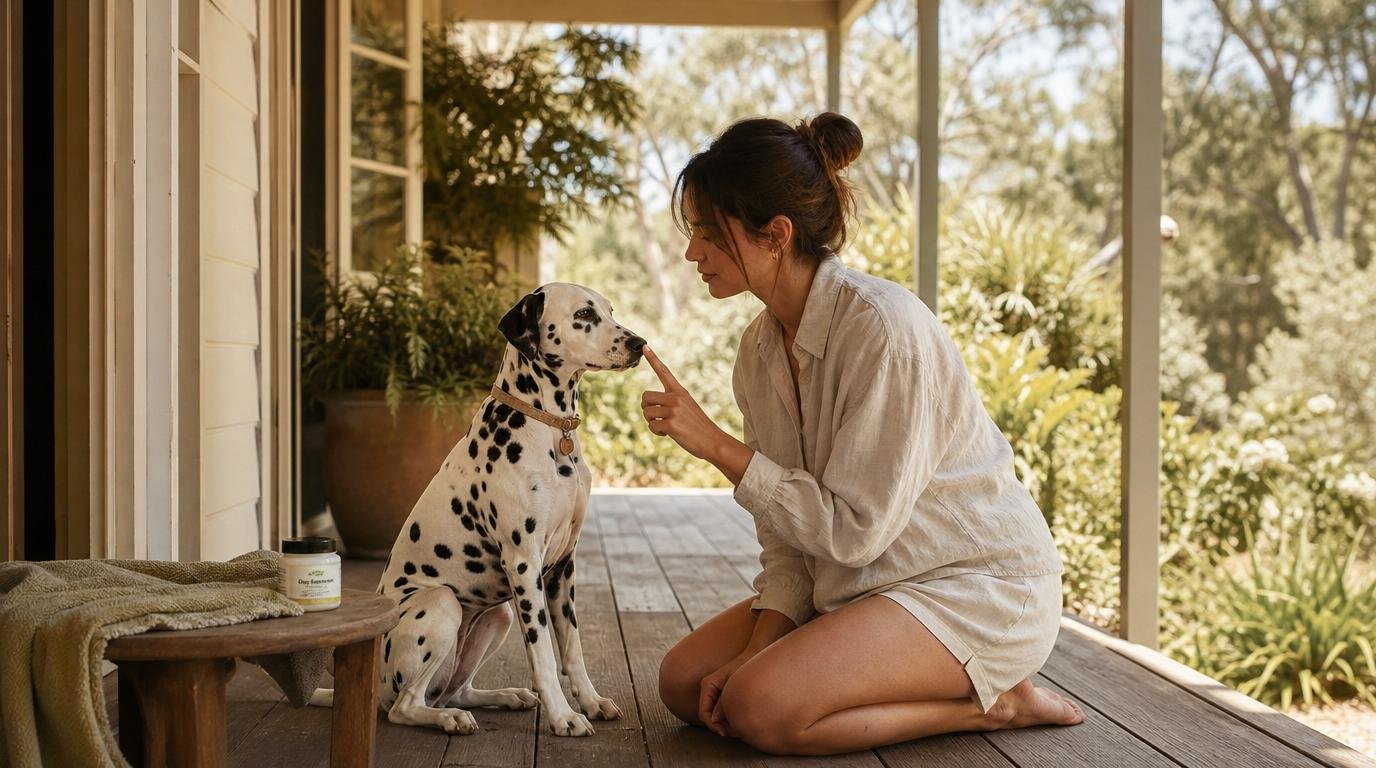 DOG
DOGDog Sunburns: How to Protect Dogs Under the Aussie Sun in 2026
Yes, dogs get sunburnt — and it can turn serious. Here's how to protect thin coats and pink skin under the harsh Aussie sun.

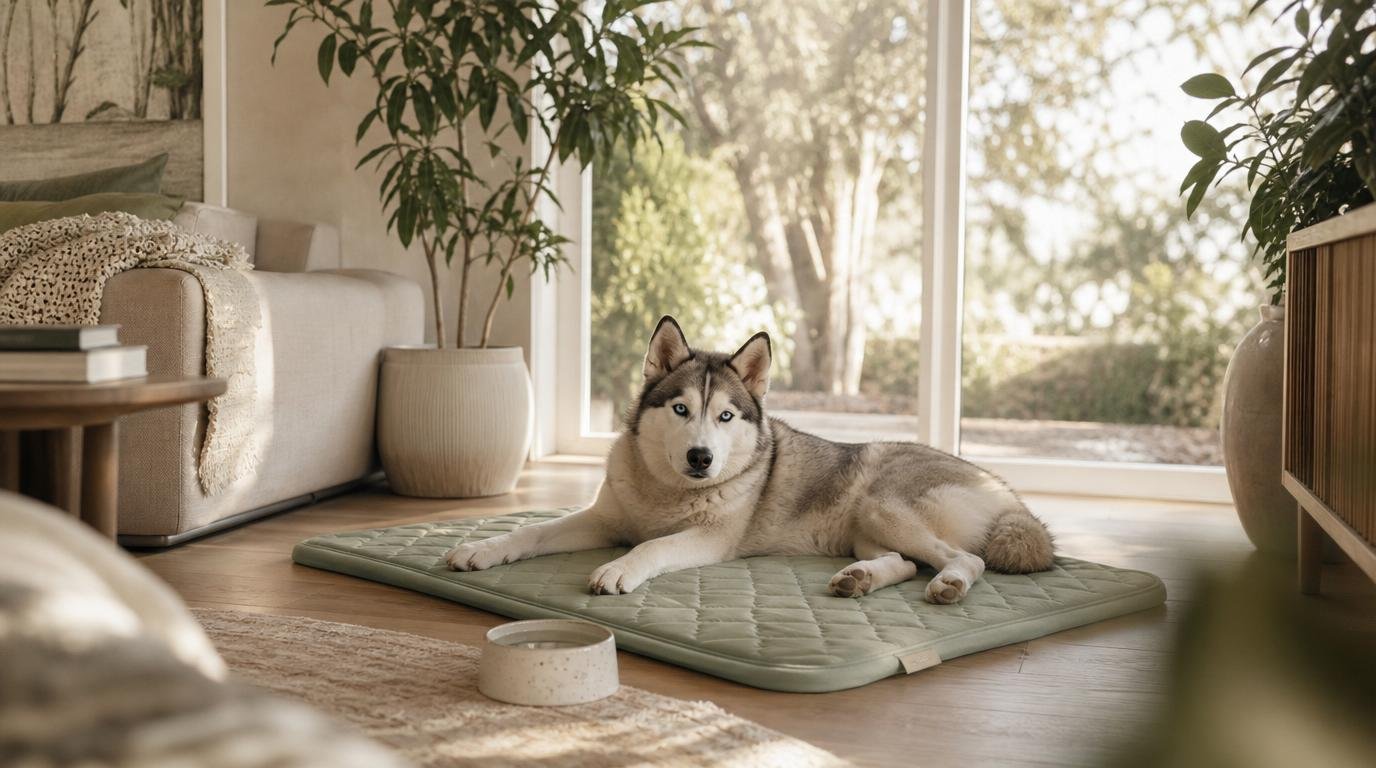 DOG
DOGBest Cooling Mats for Dogs in Australia: Ultimate Guide
When the heat hits, a cooling mat gives your dog a place to chill. We found the best for safe, lasting relief through summer.

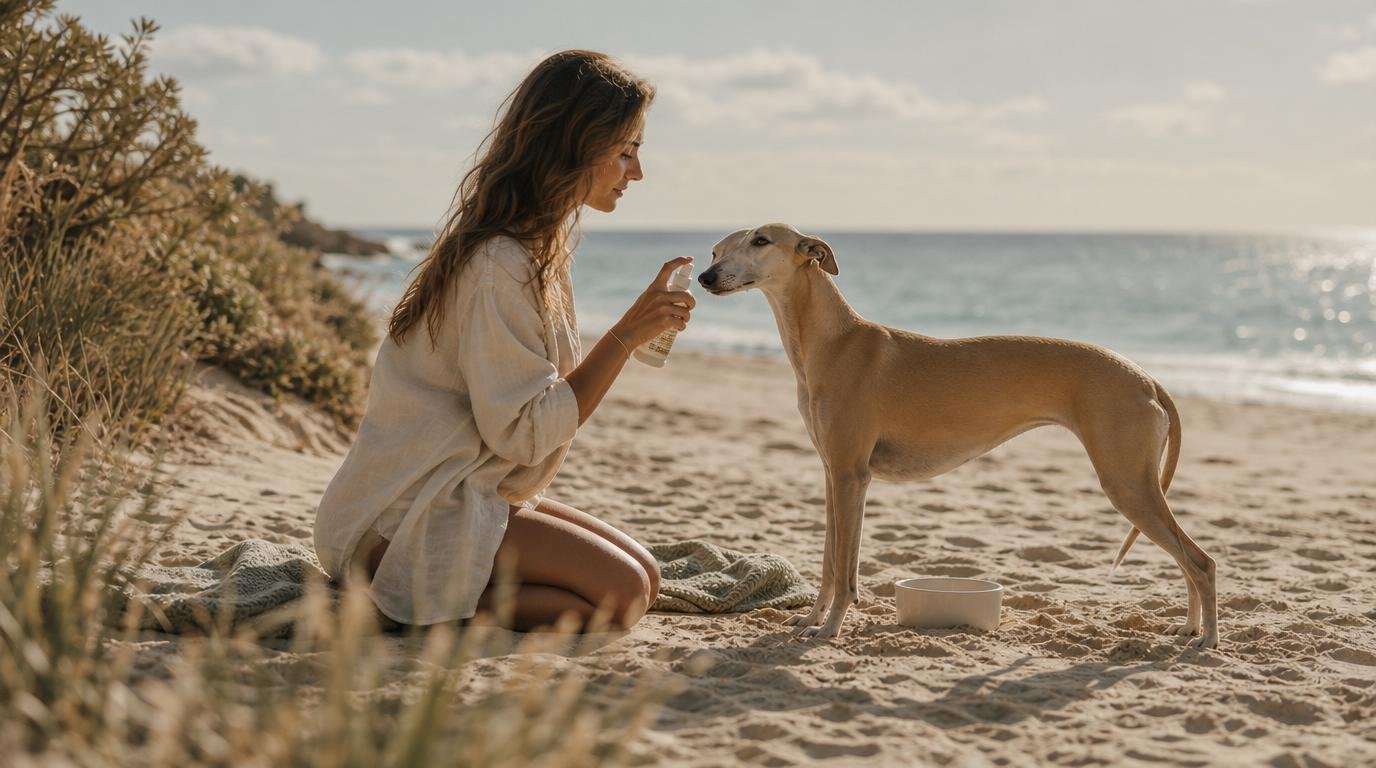 DOG
DOGYour Ultimate Guide to the Best Dog Sunscreen in Australia for 2026
Pink noses and thin coats burn fast under the Aussie sun. We found the safest dog-friendly sunscreens to keep them protected.