Dogs | Food | Health
How Much to Feed Your Dog: The Ultimate Guide
Ever looked at your dog’s empty bowl and wondered if they’re still hungry, or if you’ve overdone it? It’s harder to judge than it sounds, and knowing how much to feed your dog is one of the highest-leverage things you can get right — it shapes everything from coat quality and energy to joint health and lifespan. Bruce, my Golden Retriever, leads an active life (think beach runs and bushwalks), and our climate plays a role in his appetite too. The goal is a dog who’s fit and fuelled without slowly drifting into a four-legged sausage roll — and the way you get there is body condition, not the number on the bag.
The Upshot
Right portion is what your dog’s body says it is — not what the bag does.
Start with the food packaging’s feeding guide as a baseline, then adjust to your actual dog. Body condition matters more than the chart: you should feel ribs under a thin layer, see a waist from above, and a tummy tuck from the side. Measure every meal, count treats in the daily total, and reassess monthly.
Best Slow Feeder

Outward Hound Fun Slow Feeder Dog Bowl
- Non-slip base, 4-cup capacity
- Slows down voracious eaters
- Plastic — hand wash recommended
See the full Product Guide: Best Slow Feeders for Dogs in Australia
Best Automatic Feeder

Closer Pets C200 Automatic Dog Feeder
- Compatible with wet or dry food
- Includes ice pack for freshness
- Only holds two meal portions
See the full Product Guide: Best Automatic Dog Feeders in Australia

Understanding how much to feed your dog is one of the simplest-looking questions in dog ownership that’s also one of the easiest to get wrong. Underfeeding leaves dogs undernourished and short on energy; overfeeding (the more common mistake) leads to obesity, joint problems and a shorter life. According to the RSPCA dog feeding guide, the portion a dog needs depends on size, breed, age and activity level — and the only way to get it right is to use the bag’s chart as a starting point, then adjust from there based on your actual dog’s body and behaviour.
This guide breaks it down: the body-condition check you can do at home in 30 seconds, a 5-step framework for working out portion size, a feeding guide by dog type, and the warning signs that mean it’s time to ring the vet. Plus the two products that make portion-controlled feeding actually sustainable in a busy household.
Quick Takeaways
The five things worth remembering. Scroll across to read all five.
Overfeeding Is the Risk
Nearly half of Australian dogs are overweight or obese. Carrying extra kilos shortens lifespan, strains joints, and worsens arthritis. Underfeeding is a problem too — but overfeeding is by far the more common one.
Body Condition First
Run your hands down your dog’s sides — you should feel ribs without pressing hard. Look down from above and you want to see a visible waist tuck behind the ribs. Both checks beat the bag’s number.
Life Stage Matters
Puppies need small frequent meals (3-4 a day under six months). Adult dogs do best on two meals daily. Seniors and less active dogs usually need 10-20% fewer calories than they did at peak.
Bag First, Then Adjust
The feeding chart on the bag is a starting point, not gospel. Use it for two weeks, then check body condition and tweak portions up or down by 10% increments until weight stabilises where you want it.
Treats Count Toward Total
Treats and table scraps should be less than 10% of daily calories. If your dog is getting a lot of training treats, dial back the meal portion to match — otherwise you’re effectively feeding two dinners.
Why feeding the right amount matters
Most of us have been guilty of sneaking an extra scoop into the bowl because those pleading puppy-dog eyes are hard to resist. Moderation matters more than most owners realise — and the consequences of getting it wrong are slow but cumulative. Carrying extra kilos puts a strain on joints, raises the risk of diabetes and heart problems, and can shorten a dog’s life by a couple of years on average.
Key Insight
Nearly half of Australian pet dogs are overweight or obese. The single biggest cause isn’t a “naughty” dog or an unusually big appetite — it’s owners following the bag’s portion advice without adjusting it to their actual dog, and not counting treats in the daily total.
On the flip side, underfeeding means your dog might miss out on vital nutrients and energy — growing puppies in particular need enough fuel to develop properly (the RSPCA puppy feeding guide is a useful sense-check). Dog food isn’t cheap either, so getting portions right saves you money long-term. Overfeeding doesn’t only expand your dog’s waistline; it inflates the food bill and the eventual vet bills.
How to work out the right portion size
Every dog is an individual, so there’s no single “right” amount that works for all dogs of a given weight. A working Kelpie rounding up cattle all day will burn more calories than a Maltese who prefers naps on the couch. Use the framework below to get to a sensible starting portion, then let body condition fine-tune it from there.
-
Weigh your dog accurately
Use a vet scale if you can (most clinics will let you pop in for a free weigh-in), or weigh yourself first and then again holding your dog — the difference is the dog. Don’t guess; estimates by eye are typically off by 2-5 kg.
-
Look at the bag’s feeding chart
Find your dog’s current weight on the food packaging’s chart. This gives the manufacturer’s recommended daily total in grams or cups. Use this as your baseline, not your final answer.
-
Adjust for life stage and activity
Puppies typically eat more relative to body weight than adults. Seniors and inactive dogs usually need 10-20% less. Working or highly active dogs may need 1.5-2x the chart amount. Adjust the baseline up or down accordingly.
-
Measure every meal
Use a proper kitchen scale or measuring cup, not a “heaped scoop”. Half a cup should mean the same amount every time — eyeballing is how the extra kilos sneak in. Split the daily total across the number of meals your dog needs (puppies 3-4, adults 2).
-
Reassess in 2-4 weeks
Do the body-condition check (ribs, waist, tummy tuck). If your dog is gaining weight you don’t want, drop the portion by 10%. If they look bony, add 10%. Adjust slowly — gradual changes are easier to sustain.
The table below gives a general guide by dog type. Use it as a reference, but always pair it with the body-condition check on your specific dog.
| Dog type | Feeding guideline |
|---|---|
| Puppies | Feed a puppy-formula food 3-4 times per day under six months, dropping to 3 meals from six months and 2 meals from around 12 months. Puppies have high energy needs for growth, so they eat more relative to body weight than adults. Don’t overfeed — excess weight in a growing puppy can stress developing joints permanently. |
| Adult dogs | Typically feed twice daily (morning and evening). Portion size depends on weight and activity — follow the food’s guideline for your dog’s weight as a starting point, then adjust based on body condition. Many owners feed a base of quality dry food with a topper of wet food for variety. |
| Senior dogs | Older dogs are usually less active and need fewer calories. Switch to a senior formula or cut back the portion by about 20% from their younger adult days to prevent weight gain. Feed at least twice daily to accommodate any reduced digestion capacity. |
| Pregnant or nursing dogs | Pregnant mums and lactating females need a lot more fuel. In the last few weeks of pregnancy, increase her food intake by roughly 30-50% (many owners start feeding a high-quality puppy food at this stage for the extra nutrients). A nursing mother may need 2-4x her normal portion. |
| Overweight dogs | Feed for the ideal weight, not the current weight. Measure portions accurately with a scale or cup — no “heaped” scoops. Cut back by 10-20% from what you were feeding, count every treat, and aim for slow weight loss (1-2% of body weight per week max). Your vet may suggest a vet-prescribed weight-loss food for severe cases. |
| Active/working dogs | Highly active dogs (working dogs, agility competitors, running partners) burn more calories and often need extra food — 1.5x or even 2x the amount a typical pet dog of the same size eats. A calorie-dense performance formula is usually a better fit than just feeding more of a standard adult food. |
Tips for measuring and adjusting meals
Once you have an initial feeding plan, consistency is your friend. Measure with a standard cup or kitchen scale — “half a cup” should mean the same amount every time. Eyeballing it is how a heavy hand adds up to a kilo of extra weight over a year. Watch body condition over time and adjust portions in 10% increments; don’t fixate on the grams or cups alone, pay attention to how your dog actually looks and feels. If you’re switching to a different food entirely (not just adjusting the portion), transition gradually over 7-10 days to avoid stomach upset.
Keep track of changes. If your dog is on the chubby side and you’re reducing portions, weigh them monthly (vet clinics often have free walk-in scales). Use the Agriculture Victoria dog condition score chart to score your dog from 1-9 if you want a more objective check. Adjust slowly — aim to lose 1-2% of body weight per week, not more. For households with multiple pets, feed separately to make sure one greedy guts isn’t stealing another’s dinner. Luna, my tabby cat, will happily polish off Bruce’s kibble if I’m not watching — opportunistic little thing.
When to talk to a vet
Most feeding adjustments can be made at home with a kitchen scale and a few weeks of patience. But weight changes that come on suddenly, or that persist despite measured feeding, sometimes signal an underlying health problem that needs investigation.
Conditions like thyroid problems, diabetes and Cushing’s disease all show up first as unexplained weight changes. Most are very treatable when caught early — the trick is noticing the change before it becomes severe. The body-condition check every couple of weeks is the cheapest early-warning system you’ll find.
FAQ
How can I tell if I’m feeding my dog the right amount?
The best way is to monitor your dog’s body condition. A healthy dog at the correct weight will have a defined waist when viewed from above and a slight tummy tuck when viewed from the side. You should be able to feel their ribs under the skin with light pressure, but the ribs shouldn’t be dramatically visible (for most breeds). If your dog starts to get a bit round (no waist, ribs hard to find), you’re probably overfeeding. If they’re looking bony or lacking energy, you might need to feed more. Body condition is more reliable than any number on a bag — bag guidelines are averages, your dog is an individual. Run the hand check weekly and adjust gradually based on what you feel.
How often should I feed my dog?
This depends on age and individual needs, but as a rule: puppies need to be fed more often than adults, because they have smaller stomachs and high energy needs. Young puppies (under 3-4 months) often eat 4 times a day, then you can gradually reduce to 3 meals and eventually 2 meals as they approach adulthood. Adult dogs should be fed at least twice a day (the standard morning and evening routine). In fact, the RSPCA recommends feeding adult dogs at least twice per day to help prevent bloat (a serious condition where the stomach distends from eating too much at once, especially in deep-chested breeds). Free-feeding all day is rarely the answer — it makes portion control nearly impossible and hides changes in appetite that often signal health issues.
Should I follow the dog food label’s feeding guide exactly?
Not exactly — those feeding charts are a useful starting point, but they aren’t gospel. Think of the label’s recommendation as an average: your dog might need a little more or a little less. For instance, if the bag says 2 cups a day for a dog of your pet’s weight, that’s a ballpark. If your dog is very active or seems to be losing weight on that amount, you may need to increase it. If they’re gaining weight or leaving food in the bowl, cut back a bit. Always adjust gradually — say, 1/4 cup more or less at a time over a few weeks rather than overnight. Body condition (ribs, waist, tummy tuck) is the truer guide than the chart.
My dog acts like he’s still hungry — should I feed more?
Dogs are champions at pretending to be starved, even right after they’ve polished off dinner. Many dogs (Labradors, we’re looking at you) have big appetites and will beg or scrounge for more food out of habit or for attention, not true hunger. If you’ve calculated a proper portion and your dog is in a healthy weight range, stick to your feeding plan rather than giving in to begging. Otherwise, you’ll end up with an overweight dog in no time. To help a food-crazy dog feel satisfied, you can try a slow feeder bowl (which makes mealtime last longer), split the daily portion into three or four small meals, or add a low-calorie filler like a spoonful of pumpkin puree to give the impression of more food.
Do treats count toward my dog’s daily food intake?
Yes — and this is where most overfeeding sneaks in. Treats, training rewards, chew toys filled with peanut butter, the half-piece of toast they hovered up off the floor: all of it counts toward the daily calorie total. As a rule of thumb, treats should make up less than 10% of your dog’s daily intake. If you’re doing a lot of training with high-value treats (which is common with puppies and reactive dogs), dial back the meal portion to compensate — otherwise you’re effectively serving two dinners. The classic mistake is sticking rigidly to the bag’s meal portion AND adding treats on top; that’s how a healthy dog becomes overweight without anyone noticing.
Final thoughts
Finding the right feeding balance takes a little trial and error, but it’s worth it. By paying attention to your dog’s body condition and adjusting in small steps, you’ll dial in a routine that keeps them at a healthy weight and full of energy. Guidelines are just starting points — it’s expected that you’ll tweak portions for your individual dog over time. When in doubt, your vet can do a proper body condition score and give you a target range tailored to your dog.
A healthy diet (in the right amount) is one of the best gifts you can give your dog. It means more zoomies, longer beach walks and more years together. Bruce gets weighed every couple of months at our local vet’s free walk-in scales, and the small adjustments over time have kept him exactly where he should be. Keep measuring those meals and keep watching that waistline — your dog might not say thank you for fewer treats, but their wagging tail and long-term health speak volumes.
We Think You’ll Also Like These Guides
 DOG
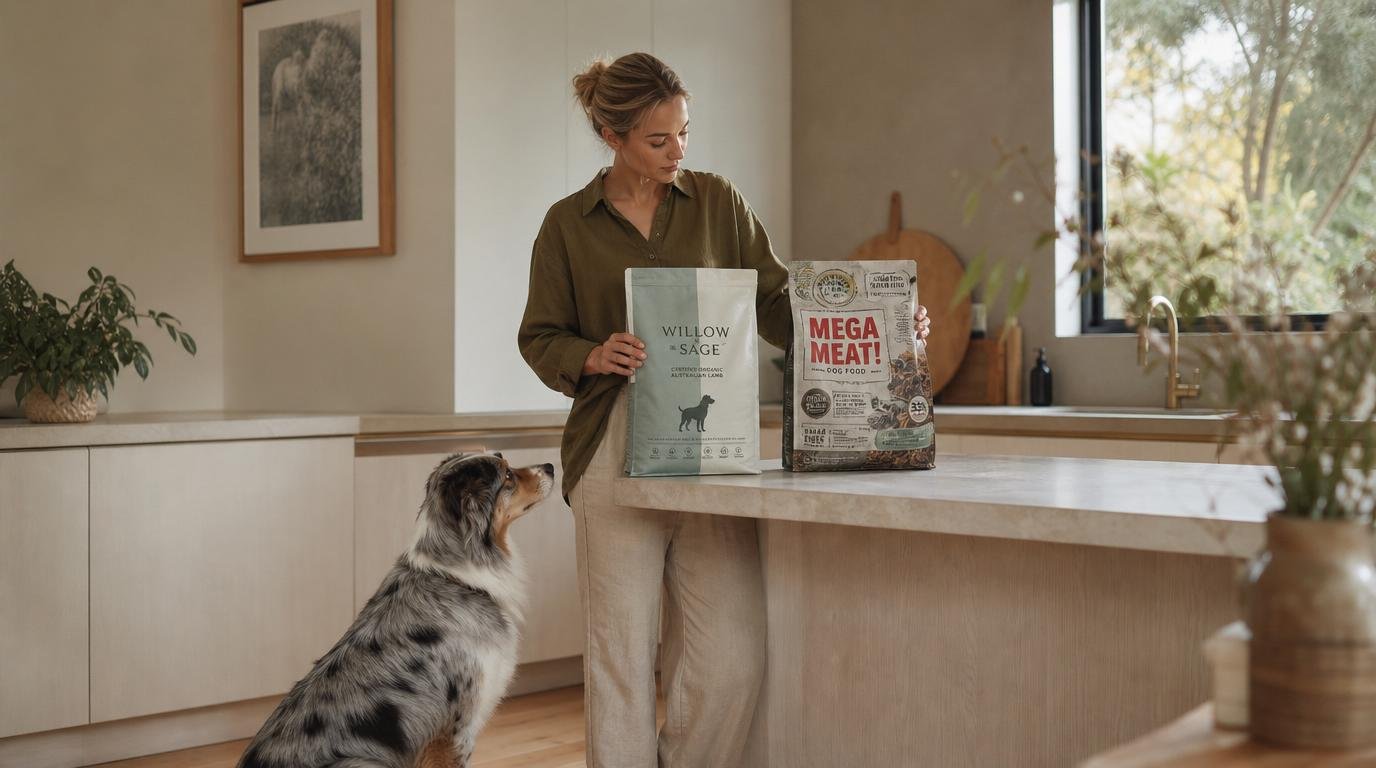
DOGBest Dry Dog Food in Australia 2026: Ultimate Vet-approved, Pet-loved Picks
With a hundred bags on the shelf, choosing is hard. We cut through the marketing to the dry foods worth feeding, vet-approved.

 DOG
DOGDog Food Ingredient Red Flags You Need To Avoid
That premium label can hide some nasty fillers. Learn the ingredient red flags to spot — and skip — on any dog food.
 DOG
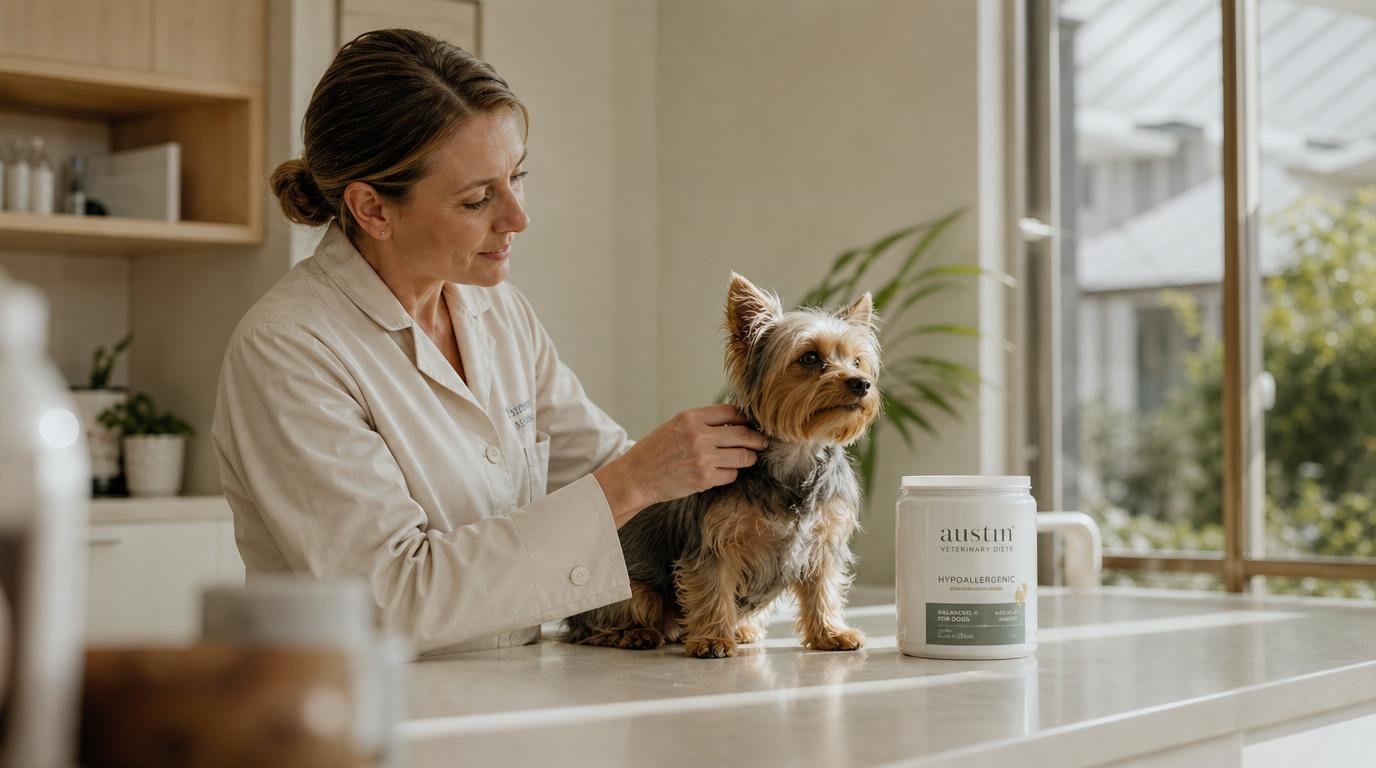
DOGVet-Prescribed Dog Food in Australia: How to Choose the Right One for Your Pup
Prescription diets aren't just pricey kibble — they're treatment. Here's how to choose the right one for your dog's condition.