Dogs | Food
Best Puppy Foods in Australia – Our 2026 Picks
Bringing a new pup home in Australia means finding tucker that keeps them happy and healthy from day one. Whether you’ve got a tiny Terrier in tropical Cairns or a cattle dog pup on a cool Tassie farm, choosing the best puppy food Australia style is a big part of caring for your little mate. As I (proud mum to Bruce the Golden) would say, a well-fed pup is a happy pup — and it sure saves your shoes from becoming chew toys! Now, let’s tuck in to our picks for best puppy foods in Australia.
Best Overall

Hill’s Science Diet Puppy Chicken Meal & Barley
- Vet-trusted, science-backed formula
- DHA for brain development
- Single chicken protein only
Best Budget

OPTIMUM Puppy All Breed Chicken
- Strong value in 4-pack format
- Complete all-breed nutrition
- Kibble too large for tiny breeds
Best for Small Breeds

Royal Canin Mini Puppy Junior
- Tiny kibble for small jaws
- Digestive and immune support
- Premium price, small breeds only
Best Grain-free
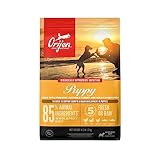
Orijen Puppy Grain Free
- 85% animal ingredients, free-run
- No grains, potatoes, or legumes
- Premium price, rich formula

We’ve compared dozens of puppy foods available across Australia to find options that deliver balanced nutrition and suit our climate and lifestyles. We focused on ingredient quality, clear labelling, and easy availability from major Aussie retailers — plus kibble size and digestibility for small-breed pups, since tiny jaws and sensitive tummies are common early on. As the RSPCA recommends, feed a high-quality balanced puppy food matched to your dog’s age and size.
What to look for in a puppy food
Five things that separate a properly formulated puppy diet from a generic adult food with a “puppy” label.
Complete and balanced label
Check the food is labelled as a complete and balanced diet for puppies. That label confirms it meets the nutritional requirements for growth — anything less is a supplement, not a meal.
Match breed size
Small breeds want calorie-dense kibble in tiny pieces; large breeds need controlled energy and calcium to protect developing joints. Generic adult-style portions and ingredients don’t translate to growing pups.
Quality protein first
Look for a named animal protein (chicken, beef, fish) at the top of the ingredient list. Learn the red-flag ingredients to avoid, and skip vague terms like “meat by-products”.
Mind grain-free hype
Grain-free sounds appealing but isn’t automatically better. Plenty of pups thrive on tried-and-tested formulas with rice or oats — and recent research has flagged heart concerns in some grain-free diets.
Practicality matters
Consider how to read the label, kibble size, storage in our humid climate, and ongoing cost. The best puppy food is one you can reliably get and afford — consistency keeps tiny tummies happy.
At a glance
Our top four picks compared — specs, prices, and our one-line take on each.
| Rank | Product | Best for | Key feature | Approx. price | Check price link |
|---|---|---|---|---|---|
| Best Overall |  | Puppy owners wanting vet-recommended growth nutrition | Chicken meal lead with DHA and precise calcium-phosphorous | ~$107 AUD (7.03 kg) | Check price |
| Best Budget |  | Multi-dog households watching ongoing feeding cost | 4-pack format with chicken protein and omega 3 & 6 | ~$92 AUD (3 kg × 4) | Check price |
| Best for Small Breeds |  | Small-breed pups under 10 kg adult weight | Tiny kibble with prebiotic and antioxidant complex | ~$69 AUD (4 kg) | Check price |
| Best Grain-free |  | Owners committed to grain-free, high-animal-protein feeding | 85% animal ingredients with no grains, potatoes or legumes | ~$115 AUD (2 kg) | Check price |
Our picks in detail
What we love, what to watch out for, and who each pick really suits.
Best Overall: Hill’s Science Diet Puppy Chicken Meal & Barley
Bottom line — vet-trusted, science-backed puppy kibble with DHA and a precise calcium-phosphorous ratio for healthy bone, brain, and eye development from 8 weeks.
Hill’s Science Diet is the name that keeps coming up in conversations with Australian vets, and the puppy formula earns its reputation. The recipe is built around chicken meal as the lead ingredient — concentrated amino acids for lean muscle — with a precise calcium and phosphorous ratio for healthy bone and joint development through the first twelve months. No artificial colours, flavours or preservatives.
DHA from fish oil supports brain and eye development during the critical early growth phase, and the kibble itself is well-sized for medium breeds transitioning off mother’s milk or weaning food. The single-flavour chicken-and-barley range is the catch — if your pup has a confirmed chicken sensitivity, look elsewhere — but for most Aussie puppies it’s the easiest premium pick to commit to, and the multiple bag sizes make stocking-up straightforward through major pet retailers and online. Premium-priced, yes, but the nutritional credentials are real.
| What we love | Areas for improvement |
|---|---|
|
|
Best Budget: OPTIMUM Puppy All Breed Chicken
Bottom line — strong-value puppy formula sold in a 4-pack of 3 kg bags; complete nutrition for all-breed pups without the premium-brand price.
OPTIMUM Puppy All Breed is a practical, no-fuss dry food designed for growing dogs of any size. Chicken leads the ingredient list as the primary protein, supported by wholegrains and vegetables to deliver a balanced diet through the puppy growth phase. Calcium for bone strength, antioxidants for immune support, and omega 3 and 6 for healthy skin and coat round out the formula.
The standout feature is the 4-pack format of 3 kg bags — strong per-kilo value for households managing feeding costs without compromising on nutritional completeness. The kibble size is appropriate for all breeds including medium dogs from around eight weeks, though it can be a bit large for very young or very small puppies. It’s primarily available through major online retailers rather than every physical pet store. If you’re feeding multiple dogs or simply want a complete puppy food at a sensible price, this is the obvious pick.
| What we love | Areas for improvement |
|---|---|
|
|
Best for Small Breeds: Royal Canin Mini Puppy Junior
Bottom line — breed-specialist puppy kibble for dogs reaching under 10 kg adult; tiny pieces, prebiotic digestive support, and trusted Royal Canin science.
Little pups have big needs, and Royal Canin Mini Puppy Junior is designed specifically around them. This formula is made for dogs that will reach an adult weight of no more than 10 kg — covering Cavoodles, Chihuahuas, Shih Tzus, Pomeranians, Jack Russells, and dozens of other popular small breeds. The kibble shape and size are engineered to fit small jaws perfectly.
The formula includes a digestive complex with highly digestible proteins and a prebiotic blend to support intestinal balance in puppies with still-developing digestive systems. Immune support comes via vitamins E and C, and DHA from fish oil contributes to brain development through the early growth months. The 4 kg bag is a practical step-up from the 2 kg entry size, ideal for owners who’ve trialled the formula and are ready to commit. The catch is the premium per-kilo price versus generic puppy foods, plus the strict small-breed-only positioning — medium and large pups won’t get the right calorie density.
| What we love | Areas for improvement |
|---|---|
|
|
Best Grain-free: Orijen Puppy Grain Free
Bottom line — 85%-animal-ingredient grain-free puppy formula built on free-run chicken, turkey and wild fish; premium price for exceptional ingredient quality.
Orijen Puppy is the benchmark for grain-free puppy nutrition in Australia. The formula is built around biologically appropriate feeding — meaning the ingredient ratios mirror what a puppy’s body is designed to process. 85% of the formula comes from animal ingredients: free-run chicken, turkey, and wild-caught fish, along with liver, heart, and other whole-prey components.
The remaining 15% comes from botanicals and freeze-dried liver. There are no grains, potatoes, or legumes anywhere in the formula, making it well-suited to puppies whose owners want to avoid those ingredients entirely. DHA from whole fish supports brain and vision development. The 2 kg bag is a manageable entry size — ideal for trialling with a new puppy or for smaller breeds that go through food more slowly. It’s a premium product reflected in the price, and the rich formula does need a gradual transition for puppies with sensitive digestion, but the ingredient quality is genuinely exceptional.
| What we love | Areas for improvement |
|---|---|
|
|
FAQ
How often should I feed my puppy?
When should I switch my puppy to adult dog food?
Is it okay to feed my puppy only dry kibble?
Can I feed my puppy raw meat or bones?
Are grain-free diets better for puppies?
Final thoughts
Picking the right puppy food is a bit of a journey, but it’s worth the effort when you see your little mate growing strong, shiny, and full of beans. Remember that the “best” food will depend on your puppy’s breed, any health issues, and your budget. What made Bruce the Golden burp with contentment might not be the same for a tiny Spoodle in an apartment.
Always introduce any new food gradually and keep an eye on how your pup reacts — firm stools, plenty of energy, and eagerness at mealtimes are good signs you’ve hit the jackpot. And don’t forget, nutritional needs change as pups grow, so be ready to adjust portion sizes and eventually transition to adult food at the right time. In the end, a bit of common sense (and your vet’s advice) goes a long way. Feed the best quality you can reasonably afford, ensure it’s appropriate for puppies, and give your furry friend lots of love and play. With that combo, you’re set to raise a happy, healthy Aussie pup!
We Think You’ll Also Like These Guides
 DOG
DOGBest Dry Dog Food in Australia 2026: Ultimate Vet-approved, Pet-loved Picks
With a hundred bags on the shelf, choosing is hard. We cut through the marketing to the dry foods worth feeding, vet-approved.

 DOG
DOGBest Elevated Dog Bowls in Australia: Ultimate 4 Picks
Raised bowls can ease strain for older or larger dogs. We found the best for comfortable, tidier mealtimes.
 DOG
DOGBest Greyhound Dog Food in Australia – Guide for Your 70 kph Couch Potato
Lean, fast and surprisingly sensitive — greyhounds eat differently. We found the best foods for their build and easily-upset gut.