Dogs | Accessories
GPS vs Bluetooth Dog Collars Australia: What’s the Difference?
GPS dog collars, Bluetooth trackers, and even satellite gadgets all promise to keep tabs on Australia’s furry escape artists — but they don’t work the same way, and the wrong choice leaves you flat-footed when it matters. Between steamy summers and trips to the beach, gear has to be reliable in real Aussie conditions, without gimmicks. Pets here have a knack for sneaking off through open gates or under fences just when you stop watching. In Australia, microchipping is mandatory in most states and territories and is crucial for identification, but a microchip won’t actually help you locate a lost pet. That’s where GPS collars, Bluetooth tags, and satellite trackers come in — they let you find your mate in real time.
The Upshot
Match the tracker to where your dog actually goes — not the spec sheet.
Bluetooth tags handle the neighbourhood and last months on a coin cell. GPS units with a SIM cover anywhere with mobile signal at the cost of regular charging and a monthly plan. Satellite or radio devices reach genuinely off-grid country but are bulkier and pricier. Pick for where you actually live.
Best for Mobile Coverage

PitPat GPS Tracker for Dogs
- True GPS with unlimited range
- No monthly fees, lifetime SIM
- Higher upfront cost
See the full Product Guide: Dog GPS Trackers with No Subscription
Best for Remote Areas

Aorkuler Outdoor GPS Dog Tracker
- Works with zero phone signal
- Real-time GPS up to ~5.6 km
- Must carry separate receiver
See the full Product Guide: Dog GPS Trackers with No Subscription

This article breaks down how each technology works, their pros and cons, ongoing costs, and what to consider in Aussie environments, so you can make an informed choice to keep your best friend safe.
What the comparison below makes clear is that no single technology wins on every axis — battery life, range, ongoing cost, and weight all pull in different directions. The trick is matching the device to where your dog actually goes wrong, not to the spec sheet that looks most impressive on paper.
Quick Takeaways
The five things worth remembering. Scroll across to read all five.
Bluetooth basics
Bluetooth tags piggyback off nearby phones — your own and any others within range. Cheap, light, and they sip battery, but the signal dies once your dog is more than ~30 metres from a phone.
GPS plus SIM
GPS collars pair satellite positioning with a mobile SIM, so you get live updates anywhere there’s mobile reception. Expect to recharge every few days and budget for a monthly data plan.
Satellite for remote
Satellite trackers ditch the phone network entirely and bounce coordinates through the sky. They’re the only option for genuinely off-grid country — but expect bulky hardware, the highest device cost, and short battery life.
Battery vs range
There’s a clean trade-off: Bluetooth tags last months on a coin cell, GPS units need recharging every few days, and satellite devices can flatten in eight hours under continuous use.
Not a fence
Even the smartest tracker is a search tool, not a containment tool. Microchip first, secure the yard second, then add a tracker to find your dog faster if the worst happens.
How Bluetooth, GPS and satellite trackers work
Let’s start with the basics. A Bluetooth tracker is a small tag (often used for keys or wallets) that connects to your phone over Bluetooth. If your pet has one on their collar and is hiding nearby (say, under the bed or in the neighbour’s garden), you can make the tag ring or see if it’s within Bluetooth range (usually up to around 10-30 metres). Some, like the Apple AirTag, or Samsung SmartTag2, can piggyback off a network of other people’s phones – in a populated area, that means if your dog passes by someone’s iPhone, you get a location update. But in a quiet country town or the bush, a Bluetooth tracker on its own won’t help much once your pet wanders out of range. I sometimes clip a little Bluetooth tag on my cat Pixel when we’re on the balcony, just in case he tries a daring escape; it gives me peace of mind for close quarters, but I know its limits.
GPS pet trackers take tracking to the next level. These have a GPS receiver (like your car’s navigation system) to pinpoint location via satellites, and a built-in mobile SIM card to send that location to an app on your phone. In other words, your dog’s collar essentially uses the mobile network to text you its location. Many models also let you set up virtual “safe zones,” sending instant alerts if your dog leaves your yard or usual walking area.
This works over vast distances — whether your dog bolts two suburbs over or 100 km away, you can see their live location on a map as long as there’s mobile coverage. In cities and towns in Australia that’s usually fine, but in very remote areas with no reception, a GPS tracker won’t be able to report in.
GPS collars tend to be a bit larger and heavier than Bluetooth tags, and you’ll need to recharge them regularly. They’re fantastic for real-time tracking — for example, if your pup escapes the yard and is running through the neighbourhood, you can grab your phone and literally follow their movements street by street.
Satellite pet trackers are the big guns of pet tracking. Technically, GPS collars already use satellites for location, but when we say “satellite tracker” here, we mean a device that also communicates directly via satellite (instead of relying on mobile towers) to transmit the location. These are similar to satellite phones or personal locator beacons.
The advantage is obvious: even in the middle of the outback or miles off the grid, a satellite tracker can send your pet’s coordinates. This is a game-changer for people who take their dogs on remote camping trips or for working dogs on farms with patchy reception. The downsides? Satellite devices are usually the most expensive option by far, and they’re bulkier — not something you’d put on a chihuahua or the neighbourhood cat. They also need a clear view of the sky to get a signal, and battery life is often short (maybe 8 hours) if updating frequently. Realistically, these are niche devices for high-adventure pets.
Key differences at a glance
Now that we know how each type works, let’s compare their practical differences. The main factors to consider are tracking range, accuracy, battery life, and costs. Here’s a quick comparison:
| Tracker type | Details |
|---|---|
| Bluetooth trackers | Short-range (approx 10–50 m directly). Uses phone Bluetooth or nearby smartphones to locate your pet. No monthly fees. Very long battery life (often 6–12 months on a coin battery). Great for around the house or neighbourhood, but not reliable for long-distance escapes. |
| GPS trackers | Long-range (as far as mobile network coverage). Uses GPS satellites for location and mobile data to report location. Generally requires a SIM/data plan (ongoing monthly cost). Battery life is moderate (typically a few days up to a week per charge). Ideal for actively tracking a pet that might roam across town or rural areas with reception. |
| Satellite trackers | Unlimited range (works anywhere on Earth with a clear sky). Uses GPS for location and communicates via satellite link — no phone towers needed. High upfront device cost and expensive subscription fees. Battery life is shorter (often need daily or weekly charging, depending on use). Best for remote/outback use or adventure dogs, but overkill for urban pets. |
Choosing GPS vs bluetooth dog collars for your pup
The “best” GPS tracker for you really depends on your pet’s habits and where you live in Australia. For many suburban dog owners, a GPS tracker hits the sweet spot: it works over long distances and gives peace of mind that if your sneaky Staffy jumps the fence, you can locate them quickly. Just be aware of ongoing costs — most GPS trackers here come with a subscription (often around $10 a month) to cover the SIM card usage. That’s a small price if your dog is an escape artist, but it’s still something to budget for. Also, remember to charge the device as recommended; a tracker is useless if the battery’s flat when your pup decides to go walkabout.
If you’re in a rural area or love camping off-grid with your dog, a satellite tracker might be worth the investment. Say you’re taking your Cattle Dog on a multi-day bush hike — a satellite unit could be a lifesaver if she gets lost in the wilderness beyond mobile coverage.
On the flip side, if your pet mostly lounges at home or only ventures in the backyard, a high-end GPS or satellite device could be overkill. We know folks who simply put an AirTag (Bluetooth tracker) on their cat’s collar to find which neighbour’s yard Mr. Whiskers is visiting for second breakfast. That can work great in inner-city areas or apartment complexes where there are plenty of phones around to pick up the signal. Just don’t expect a Bluetooth tag to help if your pet genuinely runs away; it’s more for tracking a close-by sneakily hiding pet.
Key Insight
A tracker is useless if the battery’s flat when your pup decides to go walkabout — and 3G-only models are now paperweights after the network shutdowns, regardless of battery level.
Australian conditions are another factor. Make sure any tracker you choose is waterproof and robust — dogs here love a swim at the beach or a romp in muddy creeks, and our summer storms can drench anything. Most quality pet trackers are water-resistant, but double-check the specs. Heat and humidity can affect battery performance too, so devices might need more frequent charging during a Queensland summer than in a cooler climate.
Also consider the network compatibility: a GPS tracker bought overseas might not connect to Aussie mobile bands properly. Stick to products that specify Australian support, and ideally ones that use 4G or newer networks (since older 3G-only trackers are becoming paperweights after network shutdowns). In short, choose a tracker that fits both your lifestyle and your pet — from size and weight (no bulky units on a tiny Maltese!) to how far and wide your four-legged friend tends to roam.
FAQ
Is microchipping still necessary if my pet has a GPS tracker?
Absolutely. GPS trackers and microchips serve different purposes, and one doesn’t replace the other. A microchip is a permanent ID implanted under your pet’s skin — it’s required by law in most of Australia and is crucial for proving a lost pet is yours. But a microchip is not a GPS or tracking device. It won’t tell you where your dog is; it only helps to identify them once someone has found them. So, you should always microchip and keep your details up to date, even if your dog wears a fancy tracker. Think of the GPS tracker as real-time search tool and the microchip as the ID to get your pet back to you once they’re found — you need both for the best chance of a happy reunion.
Can I use an Apple AirTag or Bluetooth tracker to track my dog or cat?
Yes, many pet owners do use AirTags or similar Bluetooth trackers on their pets’ collars, and they can be handy in certain situations. The advantages are that they’re inexpensive, lightweight, and the battery lasts many months. If your dog likes to hide in odd places or tends to visit the next-door neighbor’s yard, a Bluetooth tag can help you locate them by emitting a sound or showing proximity on your phone. In urban areas, AirTags benefit from Apple’s “Find My” network — basically, any iPhone that gets near your pet can anonymously update the pet’s location for you. We’ve seen this work well in inner-city neighbourhoods where there are plenty of smartphones around. However, there are big caveats: Bluetooth trackers don’t provide continuous real-time tracking like GPS. If your dog is sprinting down the street, an AirTag won’t let you follow their path live (you’d only see the last location where someone’s phone spotted them). And in rural or low-population areas, there might be no one around to pick up the Bluetooth signal. Also, AirTags aren’t designed specifically for pet use (there’s no official attachment from Apple, though third-party holders exist). In short, a Bluetooth tracker can be a helpful budget option for very local tracking, but for any pet that could truly run off into the distance, a GPS tracker is far more reliable.
Will a GPS dog tracker work even if there’s no mobile coverage?
Standard GPS pet trackers will locate your dog via satellite, but they need mobile network coverage to send that location to your phone. If you’re in a black spot with zero reception (say, deep in the Aussie bush or outback), a regular GPS tracker won’t be able to transmit the location data — effectively, it goes silent until it gets signal again. You might see the last known location on the app, but it won’t update in real time without a network. This is exactly where satellite communicators come into play. A true satellite pet tracker doesn’t require mobile towers at all; instead, it beams info via satellites. So if you often take your dog to remote areas with no reception, you’d want a satellite-based device. Keep in mind, those come with higher costs and usually bulkier hardware. For the average pet owner sticking to towns, beaches, and parks covered by mobile service, a normal GPS tracker is sufficient. But if you’re going on a remote camping trip, no harm in considering a satellite beacon for that extra peace of mind.
Final thoughts
Living with a pet in Australia means balancing big open spaces with big responsibilities. Whether you opt for a simple Bluetooth tag or a top-of-the-line GPS or satellite collar, the key is matching the tool to your needs. At the end of the day, nothing beats good old-fashioned responsible pet ownership (secure fences, training, and microchips) combined with a bit of tech to stack the odds in your favour.
With the right tracker, you can let your adventurous pup or curious cat explore with more confidence, knowing you’ve got a virtual eye on their whereabouts. Stay safe out there.
We Think You’ll Also Like These Guides
 DOG
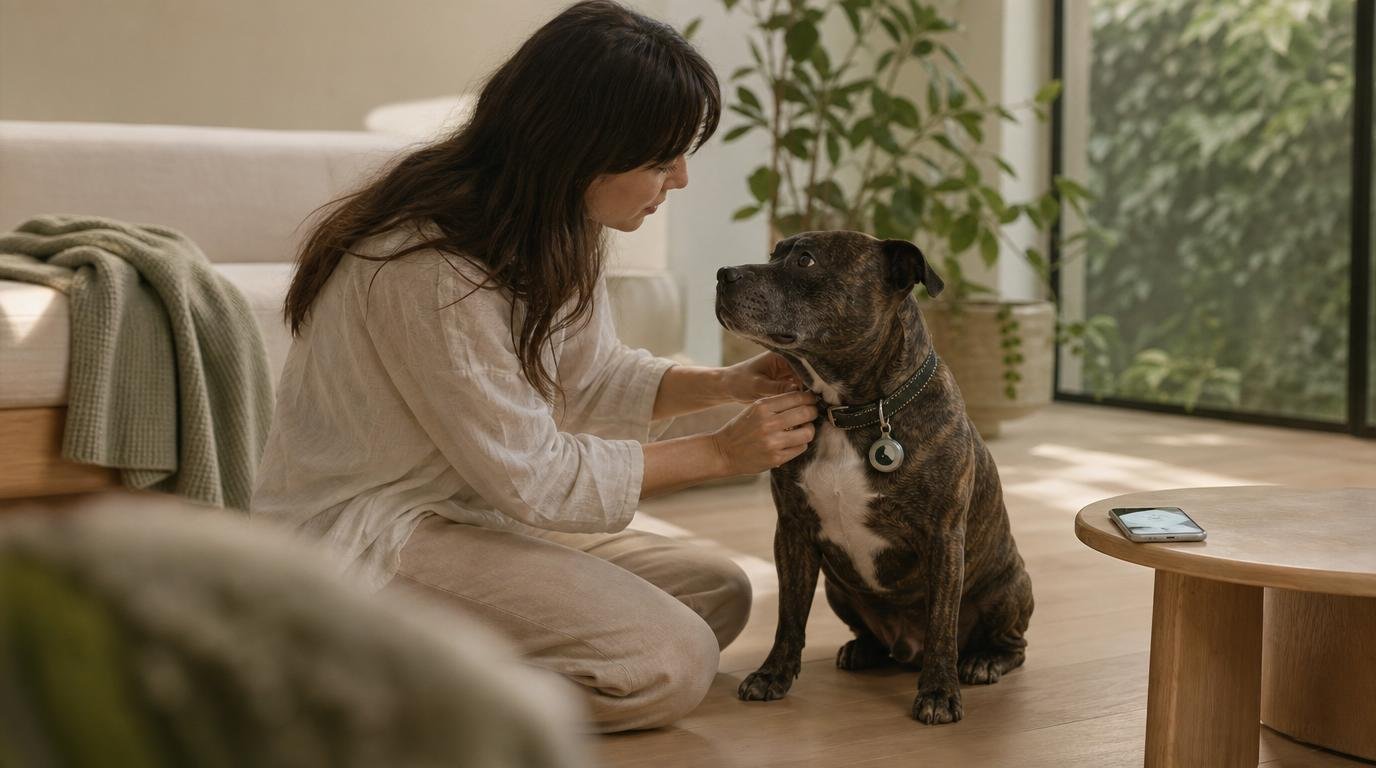
DOGCan I Use Apple AirTags as a GPS Collar for My Dog? Ultimate Guide for Australians
AirTags are cheap and clever, but they're not a real GPS collar. Here's where they help, where they fall short, and what to use instead.

 DOG
DOGUltimate Guide to the Best Dog GPS Collars in Australia with a Subscription
Live tracking that follows your dog anywhere — for a monthly fee. We found the most accurate, reliable subscription GPS collars.
 DOG
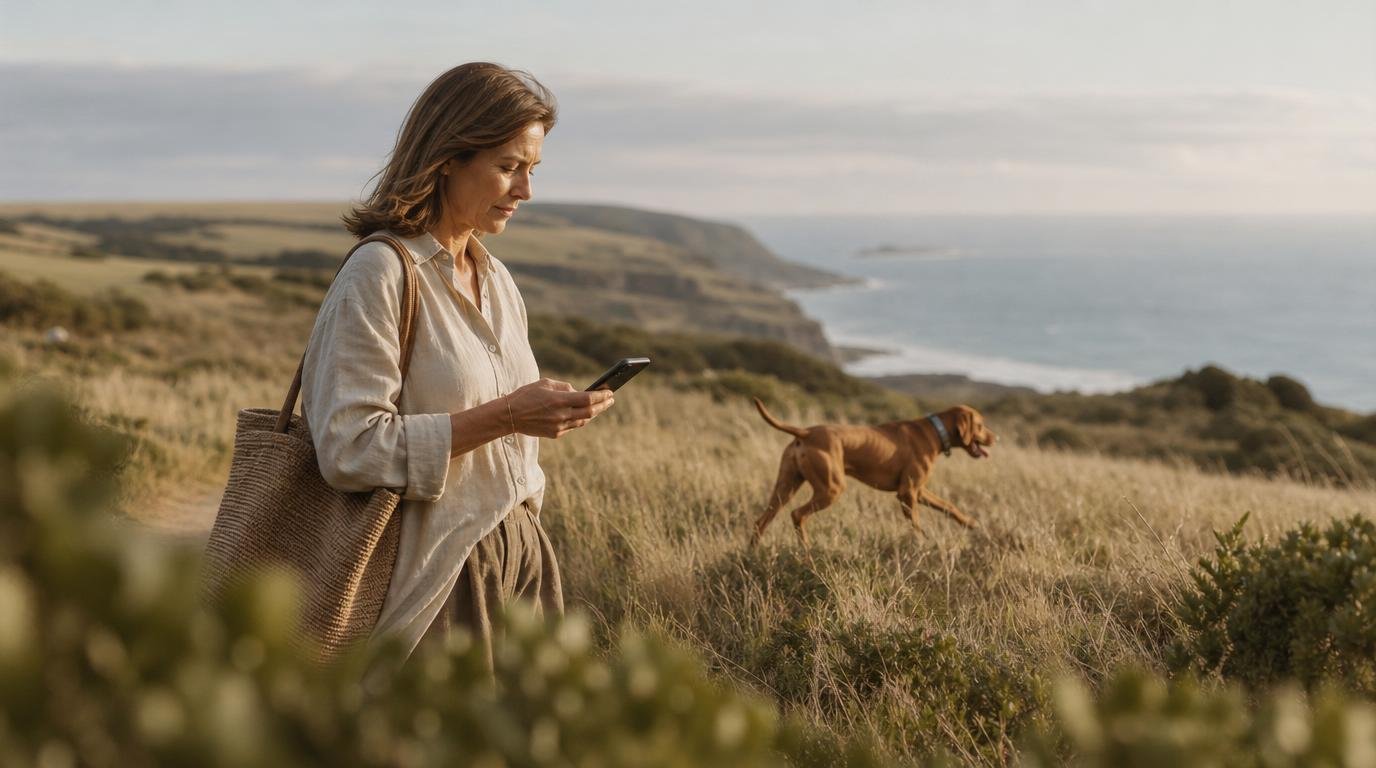
DOGDo Dog GPS Trackers Actually Work? Pros, Cons & Limitations (Ultimate Aussie Guide)
GPS trackers promise peace of mind — but do they deliver? We unpack the accuracy, the limits and whether they're worth it.
