Dogs | Accessories
Your Guide to the Best Dog GPS Trackers with No Subscription in Australia
A lost dog can cover kilometres in minutes, and many owners don’t even realise their pup is gone until it’s already halfway across the neighbourhood. Whether you’re hiking in the bush, walking along the beach, or letting your dog off lead at the park, a pet tracker can turn a heart-stopping moment into a quick recovery — particularly knowing that 13% of dogs in Australia are not microchipped. But not all trackers work the same way: some use full GPS with a SIM card, others rely on Bluetooth and nearby phones, and a few use old-school radio signals with their own handheld receiver. In this Product Guide, we compared the best dog GPS trackers with no subscription for durability, range, comfort, and real-world reliability in Australian conditions (and if you want extra features like live tracking and smart alerts, we also have a Product Guide for the best subscription trackers). The real question, though, is simple: which of these devices will still work when your dog disappears out of sight?
Best Overall

PitPat GPS Tracker for Dogs
- No monthly fees, lifetime SIM
- True GPS with nationwide range
- Higher upfront cost
Best for Remote Areas

Aorkuler Outdoor GPS Dog Tracker
- Works with zero phone signal
- Real-time GPS up to ~5.6 km
- Must carry handheld receiver
Best for Apple Users

Apple AirTag (4 Pack)
- Ultra-compact and lightweight tag
- Taps Apple’s huge Find My network
- Bluetooth only — short range
Best for Android Users

Samsung Galaxy SmartTag2 (4 Pack)
- 1+ year battery on CR2032
- IP67 water and dust resistant
- Best inside Samsung ecosystem

For these trackers, we focused on what actually matters in real-world Australian conditions: strong waterproofing for beach swims, muddy trails, and sudden downpours; a secure, comfortable fit that won’t bounce or twist on energetic dogs; and battery life that holds up through long hikes and weekend trips. The five details below are where these picks actually win or lose.
What to look for in a no-subscription dog tracker
The five details that decide whether a tracker actually helps. Scroll across to read all five.
Tracking tech
Bluetooth tags piggyback off nearby phones. True GPS units use satellites and a SIM card. Radio systems use a dedicated handheld receiver. Each suits a very different kind of search.
Range
Bluetooth tops out around 60–150 m unless a stranger’s phone catches the signal. True GPS reaches anywhere with mobile coverage. Radio gives you a finite kilometre count.
Size and fit
Under 15 g is the rule of thumb for small dogs and cats. Confirm the attachment too — many tags need a separate collar holder that isn’t always included in the box.
Durability
Look for IP67 at minimum if your dog finds water. Australian dogs encounter mud, salt, sand, and the odd creek, so the cheap end of the market won’t last long.
Battery and cost
Coin-cell tags run a year or more before a swap; GPS units need recharging every few days to a couple of weeks. Confirm whether the SIM is bundled for life or billed monthly.
At a glance
Our top four picks compared — specs, prices, and our one-line take on each.
| Rank | Product | Best for | Key feature | Approx. price | Check price link |
|---|---|---|---|---|---|
| Best Overall |  | Nationwide tracking with no ongoing fees | True GPS plus a built-in lifetime SIM across mobile networks. | ~$248–$288 AUD | Check price |
| Best for Remote Areas |  | Off-grid campers and rural properties | Radio link to a handheld receiver — works without any phone signal. | ~$500–$550 AUD (2 pack) | Check price |
| Best for Apple Users |  | iPhone households tracking around the neighbourhood | Locates via Apple’s huge Find My network of nearby devices. | ~$140–$160 AUD (4 pack) | Check price |
| Best for Android Users |  | Samsung Galaxy households after long battery life | BLE plus UWB tag tied into the SmartThings Find network. | ~$76–$96 AUD (4 pack) | Check price |
Our picks in detail
What we love, what to watch out for, and who each pick really suits.
Best Overall: PitPat GPS Tracker for Dogs
Bottom line — the right pick if you want true satellite GPS, nationwide range, and zero ongoing fees rolled into a single upfront purchase.
Our best overall pick combines true satellite GPS with zero ongoing costs. The British-designed tracker attaches via a sturdy Velcro strap and contains a built-in, factory-installed SIM that works across Australian mobile networks — pinpointing your dog anywhere with cell coverage rather than relying on nearby phones. It’s matchbox-sized at 30 g and IP67 waterproof, so beach splashes and summer storms aren’t a concern.
Battery life is the standout: well over a week on standby, and only every few days with daily walks and occasional live tracking. Charging is one-handed on the included wireless pad — no fiddling with ports. The companion app also logs activity and weight, like a canine Fitbit. The upfront price is higher than subscription-based trackers, but that one payment covers lifetime connectivity. There’s no geofencing or fancy alerts — for “where’s my dog now?” peace of mind, though, PitPat is the most effective tracker we tested.
| What we love | Areas for improvement |
|---|---|
|
|
Best for Remote Areas: Aorkuler Outdoor GPS Dog Tracker
Bottom line — the only call when your dog runs places phones don’t reach, built for bush, farm, and genuinely off-grid country.
The Aorkuler is a game-changer for off-grid adventures. Unlike everything else on this list, it doesn’t rely on any mobile network or phone — it’s a two-part system pairing a GPS collar with a dedicated handheld receiver. The receiver talks to the collar over radio, giving you real-time distance and direction updates roughly every three seconds out to the advertised 5.6 km. No subscription, no SIM, because none is needed.
The collar is bulkier than a Bluetooth tag but still light, and it’s built tough enough for dust, creek dunks, and energetic dogs. A loud beep and flashing light, triggered from the handheld, are genuinely useful for finding a dog hidden in scrub at dusk. Battery runs about eight hours of active tracking, then USB-charges overnight. You do need to carry the receiver, and each dog needs its own set — but for rural properties and camping, nothing else on the market comes close on reliability.
| What we love | Areas for improvement |
|---|---|
|
|
Best for Apple Users: Apple AirTag (4 Pack)
Bottom line — an affordable, featherweight tag that punches well above its size, as long as you and your neighbourhood live inside the Apple ecosystem.
For iPhone households, the AirTag is a ridiculously easy way to keep tabs on your dog. Drop one into a collar holder and your pup will barely notice it — 50-cent-coin sized, 11 g. There’s no GPS inside; the AirTag uses Bluetooth and Apple’s huge Find My network. Any nearby iPhone, iPad, or Mac that walks past picks up the signal and updates the location for you, which works surprisingly well in suburbs.
Pairing is one tap and the coin battery lasts about a year before a few-dollar swap. We particularly like Precision Finding: get within roughly 10 metres and the iPhone shows an arrow guiding you to the tag — handy when the dog is under the house or behind a shed. The limit is real, though: a dog in the bush with no one around won’t show on the map until they come near someone’s phone, and Android users get very little. For more depth, see our AirTag Knowledge Guide.
| What we love | Areas for improvement |
|---|---|
|
|
Best for Android Users: Samsung Galaxy SmartTag2 (4 Pack)
Bottom line — the smart pick for Galaxy households who want a year-plus of battery and AR-style finding without paying a subscription.
The SmartTag2 is the Android world’s answer to the AirTag, and a top pick if your house runs on Galaxy phones. New in this generation: Ultra-Wideband alongside Bluetooth, so a UWB-equipped Samsung phone gets an AR compass view that points an arrow toward the missing tag when you’re in range — genuinely useful for finding a dog in dense scrub or a dark backyard.
Like the AirTag, it relies on a network of nearby phones (SmartThings Find) to relay locations. Samsung’s Australian network isn’t as massive as Apple’s, but urban areas have plenty of users. Battery life is the headline win: Samsung claims up to 500 days, with around a year on a standard CR2032 in regular use, and it’s user-replaceable. The IP67 rating shrugs off rain and mud. The catch is the same as every Bluetooth tag — a dog deep in remote country won’t show on the map until someone’s phone passes by.
| What we love | Areas for improvement |
|---|---|
|
|
FAQ
Do GPS trackers replace microchipping and ID tags?
Are GPS dog trackers safe for my pet (health-wise)?
Can I use an Apple AirTag or Tile to track my dog?
How do “no subscription” pet trackers work with no SIM or plan?
What kind of battery life can I expect?
Final thoughts
Keeping track of our furry escape artists has never been easier, and these days you don’t even need to sign up for a monthly subscription to do it. The right tracker really depends on your dog’s lifestyle: a homebody pug in inner Sydney might be perfectly fine with a simple Bluetooth tag, while a cattle dog joining you on bush hikes or camping trips probably needs a tougher long-range GPS unit.
Whatever you choose, make sure the device sits comfortably and securely on your dog’s collar, and get into the habit of checking the battery before big walks, hikes, or road trips. In Australia especially, waterproofing and durability are worth prioritising — our dogs have a remarkable talent for finding mud, creeks, and saltwater. Just remember that tech is a safety net, not a replacement for good habits: keep your microchip details current, secure your yard properly, and train a solid recall. Do all that, and a tracker becomes exactly what it should be — a little extra peace of mind while you and your dog head off on the next adventure.
We Think You’ll Also Like These Guides
 DOG
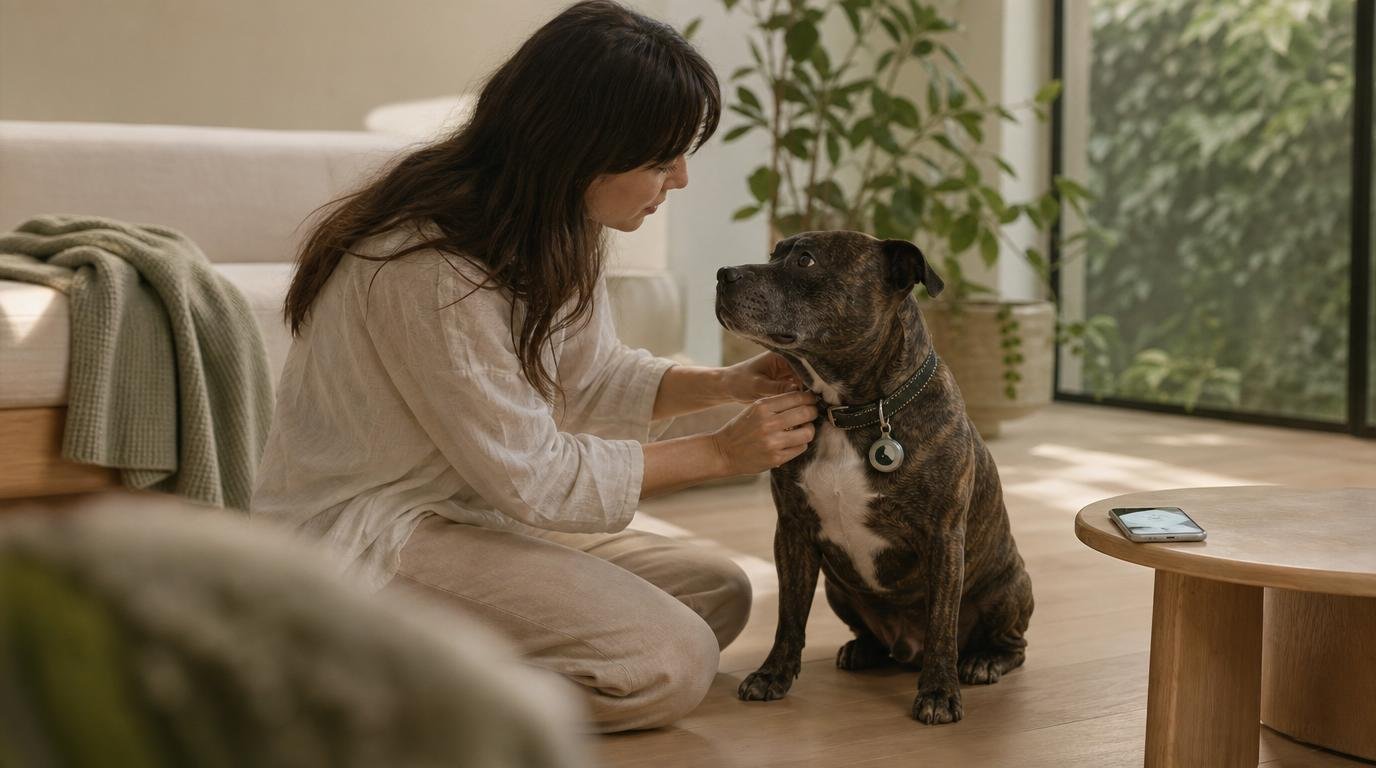
DOGCan I Use Apple AirTags as a GPS Collar for My Dog? Ultimate Guide for Australians
AirTags are cheap and clever, but they're not a real GPS collar. Here's where they help, where they fall short, and what to use instead.

 DOG
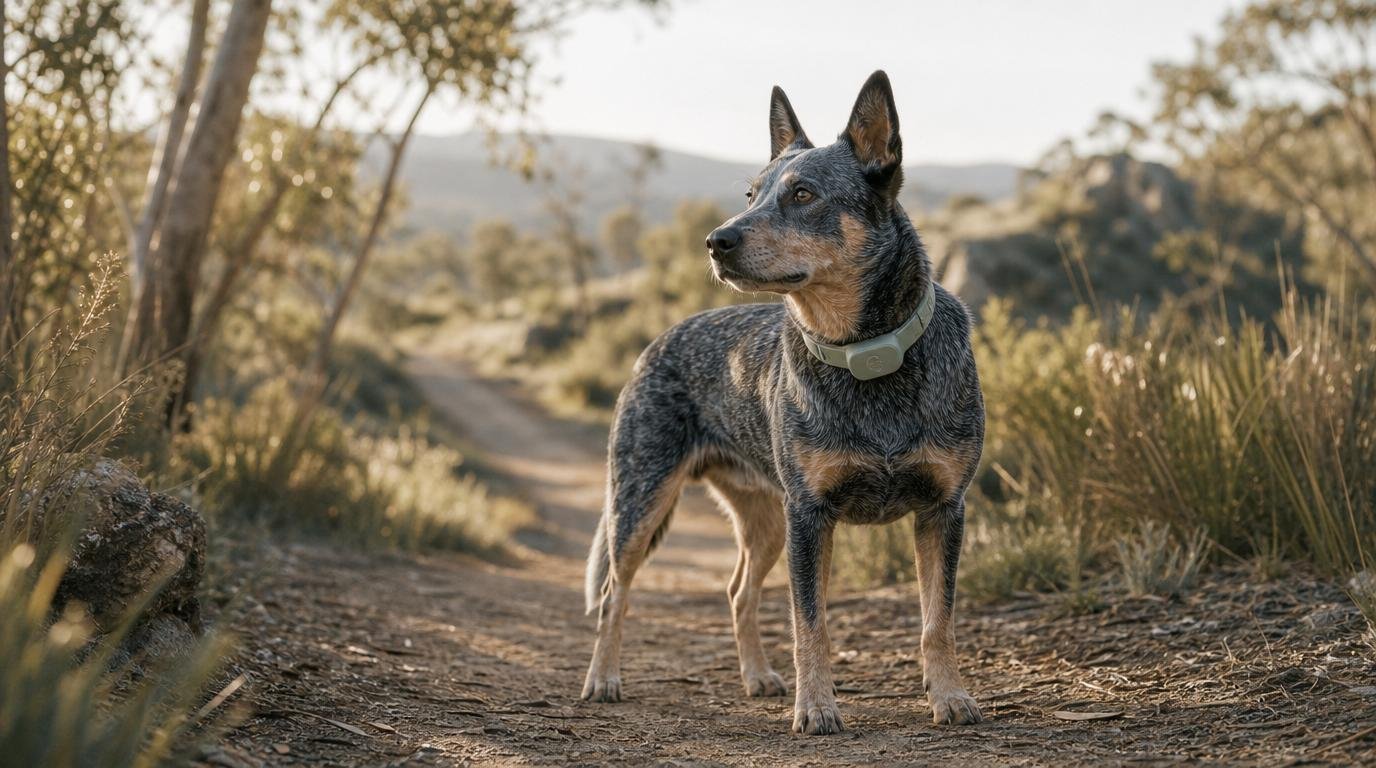
DOGUltimate Guide to the Best Dog GPS Collars in Australia with a Subscription
Live tracking that follows your dog anywhere — for a monthly fee. We found the most accurate, reliable subscription GPS collars.
 DOG
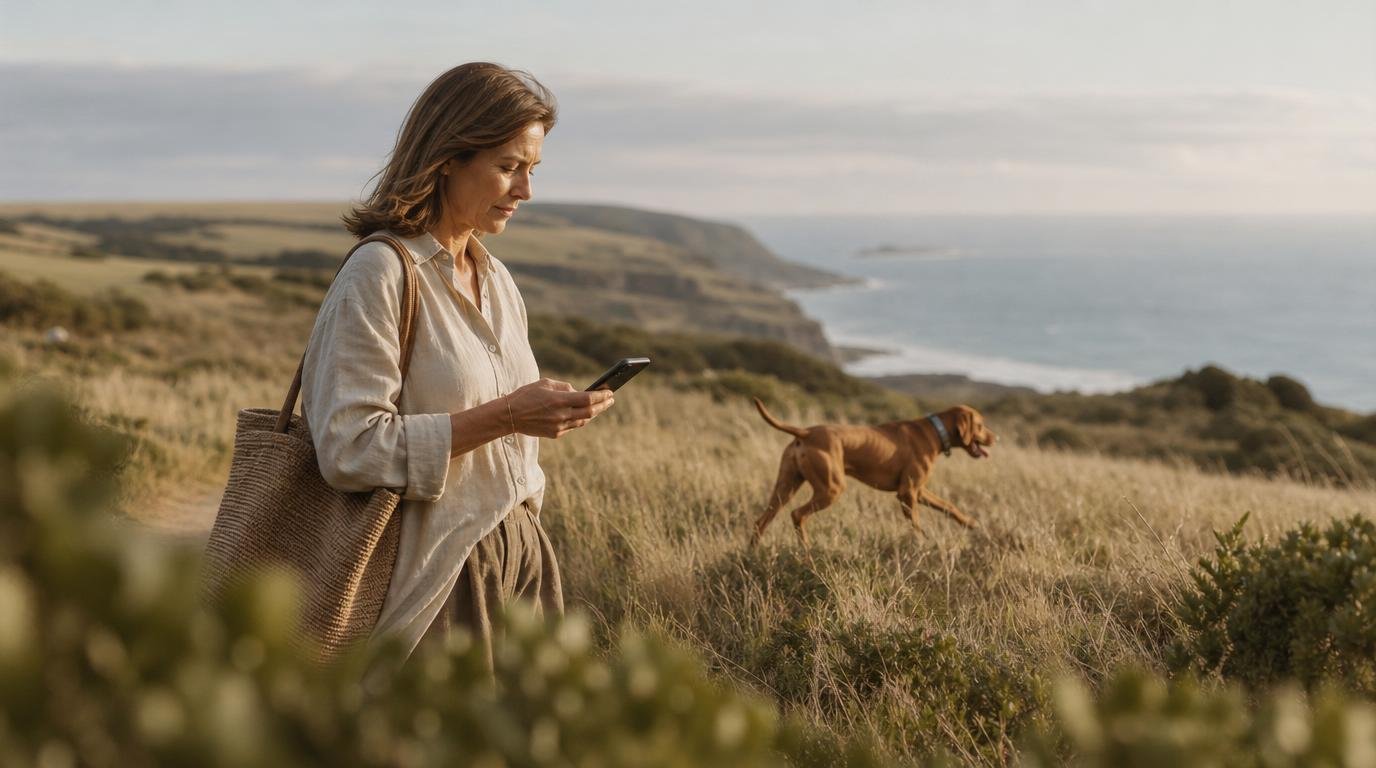
DOGDo Dog GPS Trackers Actually Work? Pros, Cons & Limitations (Ultimate Aussie Guide)
GPS trackers promise peace of mind — but do they deliver? We unpack the accuracy, the limits and whether they're worth it.
