Dogs | Accessories
Can I Use Apple AirTags as a GPS Collar for My Dog? Ultimate Guide for Australians
In Australia, a wandering dog can cover a lot of ground, and losing track of them is every owner’s nightmare. While microchipping your pet is mandatory and essential for identification, a microchip won’t tell you where your pup has gone. That’s why many owners are looking at GPS collars and tech like the Apple AirTag. In this Knowledge Guide, we’ll explore whether Apple AirTags can fill in as a pet GPS, discuss its pros and cons in Aussie conditions, and what you need to know to keep your dog safe. You’ll get practical tips, an honest look at costs, and some vet-backed insights to make an informed choice.
The Upshot
Apple AirTags can help in busy suburbs — but they’re not a real GPS collar.
AirTags piggyback on nearby iPhones to share location, so they shine in the burbs and lose the plot in the bush. Use one as a low-cost backup layer alongside a microchip, ID tag and secure fence — and choose a proper subscription tracker if your dog has serious wander potential.
Best AirTag Bundle

Apple AirTag (4-pack)
- Lightweight at ~11g
- No subscription fees
- Needs nearby iPhones to update
Best AirTag Holder

DLENP Silicone AirTag Dog Collar Holder
- Water-resistant soft silicone
- Secure, snug fit on collar
- AirTag sold separately

It’s a common question at Aussie dog parks lately. Can a tiny Apple gadget replace a traditional GPS pet tracker? In other words, can you trust an AirTag as a GPS collar for your dog on your next bush walk or beach day? I’ve pondered this while watching Bruce (my adventurous Golden Retriever) dart through the scrub. Let’s dive into how AirTags fare in real life and whether they’re up to the task.
Quick Takeaways
The five things worth remembering. Scroll across to read all five.
Bluetooth, not satellite
AirTags piggyback on nearby iPhones, not GPS satellites — so they’re locators, not real-time trackers. Understand the difference between Bluetooth, GPS and satellite trackers before you trust one with your dog.
Suburbs win, bush loses
An AirTag’s range depends on where other Apple devices are. In a busy suburb you might get frequent location updates; in remote bushland an AirTag may not ping any location at all for hours.
AirTag pros
It’s small (about 11 grams), affordable, and has no monthly fees. The battery lasts roughly a year, and it’s water-resistant enough for rainy walks and a dog who treats every puddle like a personal goal.
AirTag cons
No real-time tracking, delayed updates, and it relies on someone with a phone being within 10–20 metres. It can also fall off if not secured, and the button battery inside is a serious hazard if swallowed.
Real trackers compared
Dedicated GPS pet trackers use mobile networks and satellites for true live tracking. They work better for runaway dogs but tend to be bulkier, need frequent charging, and usually require a subscription or SIM plan.
How AirTags work vs dedicated GPS trackers
Apple AirTag basics: An AirTag isn’t a traditional GPS collar at all – it’s a Bluetooth locator designed for keys and bags. If you clip one to your dog’s collar, it communicates via Bluetooth to any iPhone (or recent Apple device) within range. If your dog wanders off, the AirTag’s location is updated when someone’s iPhone comes within roughly 10-30 metres. The network of Apple devices anonymously relays the AirTag’s position to your Find My app. In a city or suburb, this can work surprisingly well because there are plenty of phones around. However, if your dog runs off into the bush or a quiet beach with no one nearby, the AirTag won’t have anyone to ping – meaning you won’t get a live location until your dog (or the AirTag) crosses paths with an iPhone user.
Dedicated GPS pet trackers: In contrast, a true GPS dog collar contains a GPS chip to get satellite coordinates and a mobile transmitter (like a tiny phone) to send that location to you via the mobile network. This means as long as there’s mobile coverage (and the device has battery), you can track your dog almost anywhere in Australia in real time. If your pup goes wandering, a GPS tracker can show their movement on a map instantly, even if they’re a suburb or paddock away.
The trade-off is that these collars are larger and heavier, often weighing 30–50 g, and you’ll be charging them every few days. They also usually require a monthly subscription or SIM card plan to cover the data usage.
Apple AirTags as a GPS collar vs traditional GPS collar: key differences
Using an AirTag on a dog is quite different from using a dedicated GPS tracker. Let’s compare some key factors, from range to costs, to see how they stack up. This can help you decide which might suit your needs:
| Factor | AirTag vs dedicated GPS tracker |
|---|---|
| Coverage & range | AirTag: Bluetooth ~10–20 m direct, then relies on nearby iPhones to relay location. No signal in isolated areas with no people around. GPS tracker: Uses GPS satellites and the mobile network to pinpoint location. Works across wide areas wherever there’s mobile reception. |
| Tracking updates | AirTag: Not real-time if your dog is moving. Location only updates when another device connects — you might see a ping of where your dog was a few minutes ago. GPS tracker: Real-time or frequent live tracking. Follow your dog’s movements on a map instantly, which is crucial if they’re on the run. |
| Battery & power | AirTag: Coin cell battery (CR2032) that lasts ~1 year. No recharging — just replace the battery annually. GPS tracker: Rechargeable battery that lasts a few days per charge. Requires regular charging (e.g. twice a week), shorter in poor-signal areas. |
| Cost | AirTag: Device costs around $50 AUD each. No subscription fees. AirTag holders for collars are an extra one-time cost (~$10–$30). GPS tracker: Device cost is higher (often $100+) and usually needs a monthly service plan (~$5–15 AUD). Subscriptions make it more expensive over time. |
| Size & weight | AirTag: Small and lightweight (~11 g). Dogs typically don’t notice it. Fits even small dog or cat collars with a proper holder. GPS tracker: Bulkier and heavier (30–50 g). Fine for medium to large dogs, can be cumbersome for very small dogs or cats. |
| Extra features | AirTag: Built-in speaker that beeps after 8–24 hours away from owner (anti-stalking). No lights, no geofences, pairs to only one Apple ID. GPS tracker: Often includes safe-zone alerts (geofencing), activity monitoring, LED lights, and shared access so family or pet-sitters can also track. |
Limitations and safety considerations
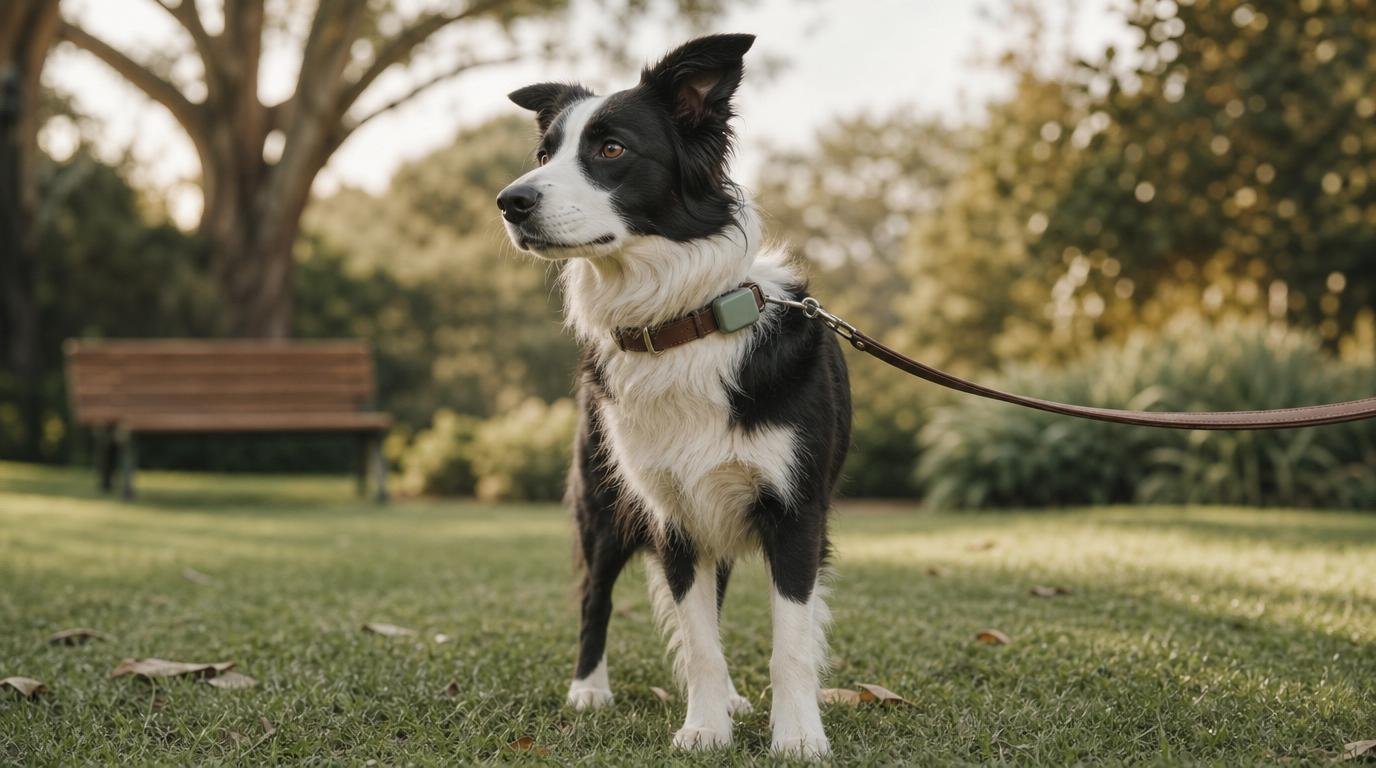
Before you rush to put an AirTag on your dog, it’s important to understand its limitations and how to use it safely. First off, Apple did not design AirTags specifically for pets. That means there is no official Apple pet collar attachment – you’ll need a secure third-party holder. Make sure you choose a holder that won’t easily snap or fall off during your dog’s zoomies. Some owners reinforce the AirTag holder with a bit of tape or an extra ring, especially if they’ve got a rowdy dog like Bruce who dives into bushes and surf. Also, keep the AirTag flush against the collar if possible; a dangling tag can snag on things or tempt other pets (I caught Luna the cat batting at Bruce’s AirTag like a toy until we switched to a firmer holder!).
Safety is a big consideration. The AirTag contains a button battery (CR2032) – the kind that is extremely dangerous if swallowed. Dogs, being dogs, might chew anything that comes off their collar. If the AirTag or its battery were to come loose and end up in a dog’s mouth, it’s a serious emergency. Button batteries can cause internal burns and blockages if ingested by pets. So inspect the holder regularly for cracks and make sure it’s firmly attached. If your dog is a determined chewer or tends to destroy collars, an AirTag might not be the safest choice for them.
Another quirk: AirTags will emit a sound after they’ve been away from their owner’s iPhone for a certain time (generally between 8 and 24 hours). This anti-stalking feature can lead to your dog’s collar suddenly beeping later in the day. In some cases, this could help someone notice the lost dog hiding in a yard or bushes. But it could also startle a sensitive dog. From experience, Bruce wasn’t bothered by the occasional chime – he’s a laid-back lad – but every dog reacts differently. It’s something to keep in mind, and another reason an AirTag isn’t a “set and forget” solution. You’ll still want to actively search for your pet if they go missing, using the AirTag as just one of many tools.
Think of an AirTag as an extra layer of help — a clue or a head start, not a guarantee.
Finally, remember that no tracker is foolproof. Even with an AirTag or a GPS collar, Australian pet owners should do the usual legwork if a pet goes missing: check the local streets, notify local pounds and vets, and post on community groups. And a tech tracker is never a substitute for proper identification and microchipping. Think of the AirTag as an extra layer of help – a bit of modern gadgetry that might give you a clue or head start, but not a guarantee.
FAQ
Is an AirTag as good as a GPS dog tracker?
An AirTag is a handy little device, but it’s not on par with a true GPS dog tracker for most situations. AirTags are great for short-range finding – for example, if your dog sneaks into a neighbor’s yard or hides nearby, you might get a ping when someone with an iPhone walks past. They leverage the huge Apple device network, which is a plus in populated areas. However, they won’t continuously follow your dog’s movements the way a dedicated GPS collar can. If your dog is an escape artist who could roam kilometres or if you live near bushland, a proper GPS tracker (with its real-time updates and far-reaching coverage) is more reliable for recovery. In essence, an AirTag is better than nothing and works well for finding a lost item or pet that’s relatively close by, but it’s not a comprehensive tracking solution if Fido decides to go on a grand adventure.
Do Apple AirTags require a subscription or data plan?
No – one big advantage of AirTags is that they don’t need any monthly subscription or SIM card. Once you buy the AirTag (and an optional collar holder for it), you’re done with spending apart from the occasional battery replacement (a few dollars for a new CR2032 cell each year). The AirTag uses Bluetooth and piggybacks on existing Apple infrastructure (other people’s iPhones and internet connections) to send location info, so there’s no mobile data plan of your own. On the flip side, most dedicated GPS trackers do require a subscription or prepaid SIM to cover the cellular network costs – that’s how they send you your pet’s GPS location in real time. Those plans typically cost a few dollars a month. So if you’re budget-conscious, the AirTag wins hands down on ongoing costs. Just remember, with trackers you often “get what you pay for” in terms of coverage and features.
How far can an AirTag track my dog?
There’s no set maximum range like you might expect – it really depends on where your dog goes and who’s around. AirTags have a Bluetooth signal that typically can be picked up within 10 to 30 metres by a phone. If your dog is within that range of you, you’ll see them on the Find My app (and if you have an iPhone 11 or newer, you can get a direction arrow guiding you to the AirTag at close range). Once your pup goes beyond Bluetooth range, the AirTag’s location updates only when someone else with an iPhone comes near it. In a densely populated area, this could mean you’ll still get location updates every few minutes as your dog moves past houses or people – effectively tracking them across the suburb. But in rural areas or the outback with few people, an AirTag might not update at all; your dog could be 5 km away and you’d have no clue because no network node picked up the signal. Contrast this with a GPS tracker, which can transmit over several kilometres via cell towers. So, in the best case, an AirTag can help find a dog that’s lost in a populated area (there’s even stories of pets being found across town when someone’s phone picked up the AirTag). In the worst case, if your dog is lost in the middle of nowhere, the AirTag might be effectively out of range until someone comes close.
Are AirTags safe for dogs to wear on their collar?
Generally, yes – as long as you use them correctly. The AirTag itself has smooth edges and is fairly small, so it’s comfortable for most dogs and unlikely to cause irritation. The main safety concerns come from the attachment and the battery. You must use a secure holder that won’t fall off or break open. If an AirTag pops out and your dog (or another pet in the house) decides it looks like a chew toy, the coin battery inside can pose a deadly risk. Always double-check that the holder is intact and firmly attached. It’s also wise to use a breakaway collar or a safety-release mechanism if possible – this way, if the AirTag or collar snags on something (unlikely but possible with any collar accessory), the collar can come off before your dog gets hurt. As for the AirTag’s beep feature, it’s not loud enough to damage hearing; at most it might surprise your dog the first time it happens. In our household, the random AirTag chirp didn’t bother Bruce at all. If you notice your dog getting distressed by the noise (which would only happen if they’re lost away from you for many hours), then an AirTag might not be the best choice for them. Overall, used with a bit of common sense, AirTags are safe to use on a dog’s collar – just keep that battery away from curious snouts and mouths.
Do I still need to microchip and ID tag my dog if I use a tracker?
Absolutely. High-tech trackers are helpful, but they don’t replace the basics. Microchipping is not only a legal requirement in most of Australia, it’s also one of the most reliable ways to get your pet back if they’re found by someone. You are far more likely to be reunited with your pet if they’re microchipped and your details are up to date on the registry. An ID tag on the collar is the first thing a neighbour will look for if they find a dog wandering – it can save a trip to the vet or pound if they can call you directly. Think of a GPS tracker or AirTag as an added layer of security, not the sole method of identification. For example, if your dog slips out and an AirTag leads you near him but someone else finds him first, that person can read the ID tag or have a vet scan the microchip to contact you. It all works together. So, yes, do all the traditional things: keep the council registration tag on, have a name/phone number tag, and microchip your dog. The tech is just a bonus to improve the odds of a happy reunion.
Final thoughts
Apple AirTags can be a clever, budget-friendly way to keep an extra eye on your dog, especially in urban areas. Many Aussie pet owners are finding it’s a worthwhile little gadget – I know it gives me peace of mind when Bruce decides to play hide-and-seek in the park. But it’s important to stay realistic: an AirTag isn’t a dedicated GPS collar, and it won’t perform miracles in finding a dog who’s gone walkabout far from civilization. For serious escape artists or rural explorers, investing in a proper GPS tracker (and paying that subscription) might be the better call.
In any case, make sure your pet is microchipped, has a good ID tag, and that you’ve dog-proofed your yard gates. Tech can help, but nothing replaces good old-fashioned responsible pet ownership and vigilance. Use an AirTag or tracker as a backup – a bit of extra insurance to stack the odds in your favour. At the end of the day, keeping our furry mates safe is what matters most. And if you’re like me, a little beep from an AirTag on your dog’s collar is a welcome sound – it means Bruce is on the move, and it’s time for me to go catch up with him!
We Think You’ll Also Like These Guides
 DOG
DOGUltimate Guide to the Best Dog GPS Collars in Australia with a Subscription
Live tracking that follows your dog anywhere — for a monthly fee. We found the most accurate, reliable subscription GPS collars.

 DOG
DOGDo Dog GPS Trackers Actually Work? Pros, Cons & Limitations (Ultimate Aussie Guide)
GPS trackers promise peace of mind — but do they deliver? We unpack the accuracy, the limits and whether they're worth it.

 DOG
DOGYour Guide to the Best Dog GPS Trackers with No Subscription in Australia
Tracking without the monthly fee is possible — with trade-offs. We found the best no-subscription options and their limits.
