Dogs | Enrichment | Toys
Best Dog Toys for Separation Anxiety: Guide to Calm and Safe Pups
Separation anxiety isn’t just whining — it’s stress, and it shows up fast as pacing, barking, or chewing the second you leave. It’s not the same as boredom either: a bored dog wants something to do, but an anxious dog needs something that actually calms them (if your dog is just restless, check out our guide to toys for bored dogs instead — completely different approach). Bruce taught me that the hard way years ago — wrong toy, and it sits ignored while the couch pays the price. The toys that genuinely help for separation anxiety are soothing, predictable and engaging enough to give your dog a focal point during the moment you walk out the door, and pairing them with dog calming supplements can help the most anxious dogs settle faster. The four below all earn their place by working solo, lasting long enough to span the anxiety spike, and (importantly) being safe to leave with an unsupervised dog.
Best Overall

West Paw Zogoflex Toppl
- Sturdy, BPA-free rubber
- Fill with treats or freeze
- Only for moderate chewers
Best Snuffle Mat

Snuffle Mat for Dogs
- Calming nose work for anxious dogs
- Doubles as a slow feeder
- Not meant for chewing sessions
Best Puzzle Toy

Outward Hound Hide-A-Squirrel Puzzle Plush, XL
- Engages natural foraging instincts
- Soft on teeth and gums
- Plush squirrels wear out fast
Best for Heavy Chewers

Benebone Wishbone Durable Chew Toy, Large
- Tough nylon for heavy chewers
- Doesn’t split like bones
- Very hard, monitor tooth wear

We tested a stack of solo-play toys across genuinely anxious dogs (Bruce included, after a stretch when I went back to the office) to find four that do what they’re meant to: cover the moment you leave, hold a dog’s focus through the worst of the anxiety spike, and stay safe to leave with an unsupervised dog. We compared dozens of interactive toys and puzzle feeders to land on these four picks. Each works on a different mechanism — long frozen-treat licking, calming scent work, active mental puzzling, and self-soothing chewing (and yes, we’ve noted any noisy ones, and covered the squeaky toys here). Pair two or three of them on rotation and you’ve got a real strategy, not just a toy basket.
What to look for in a separation-anxiety toy
The five things that decide whether a toy actually helps an anxious dog (vs. just a bored one) — and if you want a broader primer, our guide on selecting the right toy covers materials, sizing and safety. Scroll across to read all five.
Works solo
An anxious dog needs the toy to do its job while you’re away. Skip anything that needs a tug partner, requires constant supervision to be safe, or only works when you throw it. The right toys self-engage with a frozen treat, scent puzzle, or chewy texture.
Long enough to bridge the spike
Most separation anxiety is worst in the first 20-30 minutes after departure. A toy that’s exhausted in five minutes leaves your dog adrift exactly when calm is needed most. Frozen Toppls, snuffle mats and tough chews all span that critical window.
Predictable departure cue
Use the same toy every time you leave, and only when you leave. The dog learns “owner gets keys → toy appears” — and the leaving cue starts predicting a positive moment rather than triggering panic. Keep that toy in the cupboard between sessions.
Safe to leave alone
Anything that can be torn apart and swallowed in pieces is off-limits for solo use. Stick to tough rubber, durable nylon, or supervised-only plush. Inspect every toy weekly for cracks, frays or missing chunks — replace immediately if you find any.
One tool, not the whole plan
Toys help with mild to moderate anxiety. Moderate-to-severe separation anxiety needs behaviour training, calming supplements or vet-prescribed medication alongside the toys. If toys alone aren’t shifting the pacing or barking, escalate to a vet or behaviourist.
At a glance
Our top four picks compared — what they’re best at, key features, prices and where to check.
| Rank | Product | Best for | Key feature | Approx. price | Check price link |
|---|---|---|---|---|---|
| Best Overall |  | Most anxious dogs; departure cue toy | Stuffable rubber treat puzzle with internal ridges; freezable. | ~$25-35 AUD | Check price |
| Best Snuffle Mat |  | Calming scent work for anxious dogs | Fleece-strip foraging mat with non-slip backing; doubles as slow feeder. | ~$25-35 AUD | Check price |
| Best Puzzle Toy |  | Mentally engaged anxiety relief | Plush tree-trunk holds squeaky squirrels in pockets for hunt-and-find. | ~$44-64 AUD | Check price |
| Best for Heavy Chewers |  | Self-soothing chewers; medium-large dogs | Y-shaped nylon chew with real chicken flavour throughout. | ~$25-30 AUD | Check price |
Our picks in detail
What we love, what to watch out for, and who each pick really suits.
Best Overall: West Paw Zogoflex Toppl
Bottom line — the right first buy for separation anxiety: pairs the leaving cue with a positive 20-40 minute distraction.
The Zogoflex Toppl is the right first buy for a dog with separation anxiety. It’s a chunky rubber cup with internal ridges that hold food and treats — fill it with kibble, mashed banana, yoghurt or peanut butter (xylitol-free), freeze it overnight, and you’ve got 20-40 minutes of focused engagement starting the moment you walk out the door. That’s exactly the window when most anxious dogs spike.
What makes the Toppl particularly good for anxiety (vs. just boredom) is the predictability — when “owner leaves” reliably means “Toppl appears”, many dogs start associating the leaving cue with a positive outcome rather than the trigger for panic. The non-toxic rubber is sturdy enough for moderate chewers, and the shape stops the toy from rolling away mid-licking session. Cleaning is the dishwasher’s top rack. Pair two Toppls together (small inside large) for an extra challenge, or run a regular and a frozen version on rotation so the toy itself doesn’t get boring.
| What we love | Areas for improvement |
|---|---|
|
|
Best Snuffle Mat: Snuffle Mat for Dogs
Bottom line — the calming pick: sniffing actually lowers cortisol, turning the leaving moment into focused nose work.
Snuffle mats are the secret weapon for anxious dogs. The act of sniffing actually lowers cortisol — vet behaviourists prescribe scent-work for exactly that reason. This fabric mat hides kibble or training treats among layers of fleece strips, and your dog has to nose their way through to find each piece. Ten minutes of focused snuffling is roughly equivalent to a 30-minute walk in mental tiredness, and a tired, satisfied dog is far easier to leave alone.
For separation anxiety specifically, the mat is brilliant as part of your departure routine. Sprinkle a high-value treat (cheese, jerky) deep into the strips just before you leave; the focused, low-key nose work shifts your dog from “panic” mode to “find” mode. The mat is a generous size with a non-slip backing so it won’t skid around the kitchen mid-snuffle. Two cautions: supervise the first sessions because some dogs try to chew the fabric, and machine-wash in a laundry bag every few weeks — dried kibble dust builds up fast.
| What we love | Areas for improvement |
|---|---|
|
|
Best Puzzle Toy: Outward Hound Hide-A-Squirrel Puzzle Plush, XL
Bottom line — gives an anxious dog something to actively solve: engages the mind rather than just the mouth.
For dogs that need active mental engagement rather than passive licking, the Hide-A-Squirrel puzzle gives anxiety-prone dogs something to “solve” instead of pacing. The plush tree-trunk holds three to six squeaky squirrels (depending on size) tucked into pockets — your dog has to nose, paw and yank to extract each one. Once they’re all freed, the squeakers continue the game for as long as your dog wants to carry them around.
The XL size suits medium to large dogs; smaller versions exist for terriers and toy breeds. It’s plush, so it’s gentle on teeth and gums and quiet enough not to wake the household. Hide the squirrels around the house once your dog’s worked out the basic game — it extends a 5-minute toy into 20 minutes of scent-and-find activity that anxious dogs respond to better than a chew. The honest downside: this isn’t built for serious chewers — the squirrels will lose limbs within a week if your dog treats them as chew toys. Supervise the first few sessions to see how your dog approaches it.
| What we love | Areas for improvement |
|---|---|
|
|
Best for Heavy Chewers: Benebone Wishbone Durable Chew Toy, Large
Bottom line — the self-soothing chew for dogs that need to gnaw their way to calm: real chicken flavour, tough nylon.
For dogs that chew their way through anxiety, the Benebone Wishbone Large is built for the job. Tough nylon with a Y-shape — three curved prongs that let a dog grip one in their paws while gnawing another — means even a determined chewer settles into a long, satisfying session (if your dog regularly destroys toys, also see our toughest dog toys for aggressive chewers). Chewing releases endorphins; for many anxious dogs, an hour with a good chew is a real reset.
Real chicken flavour is infused right through the nylon, not just sprayed on top, so the toy stays interesting as the dog works through the layers. The large size suits medium to large breeds — for small dogs, the Wishbone in size small is a better fit. Two cautions: because the nylon is very hard, supervise dogs with worn teeth or known dental issues, and retire any Benebone once the edges start to crumble. As a separation-anxiety tool, pair it with the calmer departure cues (Toppl + low-key goodbye) rather than as the only distraction.
| What we love | Areas for improvement |
|---|---|
|
|
FAQ
How can I keep my dog entertained while I’m at work?
What can I put in a treat toy (like a Kong or Toppl) to keep my dog busy?
Will these toys help with my dog’s separation anxiety?
How often should I rotate my dog’s toys?
Is it safe to leave my dog unsupervised with these toys?
Final thoughts
Leaving an anxious dog at home doesn’t have to be a guilt trip. With a bit of planning and the right toys (and vet support where needed), you can turn alone time from a panic spike into a predictable, manageable part of the day. The key is layering — the Toppl as the departure cue, the snuffle mat for calming nose work, the chew toy for self-soothing, and the puzzle toy as a backup for the dogs that prefer active mental work. Use each one for its specific purpose rather than treating them interchangeably.
Always prioritise safety: introduce new toys under supervision and ensure they stay in good condition. From there, these toys can really make a difference — not just preventing destructive behaviour, but actively helping your dog feel calmer about being on their own. If after a few weeks the basics aren’t shifting the pacing or barking, that’s a sign to escalate to a vet or behaviourist rather than buy more toys. A well-stimulated, well-supported anxious dog is a content dog — even when you’re not there.
We Think You’ll Also Like These Guides
 DOG
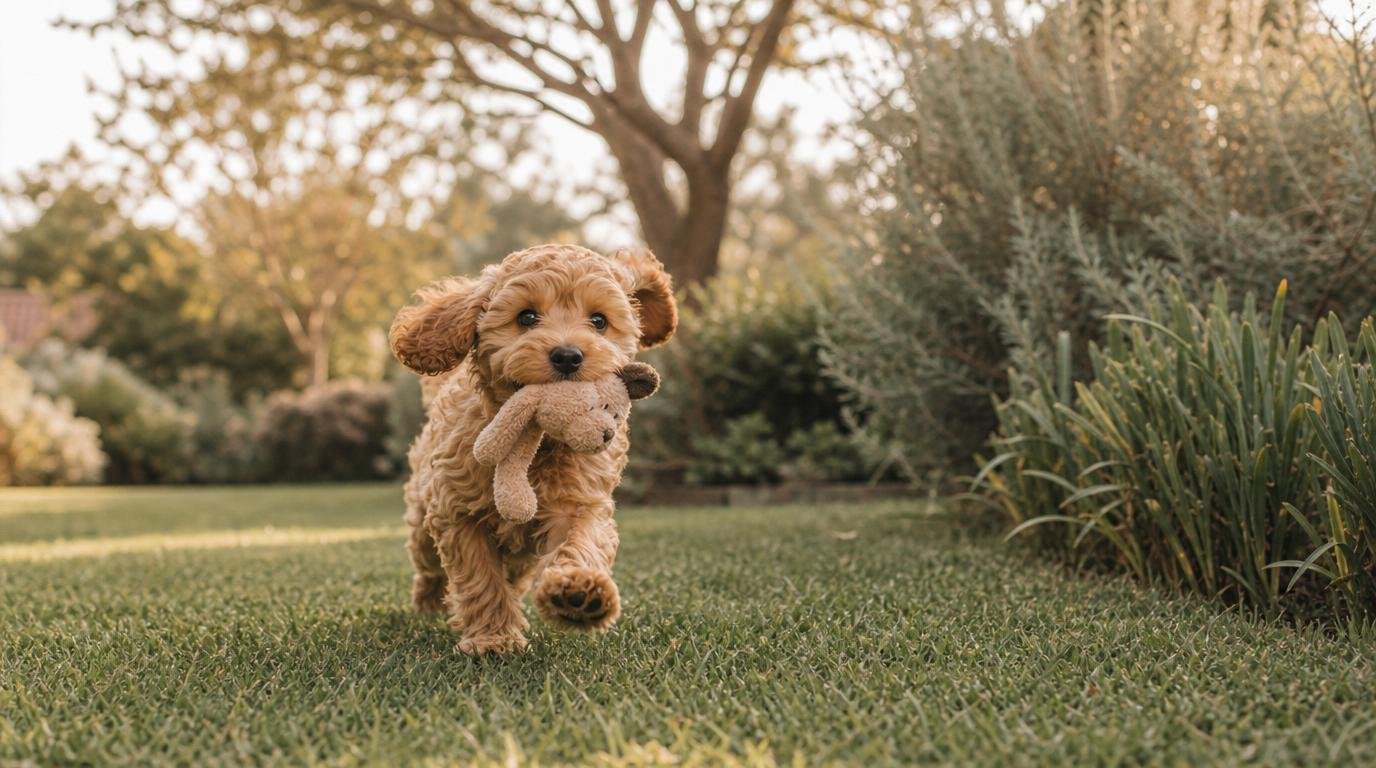
DOGBest Dog Toys for Puppies in Australia – Ultimate Guide
Teething, chewing, learning — puppies need the right toys for each. We picked safe, durable favourites that grow with them.

 DOG
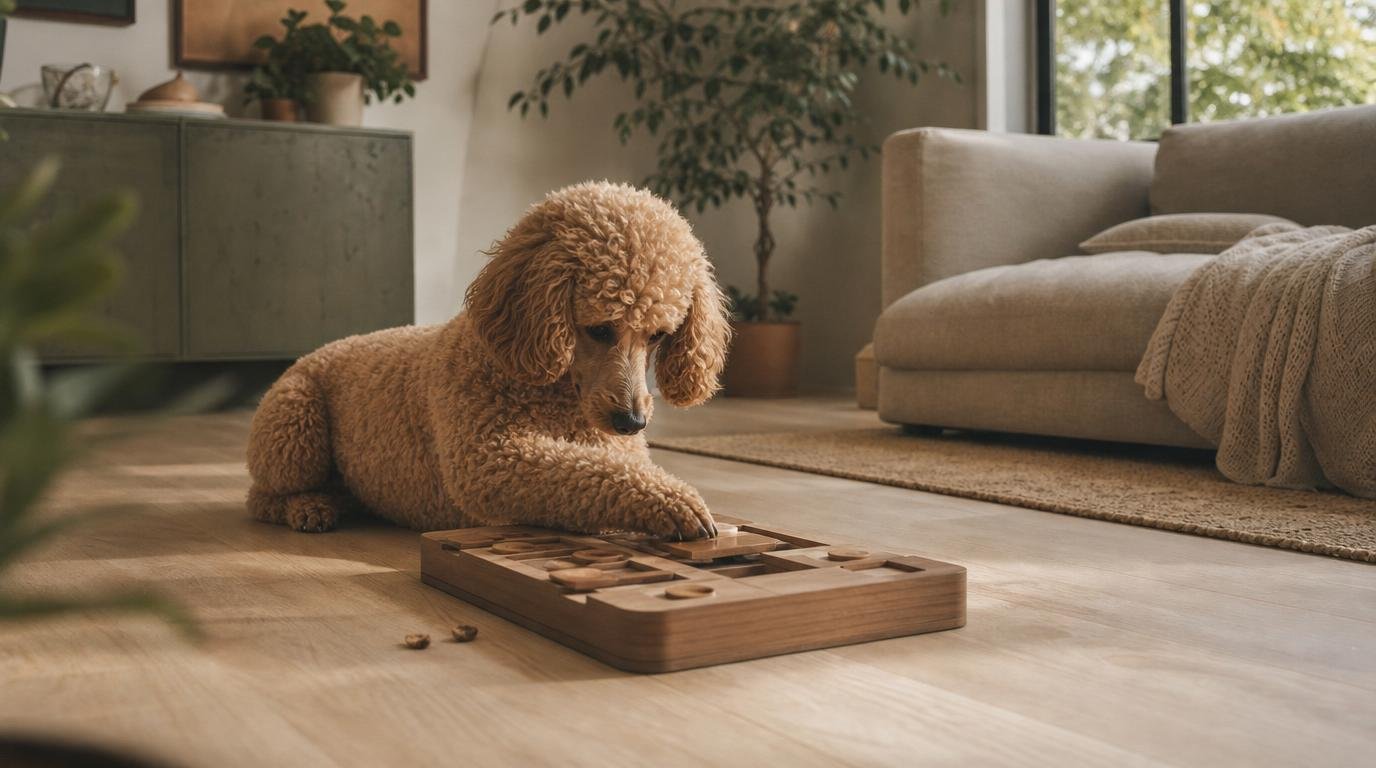
DOGBest Interactive Dog Toys in Australia: Your Ultimate Guide
Puzzles, dispensers and movers that make dogs think. We found the best interactive toys to beat boredom and burn mental energy.
 DOG
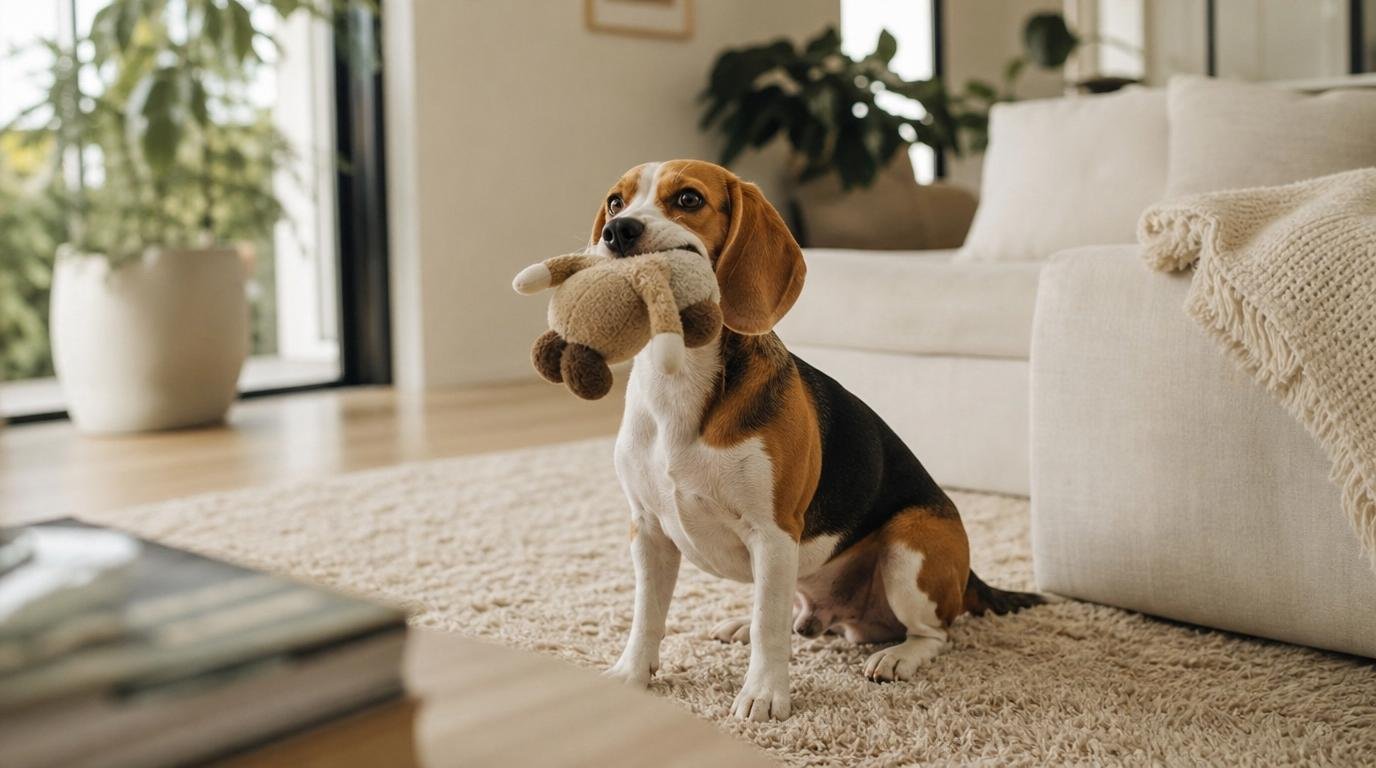
DOGBest Squeaky and Plush Dog Toys: Ultimate Guide
Soft, squeaky and endlessly loved — if they survive. We found the plush toys that last longer than five minutes.
