Dogs | Toys
Best Dog Toys for Bored Dogs: Ultimate Australian Picks to Keep Dogs Busy in 2026
Dogs don’t get “a bit bored” — they get destructive. Most behaviour issues (chewing, barking, digging) come down to one thing: not enough mental stimulation, and in Australia, where heat, humidity, and long summer days can limit outdoor time, that boredom builds fast. The right enrichment toy gives your dog a job — sniff, chase, or figure something out — and shifts the restless energy that would otherwise turn into shredded cushions into something they can actually finish. The RSPCA notes that puzzle toys and scent games are among the most effective ways to keep dogs mentally engaged at home.
Best Overall

Nina Ottosson Lickin’ Layers Puzzle Game
- Lick mat, slow feeder, puzzle
- 100+ treat compartments
- Cleaning can be fiddly
Best for Anxious Dogs
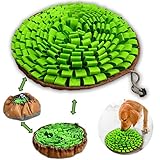
NEECONG Dog Snuffle Mat
- Encourages calm sniff play
- Foldable, travel-friendly
- Needs frequent washing
Best for High Energy

Starmark Bob-A-Lot Interactive Dog Toy
- Adjustable difficulty
- Tough, wobbly design
- Loud on tile or hard floors
Best for Heavy Chewers

KONG Rewards Ball Treat Dispensing Toy
- Doubles as a slow-feeder
- Rolls quietly for indoor play
- Less challenging for smart dogs

Most enrichment toys look interchangeable on the shelf — coloured plastic, treat-dispensing claims — but the differences in mechanism, difficulty, and durability are what separate a toy your dog still wants to play with in month three from one that gets ignored. Below: the five details to weigh up, then a head-to-head comparison and full notes on each pick.
What to look for in a boredom-busting dog toy
The five details that matter most. Scroll across to read all five.
Stimulation type
Sniffers want foraging, clever dogs want puzzles, and high-energy chaos machines want something that moves. Match the toy to how your dog actually entertains themselves, not to whichever toy looks most enriching on the packaging.
Dog size
A toy designed for a Spoodle is a choking risk for a Labrador, and oversized toys frustrate small breeds. Match the toy’s footprint and treat compartment size to your dog’s mouth — bigger isn’t safer when it comes to interactive toys.
Materials and build
Cheap plastic warps and cracks; soft fabrics hold smell in Aussie heat. Look for food-safe plastics rated for chewing or felt that’s machine-washable. There are no mandatory toy safety standards here, so brand reputation matters.
Difficulty level
A puzzle your dog solves in five minutes won’t keep them entertained for a second session. Look for toys with adjustable difficulty — openings you can size up, layers you can rotate — so the challenge grows with your dog’s skill.
Cleaning and upkeep
Snuffle mats need a wash every week or two; treat dispensers need cleaning between fillings, especially with wet food. Pick the toy you can be bothered to keep clean — the most enriching toy is useless if it ends up forgotten in a cupboard.
At a glance
Our top four picks compared — specs, prices, and our one-line take on each.
| Rank | Product | Best for | Key feature | Approx. price | Check price link |
|---|---|---|---|---|---|
| Best Overall |  | Mealtime enrichment for most dogs | Three rotating treat layers with 100+ compartments. | ~$31–$41 AUD | Check price |
| Best for Anxious Dogs |  | Anxious dogs and beginner foragers | Soft felt foraging mat with non-slip base. | ~$20–$25 AUD | Check price |
| Best for High Energy |  | High-energy dogs needing exercise and meals | Weighted wobble dispenser with adjustable openings. | ~$15–$45 AUD (size dependent) | Check price |
| Best for Heavy Chewers |  | Moderate-to-heavy chewers in apartments | Durable thermoplastic rolling treat ball. | ~$20–$30 AUD | Check price |
Our picks in detail
What we love, what to watch out for, and who each pick really suits.
Best Overall: Nina Ottosson Lickin’ Layers Puzzle Game
Bottom line — the strongest enrichment toy in the lineup, with three rotating layers and 100+ treat pockets that give bored dogs a real cognitive job, not a five-minute distraction.
Outward Hound’s Lickin’ Layers is exactly the kind of toy bored dogs actually need — because it gives them a job. Instead of chewing randomly or pacing the house, your dog has to actively think, sniff, and problem-solve to get to the food. The three rotating layers mean they can’t just “figure it out once” and be done; they’re constantly re-engaging, which is what keeps boredom from creeping back in after a few minutes.
For dogs like Bruce, this turns that restless, pent-up energy into focused activity — the kind that tires them out mentally, not just physically. It also slows feeding right down, which helps stretch out what would normally be a 30-second meal into something much more engaging and satisfying.
Where this really stands out is how long it holds attention. You can vary the difficulty just by changing what you put inside — dry kibble for a quicker session, or something sticky (like a bit of wet food or yoghurt) to make them work harder. Freezing it adds another layer again, which is perfect when you need something that lasts more than a few minutes. It’s built from sturdy, food-safe plastic, so it handles regular use well, but it’s not designed for aggressive chewing — this is a thinking toy, not a chew toy. The trade-off is a bit more cleaning (those grooves do hold onto food), but in return you get a toy that consistently gives bored dogs something meaningful to do.
| What we love | Areas for improvement |
|---|---|
|
|
Best for Anxious Dogs: NEECONG Dog Snuffle Mat
Bottom line — the calmer, instinct-driven option for anxious dogs, where foraging through soft felt layers turns restless energy into focused, low-pressure activity.
This large snuffle mat is one of the best tools for bored, anxious dogs because it gives them a calming, instinct-driven task. Instead of pacing, whining, or chewing, your dog switches into “foraging mode” — slowly sniffing through soft felt layers to find hidden food. That repetitive sniffing and searching is naturally soothing, which makes a big difference for dogs that get restless or overwhelmed indoors.
The design mimics grass, with deep folds that keep them engaged without any pressure or frustration, and the non-slip base means it stays put even on tiles. It’s simple, gentle, and effective — especially for dogs that don’t respond well to more complex puzzle toys.
The large size (around 48×48 cm) helps stretch out the activity, giving anxious dogs more time to settle into it rather than rushing through. It also folds up easily, so you can bring it out when you need a calm, focused activity — whether that’s during a hot afternoon or when guests are over. Because it’s soft fabric, it’s not built for chewing, so supervision matters if your dog tends to shred toys. It also needs regular cleaning, especially if you’re using anything moist, as food can get trapped in the layers. But if your goal is to turn nervous energy into calm, focused behaviour, this is one of the simplest and most effective options you can use.
| What we love | Areas for improvement |
|---|---|
|
|
Best for High Energy: Starmark Bob-A-Lot Interactive Dog Toy
Bottom line — the right pick for high-energy dogs that need a proper physical and mental workout, with adjustable difficulty and full-meal capacity built to bounce around.
The Bob-A-Lot is built for high-energy dogs that need more than a quick chew to settle down. Its weighted base makes it wobble unpredictably, so your dog has to chase, paw, and nudge it to release food bit by bit.
That constant movement turns feeding into a proper workout — both physically and mentally — which is exactly what high-energy dogs need to burn off that restless edge. Instead of inhaling a meal in seconds, they’re kept moving and thinking for much longer, which helps reduce that pent-up energy that often leads to destructive behaviour.
It also gives you flexibility, with two adjustable openings to make things easier or harder depending on how quickly your dog figures it out. The large size holds up to around 3 cups of food, so it can fully replace a meal, which is ideal for bigger dogs or multi-dog households. The trade-off is noise — it can get loud on tiles — and it’s not something you want left out once empty, as it’s not designed for chewing. At roughly 27 × 17 × 17 cm, it needs a bit of space to work properly. But if your dog needs something that actually burns energy, not just occupies them for a few minutes, this is one of the most effective options you can use.
| What we love | Areas for improvement |
|---|---|
|
|
Best for Heavy Chewers: KONG Rewards Ball Treat Dispensing Toy
Bottom line — the durable, low-fuss choice for moderate-to-heavy chewers, with quiet rolling, simple refilling, and toughness to survive dogs that destroy lighter toys.
The KONG Rewards Ball is one of the safer bets for bored dogs that also happen to be heavy chewers. It’s made from dense, durable thermoplastic that holds up well to repeated biting, nudging, and chasing — so instead of destroying the toy in five minutes, your dog stays engaged with it.
The rolling design keeps things moving, literally: as the ball bounces and shifts, food drops out unpredictably, which encourages continued play. For dogs that chew out of boredom, this gives them a tougher, more appropriate outlet while also adding a bit of mental stimulation through the reward system.
It also works well as a slow-feeder, turning mealtime into something that takes effort rather than seconds. You just load kibble or treats into the top and let them work for it. Cleaning is simple since there are no complex parts, but the opening is fairly small, so larger kibble or wet food can clog and need rinsing out. While it’s much tougher than most treat toys, it’s still not indestructible — especially if your dog starts treating it like a chew toy once the food is gone. But for moderate-to-heavy chewers that need something durable and low-fuss to stay occupied, it’s a reliable, long-lasting option that won’t give up easily.
| What we love | Areas for improvement |
|---|---|
|
|
FAQ
How often should I clean these enrichment toys?
Can these toys help slow down my dog’s eating or aid weight management?
Are interactive puzzle toys suitable for all dogs?
What if my dog loses interest in a toy?
Final thoughts
Bored dogs don’t just sit around — they find something to do, and it’s usually not what you want. In Australia’s heat, when walks get shorter and indoor time goes up, that restless energy builds quickly. The right enrichment toy gives them a proper outlet — something to sniff, chase, or figure out — instead of chewing furniture or pacing the house. All the picks above focus on exactly that: durable, easy-to-clean options that can handle regular use without becoming a hassle. Just match the toy to your dog’s size, energy level, and play style, and be realistic about upkeep like cleaning or refilling. Get that right, and you’re not just keeping them busy — you’re actually taking the edge off boredom before it turns into a problem.
We Think You’ll Also Like These Guides
 DOG
DOGBest Dog Toys for Puppies in Australia – Ultimate Guide
Teething, chewing, learning — puppies need the right toys for each. We picked safe, durable favourites that grow with them.

 DOG
DOGBest Interactive Dog Toys in Australia: Your Ultimate Guide
Puzzles, dispensers and movers that make dogs think. We found the best interactive toys to beat boredom and burn mental energy.
 DOG
DOGBest Squeaky and Plush Dog Toys: Ultimate Guide
Soft, squeaky and endlessly loved — if they survive. We found the plush toys that last longer than five minutes.
