Cats | Health | Lifestyle
Why Does My Cat Lick Me? The Ultimate Cat Behaviour Guide for Aussies
Licking is a normal feline behaviour tied to grooming, social bonding, and scent communication. Cats use their tongues to clean themselves, self-soothe, and reinforce relationships — and they often extend those same instincts to the people they trust most. For indoor cats in particular, human skin can become part of that routine, whether it starts as affection, curiosity, or simple habit. In this Knowledge Guide, we’ll unpack the most common reasons cats lick their humans, why some cats do it far more than others, and how to tell the difference between harmless bonding and behaviour that might need a closer look.
The Upshot
Most cat licking is bonding behaviour — your cat treating you like trusted family.
Social grooming, scent-marking, and curiosity about salty skin or food smells cover almost every harmless lick. Watch for sudden changes though: obsessive or escalating licking can signal stress, boredom, or a health issue worth flagging with your vet, especially when it pairs with hiding, low energy, or skin irritation.
Best Cat Puzzle Feeder

Nina Ottosson Buggin’ Out Puzzle & Play
- 16 hidden treat compartments
- No removable pieces, cat-safe
- Not dishwasher-safe
See the full Product Guide: Best Cat Puzzle Feeders for Indoor Cat Enrichment
Best Cat Water Fountain

FeelNeedy Wireless 3.5L Stainless Steel Fountain
- 3.5L tank; multi-stage filter
- Wireless; whisper-quiet pump
- Battery needs regular recharging
See the full Product Guide: Best Cat Water Fountains in Australia

For cat owners, knowing what’s normal — and what’s not — matters. Licking can be a sweet sign of trust, but it can also tip into stress, boredom, or even health issues if it becomes excessive. In this Knowledge Guide, we’ll break down the most common reasons indoor cats lick their humans, how to tell affectionate behaviour from a red flag, and when it’s worth getting advice from a vet or behaviour expert. If you want a solid baseline on healthy feline behaviour, the RSPCA’s expert cat advice is a helpful starting point.
Quick Takeaways
The five things worth remembering. Scroll across to read all five.
Bonding gesture
Cats groom each other to build trust and maintain social bonds, and many extend that behaviour to the humans they feel safest with. A lick is your cat saying you’re family.
Scent marking
When your cat licks you, she’s leaving behind her scent and reinforcing that you’re part of her inner circle, not just someone who lives in the house. Quiet but powerful claiming.
Curiosity and taste
Your skin might be a bit salty or carry food smells, and your cat may lick to explore a scent or get attention for treats and play. Scented lotions and sunscreen draw the same interest.
Watch for excess
A little licking is normal, but a sudden increase or obsessive licking can signal stress, boredom or health issues. Keep an eye on changes and consider a vet check if needed.
Redirect with play
If licking has tipped into habit, interrupt gently and offer a wand toy, puzzle feeder or short play session. Mental stimulation and routine matter for indoor cats prone to boredom.
Why does my cat lick me?
Bonding and affection
In cat families, grooming is about far more than staying clean. It’s a deeply social behaviour that starts from birth. Mother cats groom their kittens not just to keep them tidy, but to regulate body temperature, reduce stress, and build a sense of safety. As cats grow, that grooming becomes selective. Adult cats don’t lick just anyone — they reserve it for cats they trust, feel comfortable with, and genuinely enjoy being around. That’s why mutual grooming between cats is often seen in close pairs or bonded siblings.
So when your cat starts licking you, she isn’t being random or odd. She’s applying the same social rules to you that she would to another cat she trusts. That rough, sandpapery lick on your hand, arm, or even your face is a quiet but meaningful signal that you’ve been accepted into her inner circle. In her world, grooming equals safety, familiarity, and emotional connection. It’s not flashy or dramatic, but it’s one of the clearest ways a cat can say, “You’re mine, and I’m comfortable with you.”
Adult cats don’t lick just anyone — a lick from your cat is one of the clearest signs you’ve been accepted into her inner circle.
Other reasons cats lick you — affection, marking, taste
Affection isn’t the only reason cats lick their humans. Licking also serves some very practical purposes in the feline world. Cats use scent to recognise who belongs where, and when your cat licks you, she’s layering her smell over yours as a quiet form of claiming. Taste and curiosity matter too — salty skin, food residue, or even scented hand cream can be surprisingly interesting to a cat. And sometimes, licking isn’t really about you at all; it’s a self-soothing behaviour that helps cats relax, especially if they’re bored, anxious, or winding down.
| Item | Details |
|---|---|
| Social grooming (affection) | Your cat is treating you like a family member. Grooming you (licking) is her way of showing affection and trust, just like she would with another cat. |
| Scent marking | Cats have scent glands on their tongue and cheeks. By licking you, they spread their scent onto you, marking you as part of their territory or social group. |
| Attention or taste | Your skin might taste salty or smell of food. Licking helps your cat explore a scent or get your attention for treats and play. |
Why some cats lick more than others
Not all cats are big lickers, and that’s completely normal. Just like people, cats have individual personalities, comfort levels, and coping habits. Some cats are naturally more tactile and socially driven, while others prefer to keep their affection at arm’s length (sometimes literally).
Early life experiences play a role too. Cats that were weaned early or didn’t spend long with their mother may rely more heavily on grooming behaviours for comfort later in life. Licking can become a stand-in for self-soothing, especially in situations where a cat feels uncertain or overstimulated.
Indoor life also matters. Cats living exclusively indoors — particularly in apartments or quieter homes — can be more prone to repetitive behaviours if they’re under-stimulated. Less novelty, fewer scent changes, and long stretches without interaction can all make licking more appealing as a way to pass time or relieve mild stress. In Aussie homes, heat and humidity can add to this, reducing play during the day and shifting energy into odd habits.
Human behaviour can unintentionally reinforce licking as well. Laughing, talking, patting, or even gently pushing your cat away still counts as attention. If your cat learns that licking reliably gets a reaction, she may repeat it — not out of spite, but because it works.
In short, a cat who licks a lot isn’t being “needy” or strange. She’s responding to her environment, her history, and what she’s learned brings comfort or connection. Understanding that makes it much easier to decide whether the behaviour is harmless — or worth gently redirecting.
When to worry and what to do
An occasional lick here and there is usually harmless and pretty normal behaviour. But if your cat suddenly starts licking much more often, becomes fixated on one person or body part, or pairs the licking with other changes — like hiding more than usual, low energy, vomiting, diarrhoea, hair loss, or skin irritation — it’s worth paying closer attention. Sudden behavioural shifts can be your cat’s way of flagging discomfort, stress, or an underlying medical issue. If the licking is persistent, escalating, or doesn’t improve with environmental changes, a vet check is the right next step. Your vet can help rule out things like allergies, pain, anxiety, or gastrointestinal problems, and advise whether behaviour support or further investigation is needed.
It’s also important to think about what your cat might be licking off you. Human skincare products, medicated creams, sunscreen, essential oils, and even traces of cleaning products can be irritating or toxic if ingested regularly. Cats don’t always show immediate symptoms, so repeated exposure can be easy to miss. Resources like Animal Welfare Victoria’s common cat poisons list identify household items (like human medicines or plants) that can harm cats if licked. If your cat tends to lick after you’ve showered or applied products, switching to pet-safe or fragrance-free options can make a real difference.
For cases that seem behavioural rather than medical, redirection is often the most effective first step. Interrupt the licking gently and offer an alternative — a wand toy, food puzzle, treat ball, or short play session. Mental stimulation and routine matter a lot for indoor cats, especially in apartments or quieter homes where boredom can creep in. If you’re wondering how much play your cat needs, we’ve got you covered with this Knowledge Guide. Regular play, predictable feeding times, and rotating toys help burn off nervous energy and reduce repetitive behaviours before they become habits.
FAQ
Why does my cat lick me then bite me?
Often it’s just your cat getting a bit playful or overstimulated. Your cat might start grooming (licking) you gently, then switch to a quick nip once it’s excited or done. Think of it like a kitten grooming its mum and then playfully biting; it’s usually harmless. If the bite is gentle and not aggressive, there’s no need to worry. If it starts to hurt or become rough, pause the petting and try distracting your cat with a toy instead.
My cat licks me all the time. Should I be worried?
Not usually – frequent licking can be a normal grooming habit. Some cats just lick more than others. However, if it’s a new behaviour or obsessive, it could signal stress or a health issue. In that case it’s wise to check with a vet. RSPCA notes that any big change in your cat’s behaviour should prompt a vet visit. Otherwise, a lick here and there is just your cat’s unique way of showing you attention.
Is it safe to let my cat lick me?
Generally, yes. Your cat’s saliva won’t harm you, and licking is mostly harmless. Just watch out for anything on your skin. Cats can accidentally ingest toxins if they lick off creams or medicines. For example, the Victorian government warns that even small amounts of human medications (like pain-relief creams) can be toxic if your cat licks them. So if you’re wearing any medication or strong chemicals, keep your cat away from that area. Otherwise, enjoy the affection – just wash up before dinner!
Why does my cat lick me more at night or when I’m in bed?
Many cats lick their humans more in the evening or at bedtime because that’s when they feel safest and most relaxed. Night-time is when cats naturally become more active, and when the house is quiet, grooming can turn into a calming, bonding ritual. Your scent is strongest on pillows, sheets, and exposed skin, which can trigger comfort-based licking. For some cats, bedtime licking is also a way to self-soothe, especially if they’ve been under-stimulated during the day or are seeking reassurance before settling down.
Final thoughts
Licking can feel strange, ticklish, or downright annoying — but in most cases, it’s one of the clearest ways a cat shows trust. When your cat licks you, she’s not just being affectionate; she’s applying the same social rules she uses with the beings she feels safest around. For indoor cats especially, those small rituals matter. They’re how cats build routine, manage stress, and stay connected to the world they share with you.
The key is knowing the difference between harmless bonding and behaviour that’s trying to tell you something more. Pay attention to patterns, changes, and context, keep your cat mentally stimulated, and don’t hesitate to involve a vet or behaviour professional if something feels off. Most of the time, though, those gritty little licks are just your cat’s quiet way of saying, “You’re mine — and I trust you.”
We Think You’ll Also Like These Guides
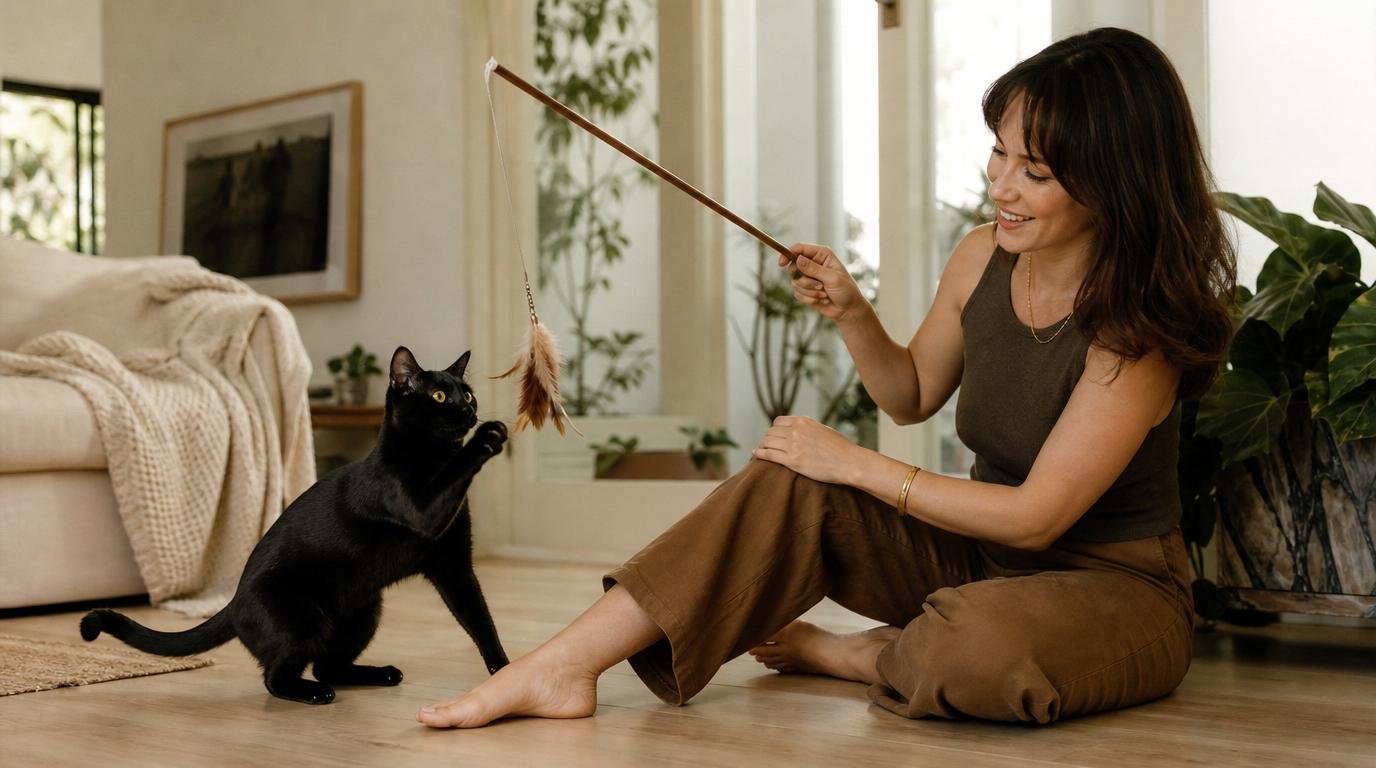 CAT
CATBest Cat Wand Toys in Australia: Ultimate Aussie Picks for 2026
Nothing unlocks the inner hunter like a good wand. We found the most durable, engaging wand toys to get your cat leaping again.

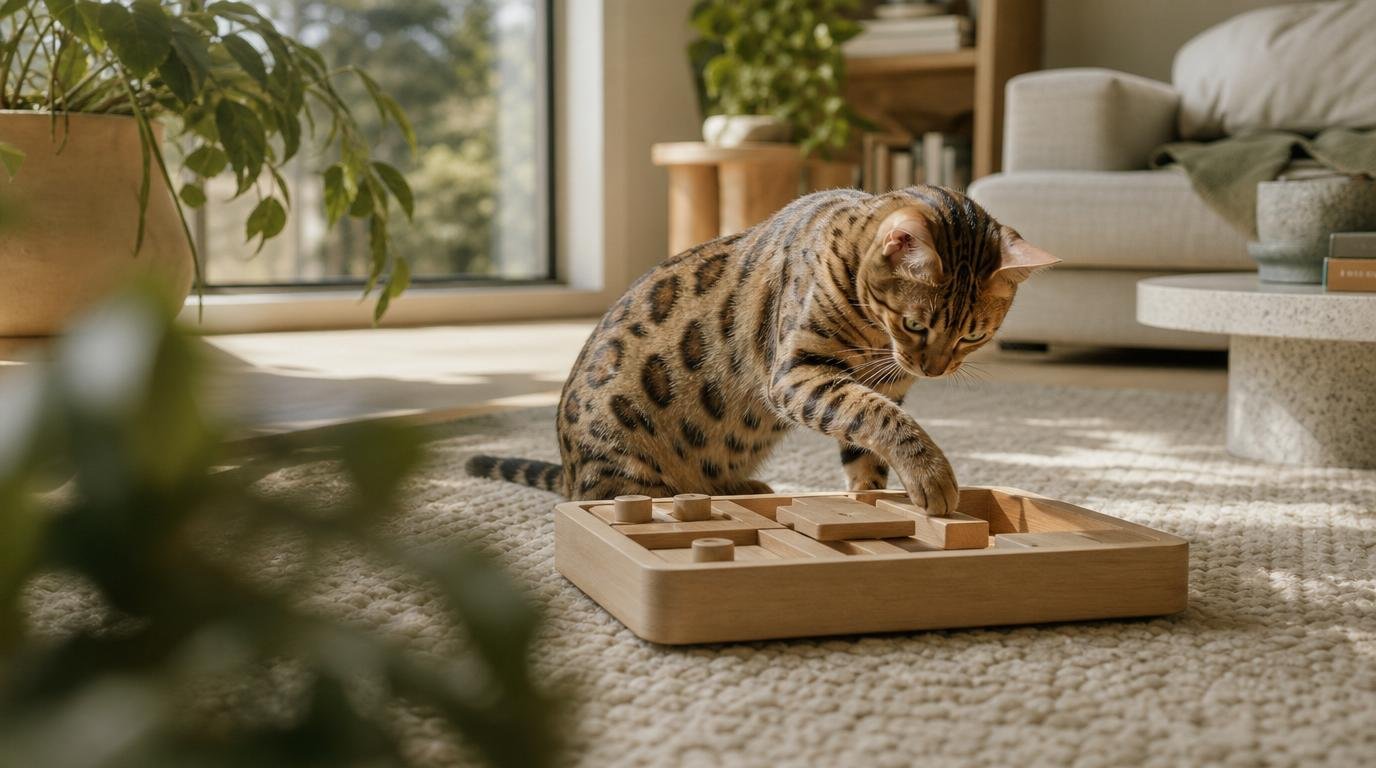 CAT
CATBest Cat Puzzle Feeders for Indoor Cat Enrichment — Ultimate 2026 Picks
Indoor cats need a job at mealtime. Puzzle feeders slow fast eaters and switch on the brain — we found the best.
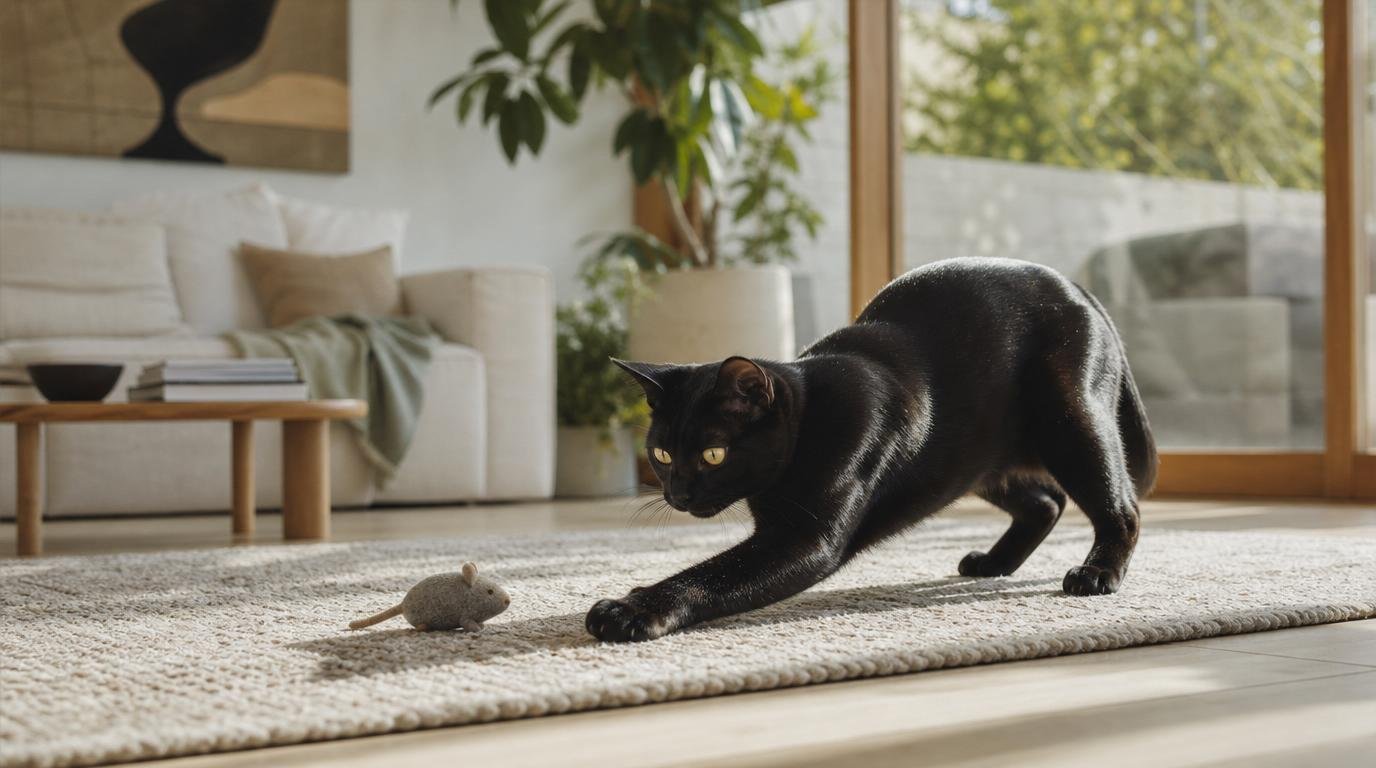 CAT
CATHow Much Play Do Cats Need? Full 2026 Guide for Aussie Cat Owners
Too little play breeds boredom and mischief. Here's how much your cat really needs each day, and how to make it count.