Dogs | Accessories | Dog Training
Your Guide to the Best Dog Training Collars Australia
Dog training collars in Australia usually come in a few different forms, but most are remote-controlled devices that deliver a harmless static stimulus, vibration, or tone on command. Used correctly, these collars reinforce training cues off-leash — whether you’re hiking in the bush with an enthusiastic kelpie or trying to get a stubborn beagle to come back at the beach. We’ve tried a fair share of these tools across rescue fosters and our own household dogs over the years. The key is finding a collar that’s effective yet safe and appropriate for your dog’s size and temperament.
Best Overall
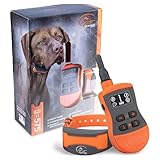
SportDOG SportTrainer 575 Remote Trainer
- Rugged, waterproof for outdoor use
- Bright OLED, easy controls
- Bulky on dogs under 10 kg
Best Premium

E-Collar Educator EZ-900
- 100 levels for fine control
- Vibration and tone modes included
- Battery drains under heavy use
Best Budget

PATPET Dog Training Collar
- Beep and vibrate modes included
- Fully waterproof receiver collar
- Shorter range than premium units
Best for Multiple Dogs

Dogtra 202C No-Nonsense Dog Training Collar
- Dual-collar system, one remote
- Adjustable intensity per dog
- Significant upfront investment

Modern remote training collars cover a wide span — from sub-$100 units that handle backyard basics through to pro-grade kits priced like a small holiday. What separates the contenders is range, the granularity of correction, build quality in real Australian weather, and whether they include genuine non-shock cues. Below: what to weigh up, how the four compare, and the full notes on each.
What to look for in a dog training collar
The five details that decide whether the collar earns its place. Scroll across to read all five.
Size and fit
Measure your dog’s neck and check the strap range. Most collars suit medium and large breeds. Smaller dogs need a short-prong contact and a shorter strap, so confirm the spec before you buy.
Modes and levels
More options aren’t always better, but they help. Look for tone and vibration alongside static, plus plenty of intensity steps so you can find the lightest cue that actually works for your dog.
Durability
Australian conditions are punishing on gear. Waterproofing is non-negotiable for swims, sprinklers, and summer storms; a well-sealed collar also survives bush use. Cheap plastic builds don’t last under sustained hard training.
Range and battery
Match range to your environment — 300 m is plenty for the local park; 500 m or more makes sense for farm or beach work. Rechargeable lithium is standard, but check how often you’ll be charging.
Legal and ethical
Some Australian states restrict or ban electronic shock collars. Check your state before buying, and use the gentlest effective setting. These are aids for trained dogs, not shortcuts for behaviour problems.
At a glance
Our top four picks compared — specs, prices, and our one-line take on each.
| Rank | Product | Best for | Key feature | Approx. price | Check price link |
|---|---|---|---|---|---|
| Best Overall |  | Outdoor work with medium-to-large dogs | 450 m range with OLED remote and full DryTek waterproofing. | ~$300–350 AUD | Check price |
| Best Premium |  | Experienced handlers or stubborn dogs | 100 stimulation levels plus tone, vibration, and a safety lock. | ~$350–400 AUD | Check price |
| Best Budget |  | Backyard and park training on a budget | All three modes (tone, vibration, 16 static levels) under $100. | ~$59–79 AUD | Check price |
| Best for Multiple Dogs |  | Two-dog households or trainers | Two compact collars controlled by one IPX9K-rated remote. | ~$550–590 AUD | Check price |
Our picks in detail
What we love, what to watch out for, and who each pick really suits.
Best Overall: SportDOG SportTrainer 575 Remote Trainer
Bottom line — the strongest all-rounder for serious off-leash training in Australian conditions, especially with medium-to-large dogs.
Our top pick nails the balance between toughness and usability. Built for hunting and outdoor training, the 575 is completely waterproof and shrugs off mud, dam dips, and Aussie weather. The remote’s bright OLED screen makes settings easy to read at a glance — no squinting in the sun. You get around 450 m of range with 10 static levels plus tone and vibration cues to work with.
Responsiveness is excellent — virtually no lag between pressing the button and the collar firing. It suits medium to large dogs; the receiver box is on the larger side, fine on a kelpie but overkill on a toy poodle. You can add a second collar and run two dogs from the same remote, which is genuinely useful in a multi-dog household. The price isn’t friendly, but durability in real Australian conditions and consistent owner reviews make it worth the spend if you’re serious about off-leash recall.
| What we love | Areas for improvement |
|---|---|
|
|
Best Premium: E-Collar Educator EZ-900
Bottom line — the precision pick if you want maximum control and welfare-focused features, and you don’t mind paying premium.
If you’re after top-of-the-line training tech, the Educator EZ-900 delivers. This is the system favoured by many professional dog trainers — 100 levels of static stimulation mean you can fine-tune the correction to the perfect level for your dog, no more, no less. In practice, a very low setting is often enough to get a response. The Educator also includes a strong vibration mode and an audible tone for non-shock cues.
The standout safety feature is the “lock and set” function: lock in the maximum stimulation level you intend to use, and an accidentally bumped dial won’t push past it. It’s a thoughtful touch. The build is as robust as you’d expect at this price — fully waterproof and ready for daily use. The downside: the remote has plenty of settings and buttons, so there’s a learning curve, and it’s one of the most expensive collars on the market. For dedicated owners or those working with very headstrong dogs, the precision and reliability earn the spend.
| What we love | Areas for improvement |
|---|---|
|
|
Best Budget: PATPET Dog Training Collar
Bottom line — the right call for first-time users or occasional backyard training where premium features aren’t worth the cost.
Not looking to spend a fortune? The PATPET proves you can get a working remote training tool at a fraction of the cost of the big brands. This no-frills unit covers the three standard modes: an audible tone, vibration, and adjustable static (with 16 levels). In practice, beep and vibration alone are often enough to get a dog’s attention during basic training, and the 300 m range is plenty for backyard or park work.
Setting it up is simple — the remote layout doesn’t require an engineering degree. The unit is IPX7 waterproof, so puddles and surprise rain don’t bother it. The build is mostly plastic and won’t survive years of hard knocks, and the 16 stimulation levels jump in larger increments than a 100-level collar offers. The strap fits a wide range of dog sizes (around 7 kg up to large breeds). For occasional or beginner use without the premium price, the PATPET hits the mark — treat it gently and it does the job.
| What we love | Areas for improvement |
|---|---|
|
|
Best for Multiple Dogs: Dogtra 202C No-Nonsense Dog Training Collar
Bottom line — the cleanest solution for households or trainers running two dogs of average temperament on the same remote.
Two dogs to train? The Dogtra 202C is purpose-built. The kit comes with two collars and one handheld transmitter that controls both. A toggle on the remote switches between collar A and B, so you can correct or cue each dog individually. Both collars include Dogtra’s “Pager” vibration — a useful non-shock attention-getter. The receiver boxes are compact, so they won’t weigh smaller dogs down.
Durability and water resistance are sorted: these collars are IPX9K rated, meaning they shrug off heavy rain or a run through the sprinkler. The main consideration is cost — it’s a high-end set, and you’re paying for two quality e-collars plus the tech to manage them together. The 202C is low-to-medium power output, so it’s best for dogs of average temperament; two very large stubborn dogs might need a higher-output system. For most pet dogs and working breeds, though, it delivers reliable dual-dog training without complicating things — a well-engineered solution for parallel training.
| What we love | Areas for improvement |
|---|---|
|
|
FAQ
Are training collars safe or are they cruel to dogs?
Are shock collars legal in Australia?
Will a training collar fix all my dog’s behaviour problems?
How long can I leave a training collar on my dog?
What is the difference between a remote training collar and a bark collar?
Final thoughts
Finding the best training collar is about matching the tool to your dog and your training style. The products we’ve highlighted are all capable in their own ways — from the tough-as-nails SportDOG for outdoor adventures to the fine-tuned Educator for those who want maximum control. Whichever you choose, remember that these collars are aids, not shortcuts.
Proper fit is essential (no one likes a collar that chafes, especially in our humid summers), and always start with the gentlest effective setting. Used responsibly, a training collar can give your dog a bit more freedom to explore off-leash while keeping you confident that you can get their attention when it counts.
We Think You’ll Also Like These Guides
 DOG
DOGBest Bark Collars for Dogs in Australia: Ultimate Guide
Constant barking tests your patience — and the neighbours'. We found the best humane, no-shock collars to settle the noise, for every size of dog.

 DOG
DOGAre Dog Training Collars Cruel? Welfare, Law and Alternatives
Cruel, or just misunderstood? We unpack the welfare science, the law in Australia, and the kinder alternatives worth trying first.

 DOG
DOGHow to Stop a Dog Barking in the House: The Ultimate Aussie Guide for 2026
Endless indoor barking wears everyone down. Here's how to find the cause and calm it — humanely and for good.
