Dog Training | Dogs
Are Dog Training Collars Cruel? Welfare, Law and Alternatives
Ask whether dog training collars are cruel and you’ll get a different answer depending on who you ask, and which collar they’re picturing. A flat collar isn’t the issue. The real debate is about electronic collars that deliver an electric shock, and on those the evidence is unkind: the RSPCA links shock collars to pain, fear and lasting anxiety. They’re also banned outright in several Australian states. This guide untangles the welfare science from the marketing, walks through where the law stands across the country, and shows you the kinder tools that get the same results.
The Upshot
Most of the cruelty lives in the shock, not the collar — and the law agrees.
Aversive electric shock collars cause real fear and pain, and they’re banned outright in several Australian states. Reward-based training works at least as well without that welfare cost. If you ever reach for a device, choose tone or vibration over shock, learn your state’s law first, and get a professional involved.
Best Humane-Mode Trainer
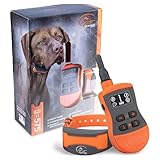
SportDOG SportTrainer 575 Remote Trainer
- Rugged, waterproof build
- Bright OLED, easy controls
- Bulky on dogs under 10 kg
See the full Product Guide: Your Guide to the Best Dog Training Collars Australia
Best Tone/Vibration Mode

Pet Manka 4-Mode Remote Bark Collar
- Tone and vibration, no shock
- Auto plus remote in one collar
- Short remote range (~50 m)
See the full Product Guide: Best Bark Collars for Dogs in Australia

“Cruel” is a heavy word to hang on a piece of dog gear, and yet it comes up constantly around training collars. Part of the trouble is that the term covers wildly different things. A martingale, a head halter, a beep-only bark collar and an electric shock collar all get lumped together, even though they sit at completely different ends of the welfare spectrum. Before we can answer the question fairly, we need to be clear about which collar we’re talking about.
Bruce, our Golden Retriever, has the recall of a teenager who’s just spotted his mates — selectively deaf when something more interesting is on offer. We understand the pull towards a quick technological fix. But the gap between “this would be convenient” and “this is fair on the dog” is exactly where this topic gets thorny, so we’ve leaned on the welfare research, the current Australian law, and the gentler options that tend to work better anyway.
Quick Takeaways
The five things worth remembering. Scroll across to read all five.
Shock is the problem
The cruelty concern is about electric shock and the pain it causes, not collars in general. A flat collar or harness isn’t what worries vets — aversive electric stimulation is.
The law varies by state
Shock collars are banned in NSW, SA and the ACT, and restricted in several other states, while Queensland has no specific ban. Check your own state’s rules before you buy or use one.
Rewards work as well
Research finds reward-based training matches shock for results, without the fear and stress. Most owners see improvement either way, so the gentler path costs you nothing in effectiveness.
Tone beats shock
If you do use a device, beep and vibration are far gentler than static shock. They interrupt a behaviour without inflicting pain, and several modern collars skip shock entirely.
Get a professional in
Persistent barking, anxiety or reactivity needs a plan, not just a gadget. A vet or qualified force-free trainer will find the cause and usually save you wasted money.
What we mean by a training collar
The phrase “training collar” is doing a lot of work, and that’s where most of the confusion starts. At one end you have everyday gear that simply attaches a lead — flat collars, martingales that stop a dog backing out, and front-clip harnesses. Nobody seriously argues these are cruel. At the other end sit aversive tools designed to stop behaviour by being unpleasant: prong collars, choke chains, and electronic collars that deliver a static shock. When people debate whether training collars are cruel, it’s almost always this second group, and electric shock collars in particular, that they have in mind.
The electronic family
Electronic collars themselves come in a few flavours, and they’re not all the same. Remote trainers let a handler trigger a tone, a vibration or a static shock from a distance, usually for off-leash work like recall. Automatic bark collars react to a dog’s own barking with a beep, a buzz, a spray of citronella or a shock. Containment or “invisible fence” collars shock a dog that crosses a buried boundary wire. The key variable across all of them is the mode of correction: a beep or a vibration is a world away from an electric shock, even when the casing looks identical.
It’s the same logic that separates a martingale from a prong collar. Both are technically “training collars”, but one applies gentle, even pressure while the other digs metal points into a dog’s neck. Lumping them together is how the cruelty conversation gets muddled. When we weigh up welfare, then, the question isn’t really “is this a training collar?” but “does this tool rely on pain or fear to work?” That single test sorts the genuinely concerning gear from the rest, and it’s the lens we’ll use for the rest of this guide.
Are dog training collars cruel? What the science says
On the aversive end, the welfare evidence is fairly settled. The RSPCA’s position is blunt: it opposes electronic shock collars because they work through punishment and “inflict pain, fear and discomfort.” Beyond the immediate sting, the concern is what repeated shocks do to a dog over time — anxiety, a worsened mood state, and in some dogs a learned helplessness where they simply shut down. There’s also a public-safety angle, because punishment-based methods can tip a fearful dog towards defensive aggression, including towards people.
“Such devices involve punishment, and inflict pain, fear and discomfort.” — RSPCA Australia
Crucially, the pain doesn’t even buy better results. A 2014 study of pet dogs published in PLOS ONE compared remote shock-collar training with reward-based methods and found the shocked dogs showed more stress signals — spending more time tense and yawning more often — while the training outcomes were no better. In fact, 92% of owners across all groups reported their dog’s behaviour improved, with no meaningful advantage to the shock group. The Australian Veterinary Association reaches the same conclusion, advising against collars designed to inflict pain, discomfort or fear, and backing reward-based training as both safer and more effective.
Key Insight
When researchers put shock collars head-to-head with reward-based training, the dogs trained with rewards did just as well — and showed far fewer signs of stress. The shock buys you nothing your dog can’t learn a kinder way.
It’s worth being fair about the other side. Some experienced trainers argue a well-timed, low-level static cue is humane when used precisely, and the modes matter enormously — a tone or vibration isn’t a shock. But the gap between careful expert use and the reality of an everyday owner pressing a button in frustration is exactly what the welfare bodies worry about. For the average household, the safest reading of the science is that aversive shock carries real risk and offers no clear upside.
Where training collars stand with the law in Australia
This is where good intentions can land you in genuine trouble, because the legality of electric shock collars isn’t a national rule — it’s set state by state, and it varies a lot. In some jurisdictions, owning or using one is an offence in itself, regardless of how gently you think you’re using it. The table below is a plain-English guide to where electric shock collars stand, based on the RSPCA’s summary of state and territory legislation. Animal welfare law is updated periodically, so treat this as a starting point rather than legal advice.
| State / Territory | Where electric shock collars stand |
|---|---|
| ACT | Banned. Administering an electric shock to an animal is prohibited. |
| NSW | Banned. Sale, possession and use are prohibited, with limited exemptions. |
| SA | Banned. Electric devices used to confine or control an animal are prohibited. |
| VIC | Restricted. Only approved collars, subject to set conditions and exemptions. |
| WA | Restricted. A general prohibition, with a defence allowing electric training collars. |
| NT | Restricted. Remote-control shock collars prohibited; some non-remote collars permitted. |
| TAS | Restricted. Electronic devices banned in sport, performance and related training. |
| QLD | No specific ban. General animal cruelty law still applies. |
A few things are worth underlining. First, “no specific ban” in Queensland doesn’t mean anything goes — causing unnecessary pain still falls under general cruelty law. Second, the restrictions in Victoria, WA, the NT and Tasmania come with real conditions and exemptions, so “restricted” is not a green light. Before you buy or use any electronic collar, confirm the current position with your state or territory authority or the RSPCA’s guide to electronic collar legislation. Getting this wrong isn’t just an ethical misstep — in NSW, SA or the ACT it can mean a cruelty offence.
When a remote trainer might have a place
None of this means every electronic collar is off the table for every owner. In states where they’re permitted, and in the hands of someone who knows what they’re doing, a quality remote trainer used on its tone and vibration settings can be a legitimate tool — particularly for off-leash recall with a working or hunting dog in open country, where a voice simply won’t carry. The better units, like the ones we cover in our guide to the best dog training collars in Australia, are built around clear feedback and waterproofing rather than raw intensity.
The honest caveats matter, though. A device like this earns its place only when you’ve checked it’s legal where you live, you’re using the gentlest effective mode rather than static shock, and you’ve layered it on top of solid reward-based foundations — not used it to paper over a training gap. It’s a tool for fine-tuning a trained dog at distance, not a shortcut for a dog who was never taught the behaviour in the first place. Reach for it the way you’d reach for a power tool: useful in the right hands, genuinely risky in the wrong ones.
Kinder ways to get the same results
For the vast majority of households, the better path is the one the welfare research keeps pointing to: reward-based training. The method is simple to describe even if it takes patience to do well. You mark and reward the behaviour you want, and you manage the environment so the behaviour you don’t want is harder to practise. For recall, a long training lead gives you control and safety without any correction at all, letting your dog earn freedom as the reliability grows.
Management does a lot of quiet heavy lifting here too. A bored dog with nothing to do will invent its own entertainment, so a tired, well-exercised dog is halfway to a well-behaved one. Daily sniff walks, a food puzzle at breakfast, and a few minutes of training sprinkled through the day take the edge off the restlessness that drives so much “naughty” behaviour. Pair that with consistency from everyone in the household — the same cues, the same rules — and a surprising number of problems shrink before you’ve spent a cent on equipment.
Barking deserves its own mention, because it’s the reason many owners start eyeing a collar in the first place. The fix depends entirely on the cause — boredom, separation anxiety, and alarm barking at the window each need a different response, and our guide on how to stop a dog barking in the house walks through them. If you do want a device to interrupt nuisance barking, a beep or vibration collar sits a long way from shock; modern units like the Pet Manka skip static correction entirely and pair an automatic mode with a handheld remote. It’s still a tool, not a cure, and it works best alongside addressing why the barking is happening.
A good vet or an accredited force-free trainer will look for the cause rather than just suppressing the symptom, and that’s the difference that lasts. It’s also usually the cheaper route once you add up the gadgets that didn’t work. The collar question, in the end, answers itself: when a gentler method gets you there without the fear, the pain and the legal risk, that’s the one worth choosing.
FAQ
Are dog training collars cruel?
It depends on the collar and how it is used. A plain flat collar or harness isn’t what worries animal welfare groups. The concern is aversive electronic collars that deliver an electric shock, because they work by causing pain, fear or discomfort. The RSPCA opposes shock collars for exactly that reason, and the research backs it up. Beep and vibration modes are far gentler, and reward-based training avoids the welfare cost altogether. So the honest answer is that the cruelty lives in the shock and the misuse, not in the idea of a training collar itself.
Are shock collars illegal in Australia?
In some states, yes. Electric shock collars are banned in New South Wales, South Australia and the ACT, and they are restricted in Victoria, Western Australia, the Northern Territory and Tasmania. Queensland has no specific ban, though general animal cruelty law still applies everywhere. The rules differ by collar type and they do change over time, so check your own state or territory legislation, or the RSPCA, before you buy or use any electronic collar. Using a banned device can leave you facing a cruelty offence.
Is a vibration or tone collar better than a shock collar?
For your dog’s welfare, yes. Tone and vibration interrupt a behaviour with a sound or a buzz rather than an electric shock, so they don’t rely on pain. Many modern collars skip static shock entirely and use beep and vibration only. They aren’t a magic fix, and a sensitive dog can still find a buzz startling, but as a tool they sit a long way from the welfare problems of shock. If you reach for any device, the gentler modes are the place to start, paired with rewards for the behaviour you do want.
Do vets recommend electronic training collars?
Most don’t. The Australian Veterinary Association advises against collars designed to inflict pain, discomfort or fear, including electronic shock collars, and supports reward-based training as safer and more effective. The RSPCA takes the same view. Vets are most concerned about static shock and about devices used to fix anxiety or aggression, which can make those problems worse. If your dog has a behaviour you can’t shift, the recommendation is to see your vet or a qualified force-free trainer rather than buy a collar off the shelf.
What can I use instead of a shock collar?
Start with reward-based training: mark and reward the behaviour you want, and manage the environment so the unwanted behaviour is harder to practise. For recall, a long training lead gives you control without any correction. For barking, work out the cause first, because boredom, anxiety and alarm barking all need different fixes. If you want a device for barking, a beep or vibration collar is gentler than shock. And for anything persistent, a vet or accredited trainer will get you further than any gadget.
Final thoughts
If I’m honest, I understand the temptation. When Bruce ignores a recall for the hundredth time, the idea of a button that fixes it in an afternoon is seductive. But every time I weigh it up, the same picture emerges: the shock carries real welfare risk, it’s flat-out illegal in parts of the country, and it doesn’t even train better than a pocket of treats and a bit of consistency. That’s a lot of downside for no real upside.
So my bottom line is this. If you live somewhere a device is legal and you’ve got a specific, off-leash reason, a quality remote trainer used on tone or vibration can sit in the toolkit — checked against your state’s law and built on reward-based groundwork, never instead of it. For everyone else, skip the shock, lean on rewards, and if a behaviour won’t budge, get a vet or a good trainer in your corner. Your dog will get there, and you’ll both enjoy the journey more.
We Think You’ll Also Like These Guides
 DOG
DOGBest Bark Collars for Dogs in Australia: Ultimate Guide
Constant barking tests your patience — and the neighbours'. We found the best humane, no-shock collars to settle the noise, for every size of dog.

 DOG
DOGYour Guide to the Best Dog Training Collars Australia
From gentle tone to vibration, training collars vary hugely. We found the most humane, effective options — and how to use them right.

 DOG
DOGHow to Stop a Dog Barking in the House: The Ultimate Aussie Guide for 2026
Endless indoor barking wears everyone down. Here's how to find the cause and calm it — humanely and for good.