Dogs | Travel
Travelling with your dog by car in Australia: the safety guide
A 25 kg dog in a 60 km/h crash becomes a 750 kg projectile — and that’s the part most owners haven’t thought through. Australia’s dog car travel safety rules vary by state, but the physics doesn’t. Whether you’re nipping to the dog park or driving Brisbane to Byron, the gear you pick, the way you stop, and how you read the heat all matter more than the destination. The RSPCA’s guidance on in-car restraint is short, blunt and worth reading. This guide pulls it together.
The Upshot
Buckle your dog in like you’d buckle in the kids — same physics, same rules.
A crash-tested harness clipped to a seat belt or a properly secured crate keeps your dog safe and keeps you legal. Pick the right one for your dog’s size and trip length, fit it properly, and use it every drive — the routine is what saves them, not the gear sitting in the boot.
Best Car Seat Cover

CHANCCI Hard Bottom Car Seat Cover
- TPU holds shape under large dogs
- Six conversion modes, all usable
- Narrower fit — measure first
See the full Product Guide: Best Dog Car Seat Covers
Best Airline Crate

SportPet Designs Plastic Travel Dog Crate (IATA Approved)
- Built to IATA airline standards
- Wheels and handles for airport runs
- Bulky — doesn’t fold to store
See the full Product Guide: Dog Travel Crates Australia

Most of us learned to drive with a dog flopping around the back seat and nobody thinking twice about it. That’s not how it works anymore — and honestly, it shouldn’t be. The gear has moved on and the law has caught up in places, but mostly it’s owners seeing what happens in a hard stop and deciding never to wing it again.
This guide covers the bits that matter: which state laws bind you, what crash-tested actually means, why hot cars are deadlier than people realise, how to handle a dog that throws up the moment the engine starts, and how to plan a long trip that doesn’t turn into a battle. Some of it’s blunt because the consequences are. Most of it’s the practical stuff we’d want a mate to tell us before a big drive.
Quick Takeaways
The five things worth remembering. Scroll across to read all five.
Restraint isn’t optional
An unrestrained dog on a ute tray is illegal in every state. Inside the cabin, most states leave it to driver-distraction law — but the physics doesn’t care what’s legal where you live.
Crash-test the gear
A walking harness isn’t a car restraint. Look for products independently tested by the Center for Pet Safety, which runs crash tests using federal child-seat standards.
Hot cars kill fast
A 25°C day becomes 45°C inside a parked car in under fifteen minutes, windows cracked or not. There’s no safe duration to leave a dog in a parked car in Australian summer.
Motion sickness is fixable
Most dogs that vomit on drives are puppies whose inner ear is still developing, or anxious dogs who associate the car with the vet. Both respond well to short trips and the right routine.
Plan long trips properly
Stop every two to three hours for water, toilet and a stretch. Pack a travel bowl, a slip lead, and a copy of your dog’s vaccination record if you’re crossing state lines.
What the law says — state by state
There’s no single national rule for dogs in cars. Each state and territory does it slightly differently, and the rules split into two parts: where the dog can sit, and how the dog must be secured on an open vehicle like a ute. The penalties for getting it wrong aren’t trivial.
Inside the cabin
Driving with a dog on your lap is illegal everywhere. NSW Road Rule 297(1) carries a $562 fine and three demerit points for letting a passenger — including an animal — interfere with your control of the vehicle. Victoria, Queensland, South Australia, Western Australia, Tasmania, the ACT and the NT all enforce equivalents under their road rules or general distraction laws. Even where there’s no specific dog-in-cabin rule, every state can fine you if the dog distracts the driver, which is a low bar when the dog’s climbing into the front footwell.
On ute trays and open vehicles
This one’s much stricter. According to the RSPCA’s summary of state laws on ute restraint, every state and territory prohibits transporting an unrestrained dog on an open vehicle. The legislation varies — NSW relies on its Prevention of Cruelty to Animals Act, Queensland uses the Animal Care and Protection Act 2001, the ACT uses Section 15A of the Animal Welfare Act 1992 — but the practical effect is the same. The tether has to be short enough that the dog can’t reach the sides of the tray or jump out, attached to a harness rather than a collar, with a swivel so the lead can’t tangle. Working livestock dogs are the only common exemption.
Key Insight
The maximum penalty for failing to properly restrain a dog on a ute in Queensland is around $9,678 under the Animal Care and Protection Act 2001. It’s the kind of fine people only learn about after it’s been written.
Harnesses, crates and barriers
Three options work for most family dogs: a crash-tested harness clipped to a seat belt, a properly secured crate in the boot or cargo area, or a rigid cargo barrier with a tether or harness behind it. They’re not interchangeable and they suit different dogs differently.
The harness — most common, most misunderstood
A regular walking harness is not a car restraint. It’s the single biggest misunderstanding we see. Walking harnesses are designed to spread leash pressure across the chest at walking pace; in a crash they often fail at the buckle or transfer crash forces in a way that injures the dog. The RSPCA’s position is unambiguous — “a harness that is safe for restraint in vehicles should be used and should have passed safety/crash tests for this purpose, and this may be different from the harness used to walk a dog.”
That’s the bit to look for. Genuine crash-tested products are independently tested by the Center for Pet Safety, which uses federal standards for child safety seats and runs dynamic crash tests at around 50 km/h. CPS publishes a list of certified products, and certified harnesses carry a Safety-Certified seal. The crash dummies, for the record, are weighted dog-shaped instruments — no real dogs are used. The list is short because the bar is high.
The crate — best for bigger dogs and longer trips
A properly secured crate is the gold standard for dogs over about 20 kg or for any trip where the dog will be in the car for more than an hour. The crate has to be secured to the vehicle itself — a loose crate in the boot is a heavy projectile in a crash — and it needs to be big enough that the dog can stand, turn around and lie down, but not so big that the dog gets thrown around inside it. IATA-approved airline crates double up nicely for car travel because they’re built to handle real-world stress and they have proper tie-down points.
The cargo barrier — the wagon owner’s friend
A rigid cargo barrier behind the rear seats keeps the dog out of the cabin and stops them being launched forward in a stop. It’s not a complete restraint on its own — in a serious crash the dog is still loose behind the barrier — so most owners pair it with a tether and crash-tested harness. It’s the best option for big wagons and SUVs carrying multiple dogs.
Why hot cars kill faster than people realise
Australian summers do a particular thing to parked cars. The interior temperature rises roughly 20°C above the outside temperature within thirty minutes, and most of that rise happens in the first ten to fifteen minutes. A 25°C Brisbane afternoon becomes 45°C in the back seat by the time you’ve finished a coffee. Cracking the windows barely slows it down — the change is closed-system convection, not airflow.
Dogs can’t sweat through their skin the way we do. They cool themselves almost entirely by panting, which requires drawing cool air in and exhausting hot air out. Inside a parked car there is no cool air to draw in. Within minutes the dog is breathing 45°C air and the body temperature climbs into heat-stroke territory — around 40°C for dogs, with permanent organ damage above 42°C.
Victoria has made this an explicit offence: under state law, leaving a dog in an unattended vehicle for more than ten minutes when the outside temperature is at or above 28°C is illegal. Other states prosecute under general animal cruelty provisions, but the principle is the same. The simple rule is: if you can’t take the dog with you when you stop, leave the dog at home. Long road trips compound this — every fuel stop, coffee stop and toilet stop is a moment to think it through. Pack a travel bowl and make hydration a habit; our guide to dog travel water bottles covers the bottle-and-bowl combos that actually work in a glovebox.
Motion sickness and travel anxiety
The dog that vomits in the car within five minutes of leaving the driveway isn’t being difficult — there’s almost always a fixable cause. Two big drivers: a developing inner ear in puppies, and learned anxiety in dogs whose entire car experience is the trip to the vet. Both respond well to a calm, repeated routine.
Practical things that work: skip the meal three to four hours before driving (a full stomach makes nausea worse), crack a window for fresh air, and keep the dog stable and forward-facing in a fitted harness or crate. Loose dogs that brace themselves on a footwell or pace around in the back are working harder against the motion, and the stress feeds the nausea. Counter-conditioning helps the anxious ones — short drives that end somewhere good, like the beach or the park, rewire the car-equals-vet association in a few weeks.
“A dog who’s only ever been driven to the vet has every reason to throw up before you’ve left the street.”
If the dog still struggles on longer drives, talk to a vet. There are dog-specific anti-nausea medications now available in Australia that work for around 24 hours per dose and are well-tolerated. They’re a real option for big trips — much better than enduring a car-sick dog all the way to Bright.
Planning a long trip
Long drives with a dog reward planning. Stops every two to three hours for water, a toilet break and a five-minute leg-stretch are the baseline; on hot days, more often. Pack a travel bowl, a slip lead in case the regular collar fails, a towel for muddy paws, and a copy of the dog’s vaccination record if you’re crossing state lines or staying at pet-friendly accommodation.
Acclimatise the dog to whatever restraint you’re using before the trip — a brand-new crate the morning of an eight-hour drive is a recipe for a stressed dog. A week of short drives in the same harness or crate, with calm exits at familiar places, takes most of the novelty out. For dogs that travel rarely, a quiet dummy run to the local park in full travel kit is worth the half hour it costs.
Plan the overnight too. Pet-friendly accommodation books out in the Aussie school holidays, and a tired dog needs a quiet bed more than a fancy view. Check the route for shaded rest stops — service centres on the M1 and Hume have them, but back roads often don’t, and a hot afternoon in full sun at a rural rest area is exactly the wrong place to discover that. The reward is real: a dog that travels well opens up the country to your family.
FAQ
Is it illegal to drive with my dog unrestrained in Australia?
It depends on the state and where the dog sits. Driving with a dog on your lap is illegal everywhere — NSW Road Rule 297(1) carries a $562 fine and three demerit points, and other states have equivalents. An unrestrained dog on a ute tray is illegal in every state and territory under animal welfare law. Inside the cabin, most states don’t mandate a restraint, but if the dog distracts the driver you can still be fined for failing to keep proper control of the vehicle. Even where it’s technically legal, every Australian state vet body recommends restraint.
What kind of harness should I use for car travel?
The RSPCA’s guidance is clear — use a harness that’s been crash-tested for vehicle restraint, not a regular walking harness. A walking harness isn’t designed to absorb crash forces and can injure your dog in a sudden stop. Look for products independently tested by the Center for Pet Safety, which uses federal child-seat crash standards. Clip the harness to the seat belt as the manufacturer directs, and never attach a tether to a collar — a collar can cause neck injury or choke a dog in a crash.
How hot is too hot to leave a dog in the car?
There’s no safe temperature for leaving a dog alone in a parked car, even briefly. A car’s interior can climb 20°C above the outside temperature within minutes — a 25°C Brisbane day becomes 45°C inside in under fifteen minutes, even with windows cracked. Victoria makes it an offence to leave a dog unattended in a vehicle for more than ten minutes when the temperature is 28°C or above, and other states prosecute under general animal cruelty law. If you can’t take your dog with you when you stop, leave the dog at home.
How can I stop my dog being sick in the car?
Skip the meal three to four hours before travel, drive with a window cracked for fresh air, and keep the dog facing forward in a stable position — a properly fitted harness or crate helps far more than a loose dog wedging itself into a footwell. For puppies, motion sickness often eases as the inner ear matures. If the dog still struggles on longer trips, talk to your vet about anti-nausea medication — there are dog-specific options available in Australia that work well and last 24 hours.
How often should I stop on a long drive with my dog?
Plan a stop every two to three hours for water, a toilet break and a short walk to stretch the legs. On hotter days, stop more often and check the dog isn’t panting heavily or showing signs of overheating. Carry fresh water and a travel bowl — the rest-stop tap isn’t always running. For trips over four hours, build in a longer break around the halfway mark so the dog can properly decompress before climbing back in.
Final thoughts
My opinion on this is simple, and I’ll stand by it: the dog goes in a crash-tested harness, every drive, no exceptions. Keep the harness in the car, the travel bowl in the boot, and a photo of the vaccination card on your phone. None of it costs much and none of it takes thought once it’s a habit, which is the whole point. The accident you’re preparing for is the one you don’t see coming, and a 25 kg dog launching forward at 60 km/h doesn’t care that you were only popping to the shops. Get the gear, get it fitted, use it.
We Think You’ll Also Like These Guides
 DOG
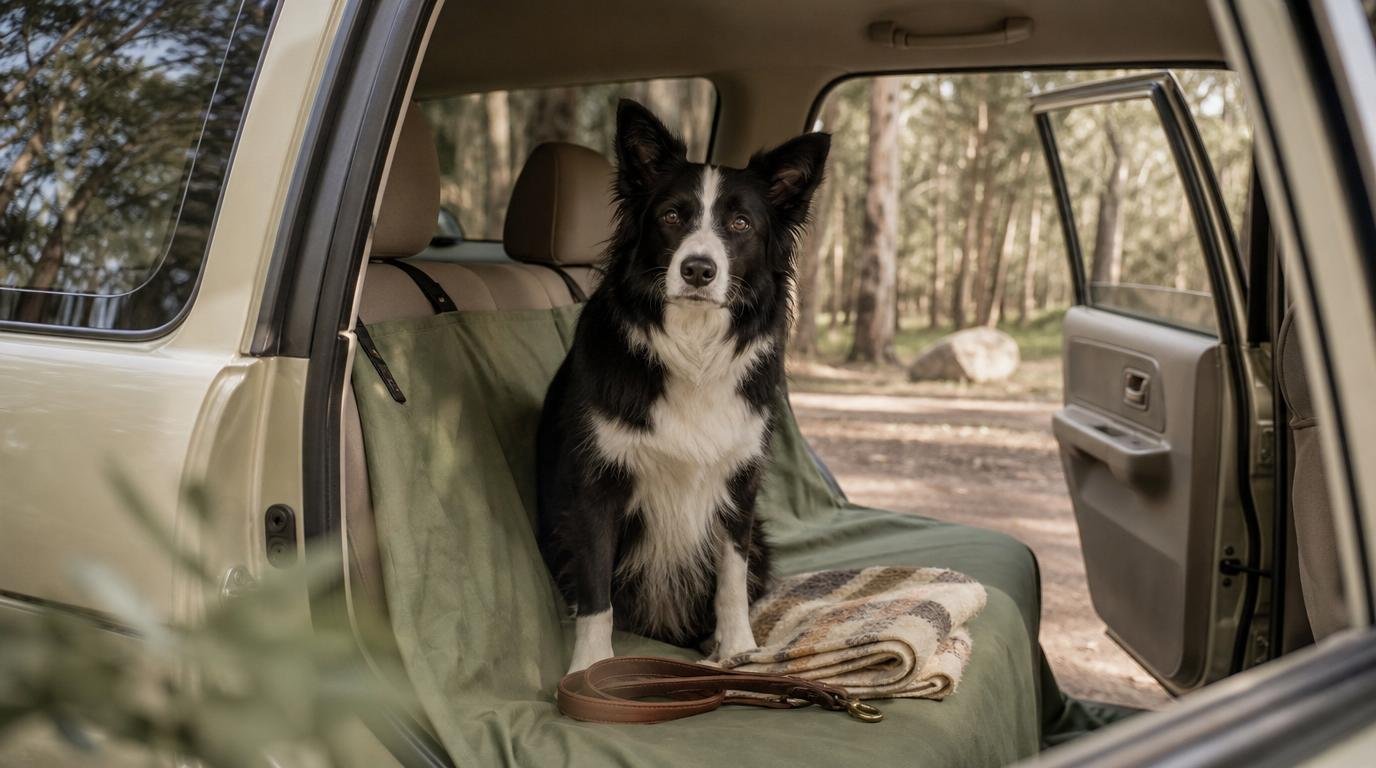
DOGBest Dog Car Seat Covers: Ultimate Australian Reviews
Mud, fur and claws are no match for the right cover. We found the best car seat protectors that actually stay put and clean up easy.

 DOG
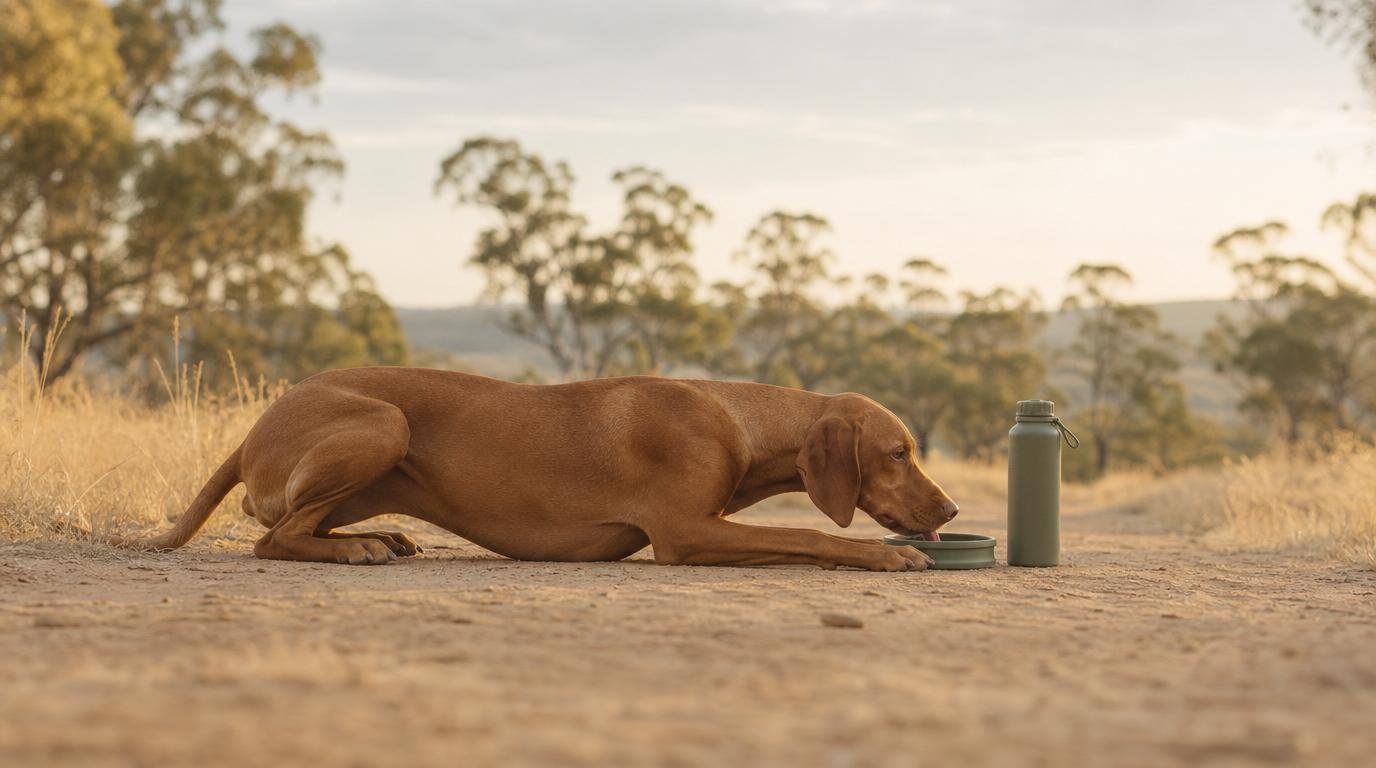
DOGBest Dog Travel Water Bottles in Australia: Ultimate Guide
Walks, road trips and hot days — easy hydration on the go. We compared the best leak-free travel bottles for thirsty dogs.
 DOG
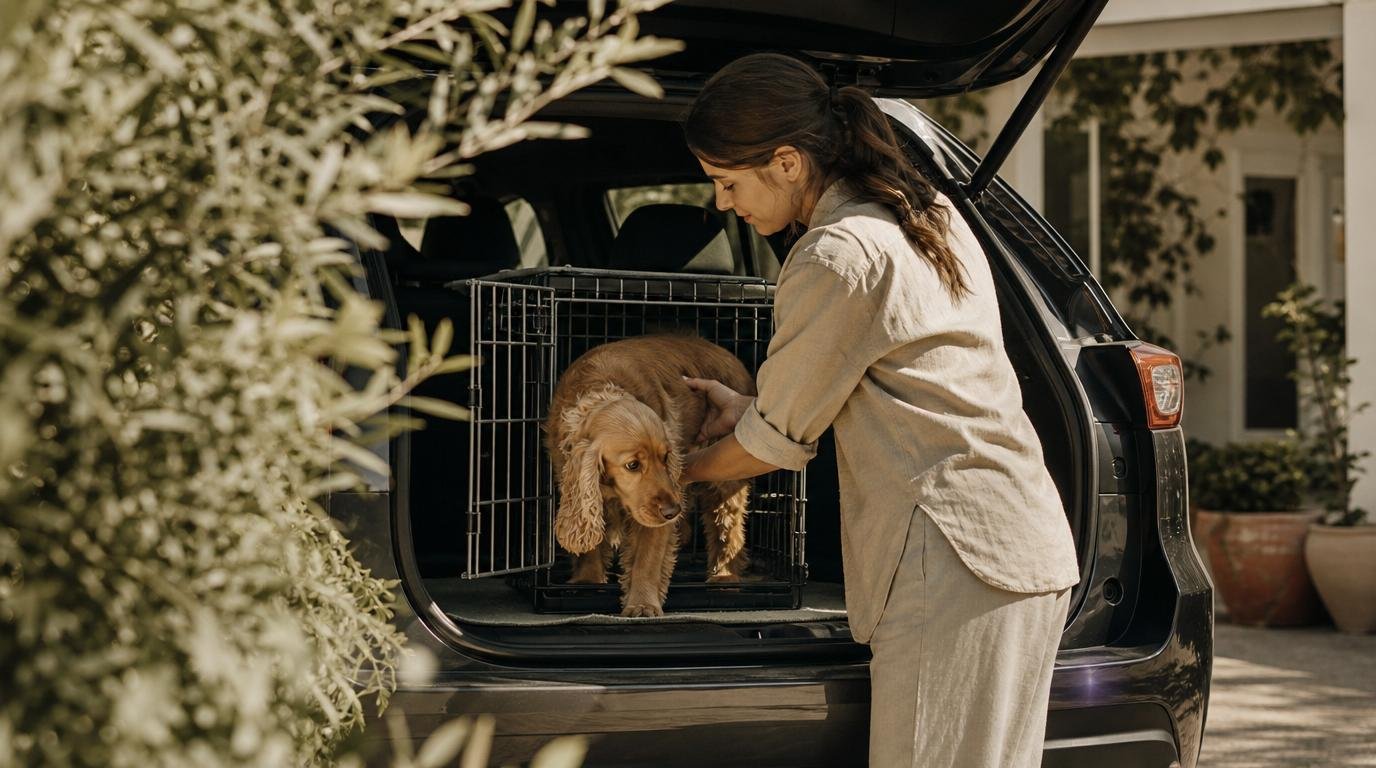
DOGDog Travel Crates Australia – Airline Approved and Car Safe
Whether by car or plane, a sturdy crate keeps your dog safe on the move. We found the best airline-approved and car-safe picks.