Bedding | Cats
Do Cats Need Heated Beds in Winter? An Australian Climate Guide
Walk into any pet shop in May and you’ll see heated cat beds stacked next to the winter coats. The marketing makes it sound essential — but for a healthy adult cat in a heated Australian home, it usually isn’t. Cats are built to find their own warmth and most do it well. The animals who actually benefit are the ones who’ve lost some of that ability: arthritic seniors, thin or short-coated cats, kittens, and any cat with chronic illness. The question isn’t whether heated beds help — it’s whether your particular cat is the kind that needs one.
The Upshot
Most healthy adult cats don’t need a heated bed — older or arthritic cats often do.
A well-fed adult cat with a warm corner of the house will be perfectly comfortable through most Australian winters. The animals who actually benefit are the ones whose own thermoregulation has slipped: senior cats with arthritis, very thin cats, kittens, and any cat with chronic illness. Match the bed to the cat.
Best Cat Heating Pad

K&H Pet Products Self-Warming Pet Pad
- No electricity, free to run
- Reversible and machine washable
- Only mild warmth on its own
See the full Product Guide: The Best Heated Cat Beds for Australian Winters
Best for Power Outages

SnuggleSafe Pet Microwaveable Heat Pad
- No power needed, works anywhere
- 8–10 hours of warmth per use
- Needs reheating each evening
See the full Product Guide: The Best Heated Cat Beds for Australian Winters

Pixel, our resident black apartment cat, has spent most of her life proving she can find the warmest spot in any room without help. She tracks the sun across the floor, parks on the laptop charger, and resurfaces from blanket origami at suspicious hours of the morning. Healthy cats have been quietly doing this for thousands of years, and they’re remarkably good at it.
But not every cat is Pixel. Older cats with stiff joints don’t follow the warm spot as nimbly. Cats who’ve lost weight to kidney disease, hyperthyroidism, or simple ageing run colder. Kittens haven’t yet learned the trick at all. For those animals, the maths around heated beds is different — and worth understanding before you spend money on one or decide not to.
Quick Takeaways
The five things worth remembering. Scroll across to read all five.
Most cats self-warm
Healthy adult cats are excellent at finding warmth on their own — sun spots, your bed, blanket nests. They don’t need a powered option for basic winter comfort in a heated home.
Seniors actually benefit
Cats with arthritis press up against warmth because heat eases joint stiffness. A gentle heat source can meaningfully improve their comfort overnight and their willingness to move around the next morning.
Climate changes everything
A Brisbane indoor cat and a Hobart indoor cat have very different needs. Australian winter ranges from “open the door” to “frost on the grass,” and the answer scales with it.
Mild warmth is the goal
Pet-safe heated beds run just above body temperature, not hot. If a pad feels properly warm to your hand, it’s already too hot to leave a cat resting on.
Watch for cold signs
Curled tightly for hours, cold ears and paws, sluggishness, or seeking unusual heat sources are signals a cat is too cold. Most healthy cats won’t show any of these.
How cats handle the cold
Cats are not small dogs in a fur coat. They’re a desert-descended species with a thermoregulation range that sits noticeably higher than ours — a normal cat body temperature is around 38 to 39 degrees Celsius, and their comfortable ambient range runs from roughly 10 to 27 degrees. That’s a wider window than people often assume, and it explains why a healthy adult cat in a draft-free Australian home almost never looks cold.
The mechanics behind that range are quietly impressive. A cat’s double coat traps warm air against the skin, the long guard hairs shed water, and the dense undercoat does the insulation work. When the room cools, cats raise the pile of their fur, curl tightly to reduce surface area, and tuck nose-to-tail to recycle exhaled warmth. They also actively select for heat sources in a way that looks accidental and isn’t — the laptop, the windowsill in sun, the spot on the couch you just stood up from.
Outdoor and free-roaming cats expand this repertoire even further: they relocate to garages, sheds, parked-car bonnets, and any tight, lightly insulated space they can crawl into. That instinct is so reliable that the absence of warmth-seeking behaviour is itself a more useful signal than the presence of it. A cat that isn’t bothering to find a warm spot is usually either fine or unwell — rarely meaningfully cold.
Which cats benefit from a heated bed
The cats who do benefit are the ones whose ability to manage their own warmth has eroded. The clearest example is the senior cat with arthritis. Joint inflammation is painful in the cold, the same way an old knee injury aches in a Melbourne July, and cats with osteoarthritis instinctively press themselves against warmth because heat softens the surrounding muscle tension. The RSPCA’s guidance on cats with arthritis specifically recommends soft, draft-free, well-padded beds in peaceful locations — and a gentle heat source under that bedding is a small, sensible upgrade for cats who clearly seek it.
The second category is cats who’ve lost insulation. That includes the very thin: cats with chronic kidney disease or hyperthyroidism almost always shed body mass, and along with it the metabolic engine and subcutaneous fat layer that used to keep them warm. Hairless breeds (Sphynx, Devon Rex with their fine coat) sit in the same bucket year-round, regardless of age. So do cats recovering from surgery, cats with heart conditions on rest restrictions, and cats whose immune systems aren’t running at full capacity.
Key Insight
The decision isn’t really about temperature — it’s about whether the cat in front of you can still self-regulate. A healthy adult cat will find warmth without help; a cat whose body has stopped doing the work for them needs you to do some of it.
Kittens belong on the list too, but with a caveat. Cats under about eight weeks old can’t reliably regulate their body temperature and rely on contact with their mother and littermates. Older kittens who are eating, playing, and exploring normally are essentially small adults and rarely need anything more than a warm corner. The risk window is narrow and usually obvious.
What an Australian winter feels like for an indoor cat
Australia isn’t one winter. A Brisbane indoor cat will go through July barely noticing the season change — overnight lows of 10 degrees inside a brick home don’t trouble a healthy animal. A Hobart cat in a poorly insulated weatherboard, on the other hand, may wake up to indoor temperatures in the single digits, and that’s a meaningfully different conversation. Most of the country sits somewhere between those extremes, and the right answer scales accordingly.
The variable that matters more than the postcode is the household: how well the home is insulated, whether heating runs overnight, where the cat actually sleeps, and how draughty that spot is. A cat sleeping on a tiled floor near an external wall in a Canberra winter feels the cold far earlier than a cat in a synthetic-fleece bed three rooms in from any window. The good news is the simplest interventions — moving the existing bed off the floor, away from a draft, and adding an extra blanket — fix most of the discomfort before electricity is needed.
If your cat is older and already showing signs of joint discomfort, warmth is one lever among several. Diet supplementation matters too: a joint supplement with proven ingredients does work that warmth can’t, and our piece on omega-3 fish oil for cats covers how it complements arthritis management. Treat the heated bed as the comfort layer, not the medical fix.
What “safe warmth” looks like in practice
The single most common mistake is assuming a heated bed should feel warm to a human hand. It shouldn’t. Pet-safe heated pads are engineered to reach roughly the cat’s own body temperature — about 37 to 39 degrees — and hold there with a thermostat. To us, that registers as barely warm. To a cat already at the same temperature, it removes the need for the body to spend energy on heat production. If you press your hand to a cat heating pad and it feels properly warm, the unit is either faulty or it’s not a pet-specific product.
That same distinction is why the RSPCA’s winter pet care guidance recommends pet-specific heating pads and disks while warning against human electric blankets, hot water bottles, and cats sitting too close to a column heater or open fire. The risk isn’t the warmth itself — it’s the lack of regulation. A human electric blanket has no idea there’s a cat on it and no safety cut-off built for a sleeping animal. A pet heating pad does both.
| Safe and sensible | Better avoided |
|---|---|
| Pet-rated heating pad with thermostat, body-temp ceiling | Human electric blanket — no cat-aware cut-off |
| Microwaveable disk under fleece, 8–10 hours of stored warmth | Hot water bottle — chew and leak risk overnight |
| Self-warming pad reflecting the cat’s own body heat | Cat sleeping pressed against a column or fan heater |
| Bed moved away from drafts, raised off cold tile or concrete | Open-flame fireplace within paw or tail reach |
Signs your cat is feeling the cold
Cats don’t broadcast cold the way humans do. A healthy cat that’s a little chilly will simply move — to the next sun spot, to the laundry pile, on top of you. The cats worth paying attention to are the ones whose movement has slowed. Watch for animals who curl unusually tightly and stay that way for hours, who seek out radiator backs or air-conditioner vents they’ve never been interested in before, or who become reluctant to leave a warm spot to eat or use the litter tray. Cold ears, cold paws, or a cool belly are all useful tactile signals if your cat tolerates being checked.
For most indoor cats in most Australian homes, none of this will apply, and that’s the most informative outcome. A cat behaving exactly as it always does isn’t cold — it’s just settling in for its 14-hour day. The intervention question only becomes relevant when something has visibly changed.
Choosing the right warmth — if you need one at all
If you’ve worked through the cat in front of you and decided warmth would help, the choice is mostly about how much intervention you want running. A self-warming pad, like the K&H featured above, uses no electricity and works by reflecting the cat’s own body heat back at them. It’s the simplest option and the one we’d suggest trying first for a healthy older cat in a moderate climate — there’s nothing to switch off, nothing to chew, and nothing to fail.
A microwaveable pad like the SnuggleSafe sits one step up: still wireless, still safe to leave overnight, but it delivers stored heat for 8–10 hours rather than just reflecting the cat’s own. That’s the right tool for the cat who’s clearly cold but lives in a milder part of the country, or for households where leaving anything plugged in overnight is a hard no. Electrically heated beds with a thermostat sit at the top of the intervention ladder, and they’re the right answer for arthritic seniors and chronically thin cats in the colder parts of Australia — Tasmania, the southern highlands, Canberra in July.
Whichever you pick, put it where the cat already chooses to sleep. Don’t move them — move the bed to them. Then give it two weeks. A heated bed that gets ignored after a fortnight is a heated bed your cat didn’t need, and that’s a perfectly good answer too.
FAQ
What temperature is too cold for an indoor cat?
Healthy adult cats sit comfortably in rooms between roughly 18 and 26 degrees, and most cope down to about 10 degrees without trouble. Below that, you’ll usually see them seeking warmth on their own. The cats who feel cold earlier than the thermometer suggests are seniors with arthritis, very thin cats, kittens, hairless or fine-coated breeds, and any cat with kidney disease, hyperthyroidism, or heart issues. For those animals, anything below the low 20s is worth paying attention to, especially overnight when household heating drops.
Are heated cat beds safe to leave on overnight?
Yes, provided it’s a pet-specific bed with a built-in thermostat. Proper cat heating pads are designed to warm to roughly the cat’s own body temperature and hold there — they won’t keep climbing. The risks come from human electric blankets, hot water bottles, and chewable cords, none of which belong near a cat overnight. A self-warming pad with no electricity at all is the simplest option if leaving anything plugged in worries you.
Do kittens need heated beds in winter?
Very young kittens — under about eight weeks — can’t regulate their body temperature properly and do benefit from a gentle heat source, ideally provided by their mother. Once kittens reach a few months old and are eating, playing, and exploring normally, they handle a warm indoor home perfectly well. If you’ve taken on a young orphaned or rescued kitten in winter, the safest warmth is a microwaveable pad wrapped in a towel, not an electric bed they could nibble or sit on without moving.
Will my cat actually use a heated bed if I buy one?
Cats are particular about beds in general, and a heated one is no different. The ones most likely to use it are arthritic seniors, who tend to seek warmth on contact and stay put. Younger healthy cats may prefer the laptop, the sunny patch on the floor, or your bed instead. Place a new heated pad somewhere your cat already chooses to sleep, rather than picking the spot for them, and give it a couple of weeks. If they ignore it consistently, they probably didn’t need it.
Can a heated bed help my arthritic cat?
Warmth does help stiff joints — the same reason a hot water bottle helps your own sore back. A gentle heat source softens muscle tension around an arthritic joint and tends to make cats more willing to move afterwards. A heated bed isn’t a treatment on its own, though. Arthritis in cats is under-diagnosed and very treatable, so if you’ve noticed your cat hesitating before jumping or sleeping more than usual, a vet visit is the most useful next step. Warmth supports the treatment; it doesn’t replace it.
Final thoughts
I bought Pixel a heated mat in her third winter, mostly because the apartment had one cold corner and I’d convinced myself it was a kindness. She slept on it twice, then went back to her preferred spot on the kitchen window in the afternoon sun. That’s the answer for most healthy adult cats — they already know what they need, and the heated bed becomes another thing in the cupboard. The cats who change my view are the seniors I’ve watched in friends’ houses, the ones who lower themselves onto a warm pad and visibly relax. For those animals, the bed earns its place every single night of winter. If you’re not sure which kind of cat you have, watch them for a fortnight before you spend any money — they’ll tell you.
We Think You’ll Also Like These Guides
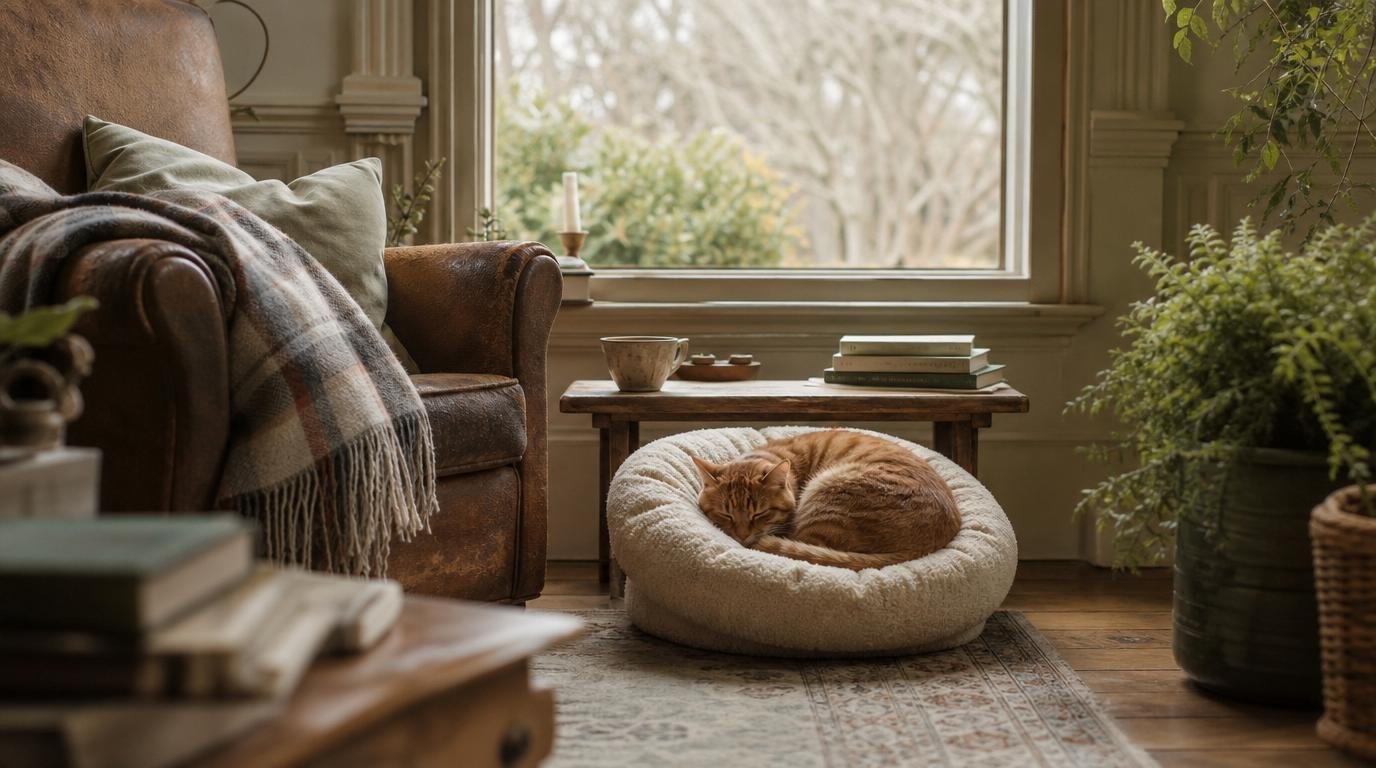 CAT
CATThe Best Heated Cat Beds for Australian Winters: Ultimate Guide
Cats chase warmth, and a heated bed delivers it safely. We found the cosiest, safest picks for chilly Aussie nights.

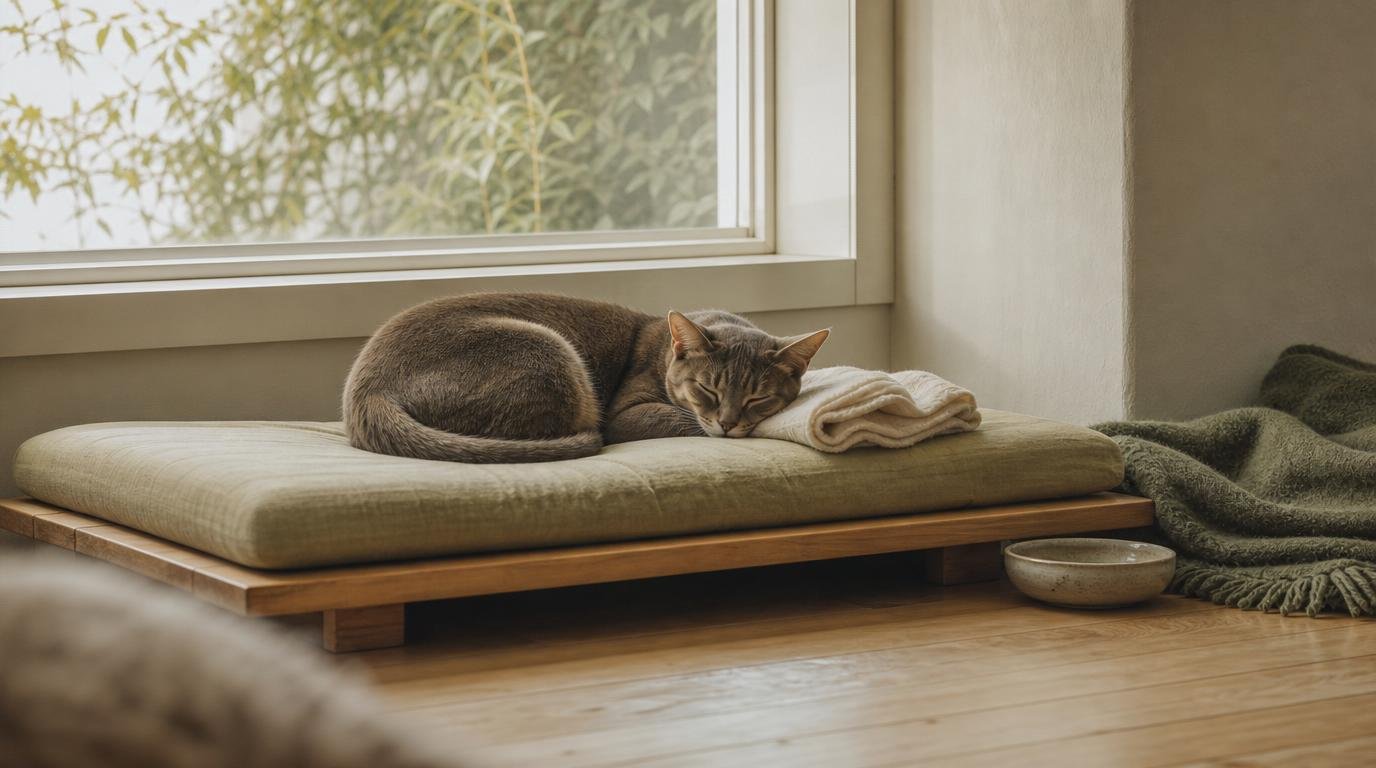 CAT
CATHow to Keep Your Cat Warm in an Aussie Winter: Indoor Climate Guide
Indoor cats feel the cold more than you'd think. Here's how to keep yours cosy and comfortable through an Aussie winter.

 DOG
DOGBest Dog Calming Beds in Australia: Ultimate Reviews
A deep, snug bed can settle an anxious dog for the night. We compared the best calming beds for comfort, support and real rest.